
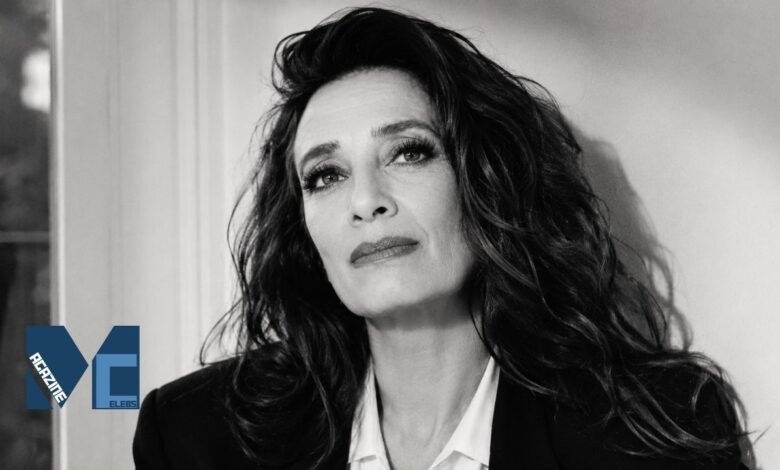
Susanna Kleeman: The Oxford-Educated Writer Who Stepped Out of the Spotlight on Her Own Terms
Known publicly as Louis Theroux's first wife, Susanna Kleeman is far more than that label suggests — she is an author, a digital tech professional, and a woman who has built a quiet but distinct literary life in London entirely on her own terms.


*Disclaimer: We may earn a commission if you make a purchase through our affiliate links, at no extra cost to you.
📋 Quick Facts: Susanna Kleeman
Full Name
Susanna Kleeman
Nationality
British
Birth Year
c. 1970 (not publicly confirmed)
Hometown
North London, England
Education
Westminster School; Merton College, Oxford
Profession
Writer; Digital Tech Professional
Marriage to Louis Theroux
1998 – 2002 (divorced)
Published Works
My Rejections (2020); TWICE (2021)
Susanna Kleeman occupies an unusual position in British public life: she is widely searched for, frequently referenced, yet almost entirely private. For years, the shorthand applied to her was simply “Louis Theroux’s ex-wife” — a label that tells you very little about who she is, and even less about where she went after their marriage ended in 2002. She is, in fact, a London-based writer and digital technology professional with a genuine literary voice, an Oxford education, and a dry, self-aware wit that comes through clearly in her published work.
What makes Kleeman a genuinely interesting subject is not the marriage that put her name into tabloid circulation, but the career she quietly built in its shadow. She spent years working in digital tech, ran a candid literary blog about the publishing industry, and eventually published two books under her own name — including a debut novel that received enthusiastic critical notice for its strange, genre-defying energy. None of that happened quickly. It happened through persistence, and she documented the process with a frankness that few writers, established or otherwise, bother to sustain.
She has given virtually no interviews about her personal life, declined to be drawn on her marriage when contacted by the press after its breakdown, and continues to maintain a level of privacy that is, by any measure, deliberately chosen. This biography draws only on verified public records, published interviews, official author pages, and reputable news sources. Where information has not been publicly confirmed, that fact is clearly noted.
Early Life & Biography
Susanna Kleeman was born and raised in North London, in a household that, by all available accounts, was financially comfortable and culturally engaged. A Sunday Mirror report from 2002, at the time of her separation from Louis Theroux, described her father as a North London businessman, and placed the family home in St John’s Wood — one of London’s most affluent residential districts. Beyond these details, verified information about her early childhood and specific upbringing is not publicly available.
What is documented is that she was attending Westminster School at roughly the same time as Louis Theroux, both of them enrolled around the mid-to-late 1980s. Westminster is one of England’s most academically rigorous independent schools, situated in central London adjacent to Westminster Abbey, and carrying fees that have historically placed it among the country’s most expensive institutions. The school has produced a remarkable number of writers, broadcasters, and journalists across its alumni history. Kleeman and Theroux reportedly met there when she was around 15 or 16 — a detail Theroux himself referenced in public accounts of how they first crossed paths.
Her childhood interest in writing appears to have surfaced early. In a candid author interview published on the literary site Whispering Stories, Kleeman recalled winning the Royal Court Theatre’s Young Writers’ Festival at the age of 11 — a significant achievement for any child. Her winning play, titled Perfect Pets, was performed at the Royal Court, one of Britain’s most respected theatrical venues. She noted in the same interview that the story behind that win is more complicated than it appears, and said she intends to write about it one day — which is itself a characteristic move: acknowledging something without explaining it, keeping the story for later.
Parents, Siblings & Family Background
Kleeman’s father is identified in contemporaneous press reports as a North London businessman, though his name and specific profession have not been publicly disclosed in verifiable sources. Her mother, named in the same 2002 Sunday Mirror report as Manuela, was present at the family’s St John’s Wood home when contacted by journalists at the time of the separation. Manuela declined to comment, saying only: “We have nothing to say on this matter.” No information about siblings has been publicly confirmed. The family’s evident preference for privacy appears consistent with Susanna Kleeman’s own approach to public life throughout her adult years.
Education
Kleeman attended Westminster School in London, which she would have started attending in the mid-to-late 1980s. The school’s academic environment is intensely competitive; it consistently produces Oxford and Cambridge entrants at a high rate, and its humanities and arts programmes are particularly well regarded. That grounding appears to have shaped her literary sensibility — the breadth of reference in her writing suggests someone exposed to a rigorous curriculum early on.
From Westminster, she went on to Merton College, Oxford, which is among the university’s most academically selective colleges. Louis Theroux studied simultaneously at Magdalen College, and both graduated in approximately 1991. The subject of Kleeman’s degree at Oxford has not been publicly confirmed in any verified source and will not be stated here. Merton College, where she studied, is a historic institution with a particularly strong tradition in the humanities; its alumni include Nobel laureates, writers, and heads of state.
Her early writing prize at the Royal Court, her Westminster education, and her Oxford degree together suggest an unusually well-prepared literary foundation — which makes the long road to publication she later documented in her blog and memoir all the more interesting. Having every apparent advantage on paper does not, as she discovered, make the publishing industry any more welcoming.
Career Timeline
c. 1982
At around age 11, Kleeman wins the Royal Court Theatre’s Young Writers’ Festival. Her play Perfect Pets is performed at the Royal Court, London — an early and striking demonstration of literary ambition.
c. 1988
Begins studies at Merton College, Oxford — the same year Louis Theroux enrols at Magdalen College. Both graduate approximately in 1991.
Early–Mid 1990s
Following graduation, Kleeman and Theroux relocate to New York. She pursues her writing career in the US, facing work authorisation difficulties — a circumstance Theroux later described publicly as a catalyst for their 1998 marriage. She establishes herself as a writer during this period; verified details of her specific editorial or professional work in New York are not publicly documented.
c. Mid-1990s
Returns to the United Kingdom with Theroux. The couple settle in Shepherd’s Bush, West London. Kleeman continues her career as a writer and begins working in the digital technology sector, a dual professional identity she maintains into the 2020s.
1998
Marries Louis Theroux in a ceremony described by Theroux himself as kept secret from most people in their lives. Theroux later stated the marriage was never intended to be conventional in its structure — he characterised it publicly as a “marriage of convenience” in a 2005 Financial Times interview.
2001–2002
The couple separate. Their divorce is finalised in 2002. Reports at the time place Kleeman in a Camden flat. She declines all press comment, telling a Sunday Mirror journalist: “I don’t mean to be unhelpful but I really can’t say anything.” Her mother similarly declines to speak.
c. 2019
Launches the blog MyRejections.com, documenting her experience submitting a manuscript to literary agents and publishers across the UK and North America. The blog takes a candid, often wry approach to the emotional rigours of seeking publication as a working writer.
2020
Publishes her first book, My Rejections: How I Got Real & Got Published — a short memoir drawn from the blog. The book covers the practical and emotional experience of literary rejection, with sections on how to approach agents, handle repeated refusals, and persist through the publishing process. Amazon reviewers praised it as “hilarious but really practical.”
June 2021
Publishes her debut novel TWICE with Zer0 Books (an imprint of Collective Ink), distributed through Simon & Schuster. The novel earns praise from the American author Dan Chaon, who called it “wryly hilarious and utterly bonkers.” Barnes & Noble, Bookshop.org, and major literary platforms list the title as an active in-print release.
💜 A Human Perspective
There is something quietly telling in the fact that Kleeman titled her first published work My Rejections. The book’s subtitle promises triumph, but the title leads with failure — and that ordering feels deliberate. In the same author interview where she mentioned winning a theatre prize at 11, she described spending years writing three and a half “bad autobiographical novels” before arriving at TWICE. The product description for her memoir also pointedly includes advice on how to “deal with unexpected appearances in ex-husbands’ celebrity memoirs” — a detail that suggests she processed her public-by-association status with dark humour rather than resentment. Whatever the private cost of that experience, the publicly visible outcome was a writer who kept working.
Relationships & Personal Life
Kleeman and Louis Theroux first met as teenagers at Westminster School in London, reportedly around 1985 when both were approximately 15. They remained in contact through their Oxford years and subsequently lived together in New York after graduating, where Kleeman encountered difficulties working legally. It was this practical circumstance that Theroux described, in a 2005 Financial Times interview, as the primary reason they married: “What happened was that my girlfriend was living with me in New York. She was having trouble finding work… legally. So we got married, to make it easier for her.”
Theroux added, in the same interview: “We never really considered ourselves married in the full sense — there were no wedding photos or anything like that. It was really a marriage of convenience.” He has spoken about this arrangement with unusual candour for someone who generally guards his private life closely. What he has consistently avoided is any comment on Kleeman as a person, or on the texture of their relationship beyond that practical framing.
Their separation occurred around 2001, with divorce following in 2002. No children were born from the marriage. A friend of the couple told the Sunday Mirror at the time: “It is very sad. Susanna was Louis’s first love. They were very sweet together, but unfortunately drifted apart.” Neither party confirmed or denied this characterisation. Theroux subsequently met producer Nancy Strang, whom he married in July 2012, and with whom he has three sons.
No publicly verified information exists about Kleeman’s relationships after her divorce. She has not disclosed whether she has married again, and no credible reporting confirms or contradicts any subsequent partnership. Her published author biography makes no mention of a partner or children. This detail has not been publicly disclosed.
Voice, Personality & Public Image
For most of the early 2000s, Kleeman had no public image of her own — she was a name that appeared in tabloid coverage of her ex-husband without providing any quotes or access. When she finally began to speak in a public register, it was through writing and through the MyRejections blog, and the voice that emerged was not what celebrity-adjacent coverage might have prepared readers for.
She is, on the available evidence, a sharp, self-deprecating writer with a genuine fondness for dark and absurdist fiction. Her Whispering Stories interview reveals someone who reads Lewis Carroll, Arthur Conan Doyle, and the Thousand and One Nights; who has read Agatha Christie since childhood and remains “petrified” by The Speckled Band; who speaks of having once stayed in the home of a woman who had recently died by suicide — and describes it primarily as a remarkable collection of bookshelves. That last detail carries the kind of tragicomic precision that is very difficult to fake.
Her novel TWICE received a blurb comparing it to “David Cronenberg making a horror film after binge-watching Fleabag” — which, whatever else it tells you, tells you that the book does not read like something written to be safe or commercially smooth. It is genre-bending fiction about doubles, coercive control, and digital technology’s grip on human relationships. The themes are serious; the execution, by multiple accounts, is entertainingly strange.
Kleeman has never sought to leverage her association with Theroux for literary exposure. There is no evidence she gave interviews at the time of his memoir publication despite featuring, by implication, within it. Her public presence has been built entirely on her own work, which is either a matter of principle, strategic calculation, or simple preference — and possibly all three simultaneously.
Financial Overview
Verified financial data regarding Susanna Kleeman’s earnings, assets, or net worth has not been publicly disclosed. She works in digital technology in addition to writing — a dual career path that is common among literary authors, for whom book advances and royalties from independent or mid-list publishing rarely constitute a full income. Her two books were published by Zer0 Books, an independent imprint with a well-regarded backlist in cultural criticism and literary fiction, but not a commercial house whose advances would typically be publicly reported.
📊 Estimated Income Streams Overview (2026)
No verified financial figures are publicly available. The bars below reflect approximate income category weightings typical for writers with dual careers in digital tech — not confirmed personal data.
“Kleeman’s trajectory — Oxford to New York to a Camden flat to a published novelist — is not a story about celebrity adjacency. It is a story about the specific, unhurried patience that serious writing requires.”
— AB Rehman, Celebrity Features & Biography Research Writer
Where Is She Now? (Current Lifestyle & Status)
As of 2026, Susanna Kleeman is based in London. Her author biography, consistent across multiple publishing platforms including her own blog, Amazon, Barnes & Noble, Simon & Schuster, and Zer0 Books, identifies her as “a writer from London who works in digital tech.” The phrasing has remained unchanged since her debut publication in 2020, suggesting it accurately reflects her current professional identity rather than a historical footnote.
Her novel TWICE remains in print and available through major retailers. Her blog, MyRejections.com, was active during the submission and publication period and contains an author note directing readers to the novel. Whether she is currently working on further books is not publicly confirmed. She maintains no known public social media presence under her own name, and does not appear to have given press interviews since her book launch period in 2021.
She appears, in short, to have returned to the kind of privacy she maintained throughout most of her adult life — not as a retreat from public life, but as its natural default state. The books exist, are available, and speak for themselves. That seems to be precisely the arrangement she prefers.
✨ Susanna Kleeman — Published Works Snapshot
First Book
My Rejections (2020)
Debut Novel
TWICE (Zer0 Books, 2021)
Publisher
Zer0 Books / Collective Ink
Notable Blurb
Dan Chaon (American novelist)
❓ Frequently Asked Questions
Who is Susanna Kleeman?
Susanna Kleeman is a London-based British writer and digital technology professional. She is also known as the first wife of documentary filmmaker Louis Theroux, whom she married in 1998 and divorced in 2002. She has published two books: the memoir My Rejections (2020) and the novel TWICE (2021).
Why did Louis Theroux and Susanna Kleeman divorce?
No official reason has been given by either party. Theroux characterised the marriage in a 2005 Financial Times interview as a “marriage of convenience” entered into because Kleeman was having difficulty working legally in New York. He said they “never really considered ourselves married in the full sense.” Friends described the couple as having “drifted apart.” Neither Kleeman nor Theroux has elaborated publicly beyond these accounts.
Where did Susanna Kleeman go to university?
Susanna Kleeman attended Merton College, Oxford, where she enrolled around 1988. She and Louis Theroux both attended Westminster School in London before going up to Oxford. Her specific degree subject at Oxford has not been publicly confirmed.
What books has Susanna Kleeman written?
She has published two books. My Rejections: How I Got Real & Got Published (2020) is a short memoir drawn from her blog about pursuing literary publication. TWICE: A Novel (2021, Zer0 Books) is her debut novel — a genre-bending thriller about coercive control, doubles, and digital technology. Both are available through major retailers including Amazon, Barnes & Noble, and Bookshop.org.
Does Susanna Kleeman have children?
No children from her marriage to Louis Theroux have been reported by any verified source. Her author biography and all publicly available information make no mention of children. This detail has not been publicly confirmed either way.
What is Susanna Kleeman’s net worth?
Verified financial data has not been publicly disclosed. Kleeman works in both writing and digital technology, but no income figures, assets, or net worth estimates have been published or confirmed by any credible source.
Final Thoughts
The tendency to define Susanna Kleeman entirely through her first marriage has always somewhat missed the point. She was, when she married Louis Theroux, already an Oxford graduate with a history of taking writing seriously — the Royal Court prize at 11, the subsequent years of attempting fiction, the eventual persistence through enough rejections to write an entire book about the process. The marriage, by Theroux’s own account, was never the defining feature of her life; it was a practical arrangement that ended when it no longer served its purpose.
What followed was quieter. She worked in digital technology, wrote, accumulated rejections, and eventually published. Her novel TWICE is not a book about celebrity life or London society or the world she briefly orbited through her former husband’s career. It is, by all accounts, an odd, funny, ambitious piece of genre fiction concerned with questions of identity, technology, and coercive power. That is exactly the kind of book its author appears to be: difficult to categorise, resistant to obvious framing, and more interesting on closer examination than the label attached to her name might suggest.
She is currently based in London, working in digital tech, and presumably writing. Whether a third book is in progress is not publicly known. What is clear is that Kleeman has, over two decades, consistently done the thing she set out to do — and done it without calling attention to herself in the process. That, in its own way, is a kind of achievement worth noting.
Sources & References
- Wikipedia — Louis Theroux
- Hello Magazine — Louis Theroux’s Love Life
- FamousFix — Louis Theroux and Susanna Kleeman (FT 2005 interview reference)
- The Free Library — Sunday Mirror (2002): “We’re Theroux; Weird TV Louis splits from his secret wife”
- Amazon — TWICE: A Novel by Susanna Kleeman
- Amazon — My Rejections: How I Got Real & Got Published
- Zer0 Books — Susanna Kleeman Author Page
- Whispering Stories — The Writing Life of Susanna Kleeman
- MyRejections.com — About Susanna Kleeman
- Goodreads — Susanna Kleeman Author Profile
AB Rehman
Celebrity Features & Biography Research Writer
AB Rehman writes long-form celebrity biographies and public figure profiles, with a focus on factual accuracy, editorial restraint, and research-led narrative. All claims in this article are drawn from verified public sources. Unconfirmed information is clearly marked as such.
⚠️ Editorial Disclaimer
This article is a biographical feature compiled from publicly available, reputable sources. It is intended for informational purposes only. No claim is made regarding private information not in the public domain. Where facts could not be verified, this has been clearly stated. The views expressed by AB Rehman in quoted commentary are editorial observations, not statements of legal or financial fact. This article is not affiliated with, endorsed by, or connected to Susanna Kleeman, Louis Theroux, or any of their associates.




I always ready and watch your great news from where i live, Indonesia, the biggest country in South East Asia with 17,000 beautiful islands. Thanks for givingbus great idea!