
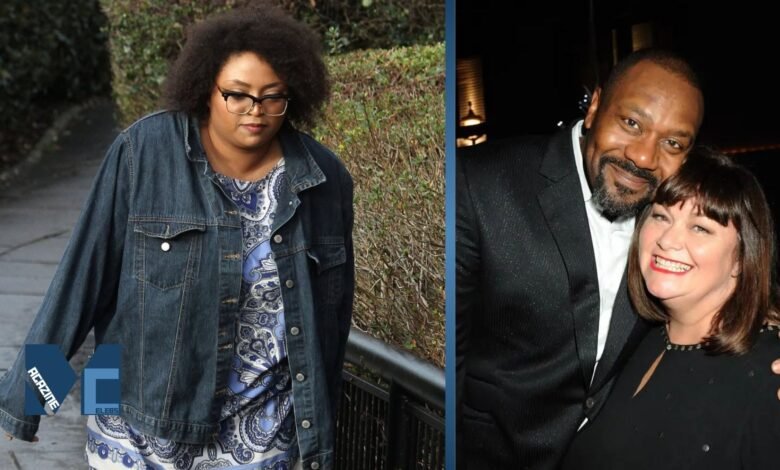
Billie Henry: The Life Dawn French and Lenny Henry Chose to Keep Out of Print
She is the only child of two of Britain's most famous comedians, and almost nothing about her adult life has ever been confirmed by the people who could confirm it. That absence is the story.


*Disclaimer: We may earn a commission if you make a purchase through our affiliate links, at no extra cost to you.
Full Name
Billie Henry
Born
1991, United Kingdom
Parents
Sir Lenny Henry & Dawn French
Adopted
1991, aged two weeks
Siblings
None — only child of the marriage
Raised In
London, later Cornwall
Occupation
Not publicly disclosed
Public Profile
Private; no media career or social presence
There is a particular kind of fame that belongs to people who have never asked for it and never used it. Billie Henry has spent more than three decades inside one of the most recognisable entertainment families in Britain without once stepping toward a microphone. She has given no interviews. She runs no public social media account. She has never been credited on a programme, a book jacket, or a charity campaign bearing her parents’ names.
And yet she is, by any reasonable definition, a known figure — known the way the children of famous people often are, by inheritance rather than by choice. Billie Henry is the adopted daughter of Sir Lenny Henry and Dawn French, two performers who have spent forty years filling British screens, stages and newspaper columns. Search engines connect her name to theirs daily. She has answered none of it.
This piece sets out only what has been confirmed by Dawn French, Lenny Henry, or court record, in their own words and in documented reporting. Where the public record is silent — on her career, her relationships, her finances — it stays silent here too. That gap is not an oversight. It is, as far as the evidence shows, the point.
Early Life: An Adoption in the Middle of a Filming Schedule
Lenny Henry and Dawn French married in 1984 at a register office in Covent Garden, London, two comedians whose careers were both, at that point, accelerating fast. They wanted children. It did not happen straightforwardly. French has spoken about miscarriages and a long stretch of grief that ran alongside the early, more visible years of her career, including her work with Jennifer Saunders on French and Saunders.
The adoption itself arrived without warning, mid-production. French has described getting the phone call about Billie while the next series of French and Saunders was already booked — studios reserved, directors hired, scripts half-written. She stepped away to collect a two-week-old baby and told almost no one outside her closest circle what was happening. Saunders, she has said, quietly covered the gap.
Billie Henry was born in 1991 and adopted by the couple within weeks of her birth. French has talked about the specific texture of that adjustment — the absence of the nine months of preparation a pregnancy gives a parent, replaced by something more sudden and, by her account, no less total. “The minute we met her… you just hit the ground running,” she said on Elizabeth Day’s How To Fail podcast, describing the lack of lead-in time that adoption gave them compared to pregnancy.
Parents, Identity, and a Household Built Around Television
Billie grew up the only child of two parents whose working lives were, by definition, public. Much of her early childhood overlapped with her mother’s most famous role: French filmed The Vicar of Dibley across its original BBC run from 1994 to 2000, and Billie spent stretches of that period on set, watching the mechanics of a show without ever becoming part of its promotion. Her father, knighted for his work in entertainment and for co-founding Comic Relief, built a parallel career around philanthropy that has raised well over a billion pounds for causes addressing poverty since the mid-1980s.
One detail recurs across interviews with both parents and is treated by them as more than incidental: Billie is mixed race, adopted by two white parents, and Henry has spoken about writing children’s books partly so that his daughter could see herself reflected in the stories on her own shelves. It is a small, specific fact, but it says something about how deliberately the two of them seem to have thought about the shape of her identity rather than leaving it to chance.
French and Henry divorced in 2010, after twenty-five years of marriage, a split both later described publicly as amicable rather than acrimonious. French has said the two could no longer live under one roof — “there would be murder,” in her words to The Telegraph — but that proximity to their daughter mattered enough that they chose to live near each other afterward. For years, mother and daughter have lived roughly twelve minutes apart in Cornwall, a county French relocated to from London in 2006, partly, by her own account, to be nearer family and away from the pace of the capital.
A Life Built on Timeline, Not Headlines
1984
Lenny Henry and Dawn French marry in Covent Garden, London.
1991
Billie Henry is born and adopted by the couple at two weeks old, mid-way through production on a French and Saunders series.
1994–2000
Billie’s childhood overlaps with the original BBC run of The Vicar of Dibley, occasionally visiting the set without becoming part of any promotional appearance.
2005
Billie attends Jools Holland’s wedding to Christabel McEwen alongside her parents — one of the rare documented public appearances of the family together.
2006
Dawn French relocates from London to Cornwall, where the family settles permanently.
2010
French and Henry divorce after twenty-five years of marriage. Both describe the split as amicable and commit to co-parenting from nearby homes.
2020
Billie Henry receives a suspended sentence and a restraining order following a court case related to harassment of a former partner — the only confirmed legal matter of her adult life on public record.
💜 A Human Perspective
Dawn French has never pretended her relationship with Billie has been easy. She has used the word “fraught.” She has called her daughter “my biggest test and my biggest joy” in the same sentence, without softening either half. That kind of honesty is rare from a parent talking about an adult child in public, and it suggests something more grounded than the usual celebrity-family gloss: a mother who loves her daughter and has also, by her own account, found the relationship genuinely hard.
The 2020 Case: What Is Actually Known
The single moment Billie Henry’s adult life intersected with public record in any detail came in 2020, when she was reported to have received a suspended prison sentence and a restraining order in a case connected to the harassment of a former partner. Reporting at the time, drawn from court coverage, described the case as involving impersonation — communications sent while posing as her father — directed at persuading an ex-partner back into the relationship.
Beyond the outcome — a suspended sentence rather than custody, alongside a restraining order — the public record does not extend much further, and this piece will not speculate beyond it. It is worth being precise about what that means in practice: a suspended sentence means a custodial term was handed down but not immediately enforced, conditional on the person not reoffending during a set period. It is a serious legal outcome, not a minor caution, but it is also not the same as imprisonment.
French has referred to this period only obliquely and without detail, describing the broader relationship with her daughter as one that has survived “all this other stuff” because the love between them held. She has not elaborated on the case itself in any interview reviewed for this article, and Henry has not commented on it publicly at all. That restraint, on both their parts, is consistent with everything else about how this family has handled Billie’s life: acknowledge that something happened, decline to turn it into a story.
Career, Relationships, and Finances: The Limits of the Record
This is the section where most articles about Billie Henry begin inventing things, and it is worth saying clearly why this one does not.
There is no verified public source confirming what Billie Henry does for a living. She has not been reported working in entertainment, media, or any other named industry. That absence is not unusual for a private adult in her thirties — most people of her age are not the subject of career profiles — but it becomes conspicuous only because her parents’ fame creates demand for an answer that simply does not exist in the record.
The same applies to her relationships. Aside from the unnamed former partner referenced in the 2020 court case, no partner, fiancé, or spouse of Billie Henry’s has ever been named publicly by her or her family. Reports describing a “wedding” or “husband” connected to her name are not supported by any primary source identified in researching this piece — no marriage announcement, no register, no statement from Dawn French or Lenny Henry, both of whom have been candid about other aspects of their daughter’s life when they have chosen to speak at all.
Claims about a weight-loss transformation tied to Billie Henry specifically — as distinct from her mother, Dawn French, who has spoken extensively and on record about her own weight loss after 2011 — also do not trace back to any verified source. It is possible this confusion stems from searches conflating mother and daughter; this article does not extend any of Dawn French’s documented health journey onto Billie, who has made no public statements on the subject.
On finances: there is no verified net worth figure for Billie Henry, no disclosed income, and no documented business interest. Any number presented elsewhere as her net worth should be treated as speculation. Her parents’ financial lives are separately documented through their professional work — Lenny Henry’s decades in broadcasting and Dawn French’s bestselling memoirs and television career — but nothing in the public record extends a figure to Billie herself, and inventing one here would not serve the reader.
“Our bond is unbreakable. We have the same amount of mother/daughter friction that any mum and daughter have — it’s no more or less.”
— Dawn French, speaking to HELLO! in October 2021
Where Is Billie Henry Now?
As of the most recent confirmed reporting, Billie Henry continues to live near her mother in Cornwall, with the two reportedly seen together on occasional outings — a 2024 sighting placed them shopping together at Liberty in London during a break in Dawn French’s touring schedule. There is no confirmed current address, profession, or relationship status beyond that. She does not maintain a public-facing social media account under her own name, and no verified interview with her exists in the public record at the time of writing.
Sir Lenny Henry, meanwhile, has been in a long-term relationship with theatre director Lisa Makin since 2013, and Dawn French has been married to her husband, Mark Bignell, since around 2013 as well, gaining two adult stepchildren, Olly and Lily, through that marriage. Billie has reportedly described herself, even as a child, as content being an only child — French has recalled her daughter buying a T-shirt at around age eight reading “I’m an only child, let’s keep it that way” — and has said Billie gets along well with her stepsiblings without the dynamic displacing that original identity.
✨ Billie Henry: What’s Actually Confirmed
Profession
Not publicly disclosed
Marital Status
No marriage publicly confirmed
Net Worth
Verified financial data has not been publicly disclosed
Residence
Cornwall, near her mother
Frequently Asked Questions
Who is Billie Henry?
Billie Henry is the adopted daughter of comedian Dawn French and Sir Lenny Henry, born in 1991 and adopted by the couple at two weeks old. She has lived a deliberately private life and is not a public figure in her own right.
What does Billie Henry do for a living?
This has not been publicly disclosed. No verified source confirms a profession, employer, or industry for Billie Henry.
Is Billie Henry married, and who is her partner?
No marriage or named partner has been publicly confirmed by Billie Henry or her family. Public reports vary, and claims naming a specific spouse or wedding date are not supported by any verified primary source.
Did Billie Henry have a weight loss journey?
No verified public source documents a weight-loss story for Billie Henry. This appears to be a case of search confusion with her mother, Dawn French, who has spoken publicly and at length about her own weight loss following her 2010 divorce and a 2014 hysterectomy.
Is Dawn French Billie’s biological mother?
No. Dawn French has spoken openly about miscarriages and infertility before she and Lenny Henry adopted Billie in 1991. Billie is their adopted daughter, not a biological child of either parent.
Does Billie Henry have siblings?
No. She is the only child of the French–Henry marriage. She gained two adult stepsiblings, Olly and Lily, when Dawn French married Mark Bignell.
What happened with Billie Henry in 2020?
She received a suspended prison sentence and a restraining order in a court case connected to the harassment of a former partner, reportedly involving impersonating her father in messages. It remains the only documented legal matter in her public record.
Final Thoughts
The honest version of Billie Henry’s story is shorter than most of what has been written about her, because most of what has been written about her is filler dressed as biography. What can actually be said is this: she was adopted into love and grief in equal measure, raised partly on television sets she never tried to join, given a hard year in 2020 that her parents chose not to exploit for sympathy or explanation, and has spent the years since living within twelve minutes of her mother and largely outside anyone else’s view.
Her parents — knighted, bestselling, decades-famous — have built entire careers on being known. Billie Henry has built, as far as anyone can verify, a life on not being. Comparing her to other figures in British entertainment who have navigated fame and family in very different ways only sharpens the contrast: most public lives leave a paper trail. Hers, deliberately, does not.
AB Rehman
Celebrity Features Writer
AB Rehman writes long-form biography and family-history features for MagazineCelebs.co.uk, with a particular focus on separating verified public record from circulated speculation in stories about celebrity families.
Editorial Disclaimer: This article is based on publicly available reporting, interviews given by Dawn French and Sir Lenny Henry, and matters of court record. Billie Henry has not given interviews and has not confirmed details of her career, relationships, or finances. Where information could not be verified through a credible primary or secondary source, this has been stated explicitly rather than estimated. This piece does not speculate about her current occupation, relationship status, or net worth.