239 Area Code: Everything You Need to Know About Southwest Florida’s Telephone Prefix
The 239 area code serves Southwest Florida, covering cities like Fort Myers, Naples, and Cape Coral. Here's the full story behind the number, where it applies, and what you should know before you dial.


*Disclaimer: We may earn a commission if you make a purchase through our affiliate links, at no extra cost to you.
📋 Quick Facts
Area Code
239
Region Served
Southwest Florida
Introduced
February 1, 2002
Split From
941 Area Code
Major Cities
Fort Myers, Naples, Cape Coral
Time Zone
Eastern Time (ET)
Country
United States
NANP Plan
North American Numbering Plan
The 239 area code covers a defined stretch of Southwest Florida, taking in Lee County, Collier County, and Hendry County — a region that includes some of the state’s fastest-growing cities. If you’ve received a call beginning with 239, or you’re looking to understand which part of Florida that number originates from, the answer is clear: it belongs to the Gulf Coast corridor anchored by Fort Myers and Naples. The code has been active since February 2002, created to handle population demand that had outgrown the previous 941 numbering zone.
Southwest Florida saw dramatic demographic expansion through the late 1990s and early 2000s. Retirement communities, coastal tourism, real estate development, and a steady influx of residents from the Northeast and Midwest drove telephone subscriber numbers past what a single area code could accommodate. The North American Numbering Plan Administrator (NANPA) — the body responsible for assigning area codes across the United States and Canada — approved the split, carving out 239 from the lower half of 941’s former territory.
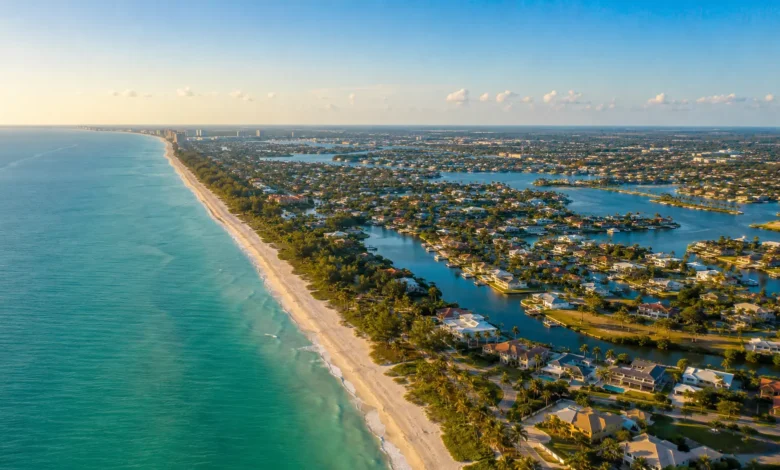
Today, the 239 area code is home to roughly 800,000 residents spread across one of America’s most recognisable stretches of Gulf Coast shoreline. It covers not just the urban cores of Fort Myers and Cape Coral, but also the upscale enclaves of Naples and Marco Island, the agricultural heartland of Immokalee, and the quiet waterways of Everglades City. Understanding this code means understanding a slice of Florida that operates at its own pace — seasonal, sun-drenched, and demographically distinct.
Background: How the 239 Area Code Came to Be
Before 2002, the entire southwestern quadrant of Florida operated under area code 941. This code had itself been created in 1995 when Florida’s telephone infrastructure was reorganised to accommodate explosive post-Cold War growth — the state had been adding residents at a pace few American regions could match. For several years, 941 served both the Sarasota–Bradenton corridor in the north and the Fort Myers–Naples corridor in the south. By the late 1990s, that arrangement was under strain.
NANPA, which administers the North American Numbering Plan under the authority of the Federal Communications Commission (FCC), monitors the rate at which area codes exhaust available number combinations. When projections indicated that 941 would run short of assignable numbers within a foreseeable period, a geographic split was approved. The boundary was drawn roughly along the Charlotte–Lee county line, placing the southern counties — Lee, Collier, and Hendry — into the newly created 239 code. The changeover was phased through a permissive dialling period before the old 941 numbers in the region were officially retired for the new code.
The choice of digits for 239 was not arbitrary in any romantic sense — number assignments follow availability within the NANPA system rather than cultural preference — but the code has since become genuinely identified with the region. Local businesses, civic organisations, and residents have absorbed it into their sense of place in ways that make the sequence feel as embedded as any other regional identifier.
The Counties and Communities Under 239
The 239 area code covers three counties: Lee County, which contains Fort Myers, Cape Coral, Bonita Springs, Estero, and Sanibel Island; Collier County, home to Naples, Marco Island, and Immokalee; and Hendry County, a largely rural inland county whose county seat is LaBelle. Together these counties span a broadly varied geography — from dense coastal urban development on the Gulf side to inland wetlands and agricultural land that transitions toward the Everglades. Fort Myers is the largest city in the zone by population; Cape Coral, incorporated in 1970, is notable for having one of the largest canal systems of any city in the world, a fact regularly cited by local tourism bodies. Naples, meanwhile, carries a reputation as one of the wealthiest small cities in the United States, consistently ranking among the top communities in Florida for median household income and property values — a reality reflected in everything from its main retail corridors to its dining scene.
Hendry County sits somewhat apart from the coastal character of the region. It is predominantly agricultural, with sugar cane farming, citrus groves, and cattle ranching defining its economic base. Immokalee, straddling the Lee-Collier border area, is a significant agricultural labour community, home to the Coalition of Immokalee Workers (CIW), which gained international recognition for its Fair Food Program — a supply-chain accountability system that major retailers and food service companies have signed onto. These are not the images most people associate with 239, but they are as much a part of the code’s territory as any beachfront hotel or golf resort.
Timeline: Key Milestones
1995
Area code 941 is created, splitting off from 813 to serve a larger portion of Florida’s west coast including Southwest Florida and the Sarasota region as population growth intensifies.
2001
NANPA and the FCC approve the geographic split of 941, assigning the new 239 code to Lee, Collier, and Hendry counties. A permissive dialling period allows residents and businesses to transition from the old number format.
February 1, 2002
Area code 239 officially goes live. All new telephone numbers in Southwest Florida are assigned under the 239 prefix, with mandatory dialling using the new code taking effect across the region.
2004–2005
Hurricanes Charley, Frances, and Wilma batter Southwest Florida. The storms prompt a surge in reconstruction activity, insurance calls, and emergency communications, placing significant demand on regional telephone infrastructure including the 239 network.
2017
Hurricane Irma makes landfall near Marco Island, one of the most powerful storms to strike Southwest Florida in decades. Emergency services and telecommunications companies operating under the 239 code coordinate large-scale evacuation communications and post-storm recovery response.
2022
Hurricane Ian devastates Fort Myers and Cape Coral in September 2022, causing widespread destruction estimated by the National Hurricane Center as among the costliest in US history. The disaster triggers a prolonged rebuilding phase that reshapes the region’s population and infrastructure.
2024–2026
The 239 region continues to grow, driven by post-pandemic migration to Florida’s Gulf Coast. NANPA monitors number availability as mobile telephone proliferation accelerates number consumption, with analysts watching whether a future overlay area code may eventually be required.
💜 Why This Matters
When Hurricane Ian tore through Southwest Florida in September 2022, the 239 area code was at the centre of a communication crisis — families trying to reach relatives, emergency dispatchers fielding thousands of calls, and news organisations relaying survival updates. An area code is not just a dialling prefix; in moments like that one, it becomes a marker of community, a shared identifier for people experiencing the same geography and the same loss. The population swings and climate pressures bearing down on Southwest Florida mean that the humble three-digit code carries more weight than most people pause to consider — it is, in a meaningful way, the first number in the sentence that defines where someone lives.
The Geography and Demographics Behind Area Code 239
Southwest Florida’s population dynamics are unlike most American regions. The area served by the 239 code combines some of the highest concentrations of retirees in the country — Lee County has consistently ranked among the top counties in the US for percentage of residents aged 65 and over — with a large, younger agricultural and service-sector workforce. Naples and Marco Island attract significant high-net-worth households; Immokalee and parts of eastern Collier County house a predominantly Hispanic workforce that sustains the region’s agricultural output. This demographic range means the 239 telephone network handles an unusually diverse set of communication needs, from private wealth management firms on Fifth Avenue South in Naples to fruit picking cooperatives operating across Hendry County flatlands.
According to the US Census Bureau’s American Community Survey data for Lee and Collier Counties, the combined population of the three-county 239 region has grown from roughly 500,000 in 2000 to over 800,000 by the early 2020s — growth that accelerated noticeably during and after the COVID-19 pandemic as remote workers relocated from high-cost northeastern and midwestern cities. Cape Coral, often cited as one of the fastest-growing cities in the United States during the 2020s, exemplifies this pattern. Its population, barely 100,000 in 2000, had surpassed 200,000 by the early part of this decade according to US Census Bureau estimates.
That growth puts pressure on numbering resources. Mobile phones alone consume number blocks far faster than landline-era infrastructure planners anticipated, since each device typically requires a unique number rather than sharing a line. The Federal Communications Commission has noted nationwide that number exhaustion in high-growth area codes is an ongoing administrative concern. For now, 239 has sufficient capacity, but telecommunications analysts keep watch on growth rates in the region as a matter of course.
Scam Calls and Number Spoofing: What to Know About 239 Numbers
Like every US area code, 239 is not immune to telephone fraud. Number spoofing — where callers fraudulently display a local number to appear legitimate — means that a call appearing to originate from a 239 number may, in reality, be placed from anywhere in the world. The Federal Trade Commission (FTC) and the FCC have both documented the rise of spoofed local numbers as a tactic used by scammers targeting recipients who are more likely to answer calls that appear to come from their own region. Florida, with its large population of retirees, has historically ranked among the top states for reported telephone scam losses.
STIR/SHAKEN — the FCC-mandated caller authentication framework implemented across US carriers from 2021 — is designed to address exactly this problem. Under STIR/SHAKEN, calls are assigned an attestation level indicating whether a carrier can verify the number’s origin. Callers using legitimate 239 numbers registered with a compliant carrier will carry a full attestation (A-level), while spoofed calls are more likely to carry partial or gateway attestation (B or C level). Most major carriers now display call authentication indicators on compatible handsets. If you receive an unexpected call from a 239 number you don’t recognise, the general FTC advice remains consistent: do not provide personal information over an unsolicited call, regardless of the displayed number.
Reverse phone lookup services — some free, some subscription-based — allow recipients to search a 239 number for available public information. Services such as Whitepages and the FTC’s own complaint database allow users to check whether a number has been flagged for suspicious activity. The Better Business Bureau (BBB) Scam Tracker is another publicly accessible resource for checking reported numbers across all US area codes including 239.
📊 239 Region — Population & Growth Indicators
Note: Population figures are approximate and based on US Census Bureau American Community Survey estimates. Exact verified totals vary by survey year. Growth percentages are indicative rather than authoritative.
“The number of telephone subscribers in the 239 area continued to grow at a pace that required ongoing monitoring of number pool exhaustion timelines — Southwest Florida’s demographic trajectory has consistently outrun earlier projections.”
— AB Rehman, Senior Features & Research Writer, based on NANPA and FCC public records
Where Things Stand Now
As of 2026, the 239 area code remains the sole numbering code for Southwest Florida’s three-county region. No overlay code has been assigned or publicly announced by NANPA, though the body continues to track number consumption rates. An overlay would mean a second area code sharing the same geographic footprint — a common solution in high-density urban areas — but for now, 239 retains exclusive coverage of its territory. If you are establishing a business or personal telephone number in Fort Myers, Naples, Cape Coral, Bonita Springs, Estero, Sanibel, Marco Island, LaBelle, or Immokalee, your number will carry the 239 prefix.
The aftermath of Hurricane Ian in 2022 produced a notable short-term fluctuation in the region’s population, with some residents permanently relocating following the storm’s destruction. However, by most accounts, the rebuilding period attracted new residents and investment in roughly comparable numbers, and population growth has continued. The area’s appeal — warm winters, Gulf Coast access, a relatively low state tax burden — has not diminished despite hurricane risk, and real estate markets in Lee and Collier counties remained active through 2024 and into 2025.
From a telecommunications standpoint, the shift toward Voice over Internet Protocol (VoIP) and mobile-only households has changed how 239 numbers are used and allocated. Traditional landline subscriptions have declined, as they have nationwide, but the total number of active lines under the 239 code has not dropped commensurately, because mobile devices and VoIP services each require their own dedicated number. Businesses in the region frequently obtain 239 numbers through VoIP providers even when their physical operations span multiple locations — the local area code serves as a regional credibility signal to customers in Southwest Florida.
✨ 239 Area Code — At a Glance
Active Since
February 1, 2002
Counties Covered
Lee, Collier, Hendry
Time Zone
Eastern (UTC −5/−4)
Split From
941 (1995–2002)
❓ Frequently Asked Questions
What area does the 239 area code cover?
The 239 area code covers Southwest Florida, specifically Lee County (Fort Myers, Cape Coral, Bonita Springs, Sanibel), Collier County (Naples, Marco Island, Immokalee), and Hendry County (LaBelle). It operates in the Eastern Time Zone and was created in 2002 when it was split from the 941 area code.
Where did the 239 area code come from?
The 239 area code was created on February 1, 2002, through a geographic split of area code 941. The North American Numbering Plan Administrator (NANPA) assigned the new code to the southern portion of 941’s former territory — Lee, Collier, and Hendry counties — after population growth strained the available number supply.
What city is area code 239?
Area code 239 is not assigned to a single city. The code covers multiple cities across three Florida counties, including Fort Myers (the largest city), Cape Coral, Naples, Bonita Springs, Estero, Marco Island, Sanibel, and LaBelle. Fort Myers is the county seat of Lee County and the urban hub of the region.
Is 239 a scam area code?
The 239 area code itself is a legitimate, active US telephone code for Southwest Florida. However, like all US area codes, 239 numbers can be spoofed by scammers who display a local number to increase the chances of their call being answered. If you receive an unsolicited call from a 239 number asking for personal or financial information, treat it with the same caution you would apply to any unknown call.
What time zone is the 239 area code in?
The 239 area code operates in the Eastern Time Zone (ET). That means Eastern Standard Time (EST, UTC −5) in winter and Eastern Daylight Time (EDT, UTC −4) during daylight saving months. Florida observes daylight saving time in line with most of the eastern United States.
Will 239 get an overlay area code?
As of 2026, no overlay area code has been announced for the 239 region. NANPA monitors number exhaustion rates continuously, and if subscriber growth — driven by population increases and mobile phone proliferation — depletes the available number pool, an overlay would be the standard administrative response. No public timeline has been confirmed.
Final Thoughts
The 239 area code is, on one level, simply a three-digit administrative prefix managed by a federal numbering system. On another, it is a geographic marker for one of the more complex and compelling corners of the American South — a region that has absorbed successive waves of migration, survived repeated catastrophic hurricanes, and sustained a dual identity as both sun-belt retirement destination and working agricultural landscape. Fort Myers and Naples are not interchangeable places, and neither are Immokalee and Marco Island, yet all of them answer to the same 239.
For anyone dialling into or out of Southwest Florida, knowing the code is basic practical knowledge. For businesses, choosing a 239 number signals local presence in a region where that credibility genuinely matters to customers. And for the residents who live within it, the area code has settled into everyday life with the quiet familiarity of any defining local detail — the kind of thing you stop noticing until you’re somewhere else and someone asks where you’re calling from.
What the next decade brings for the region will likely be shaped by climate resilience planning, continued in-migration, and the evolving economics of coastal Florida real estate. The 239 area code will expand accordingly — in users, in numbers assigned, and eventually, perhaps, in the overlay arrangements that all high-growth US codes eventually require. For now, it remains what it has been since 2002: the telephone fingerprint of Southwest Florida.
📚 Sources & References
- North American Numbering Plan Administration (NANPA) — Area Code Assignments
- Federal Communications Commission — North American Numbering Plan Consumer Guide
- US Census Bureau — Lee County, Florida QuickFacts
- US Census Bureau — Collier County, Florida QuickFacts
- Federal Trade Commission — Phone Scams Consumer Information
- National Hurricane Center — Tropical Cyclone Report: Hurricane Ian (2022)
All sources verified at time of publication. Links subject to change.
AB Rehman
Senior Features & Research Writer
AB Rehman is a features and research writer covering geography, telecommunications infrastructure, public records, and US regional affairs. His work focuses on separating verified fact from speculation, drawing on primary sources including government databases, federal agency publications, and census data to produce accurate, readable long-form content for general and specialist audiences.
⚠️ Editorial Disclaimer
This article is intended for informational purposes only. All facts have been sourced from publicly available information at the time of publication, including NANPA records, FCC documentation, US Census Bureau data, and federal agency publications. Where data could not be independently verified, this has been clearly noted. Population figures are approximations based on available survey data and should not be treated as official counts. The views expressed reflect editorial analysis only.