

*Disclaimer: We may earn a commission if you make a purchase through our affiliate links, at no extra cost to you.
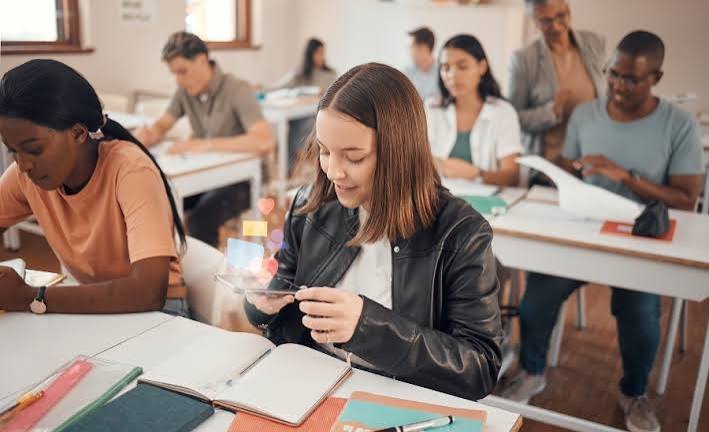
Ask almost any university student what they were doing the last time they should have been studying, and the answer is often the same. Scrolling. Watching. Posting. Liking. The social media has become so integrated in the day-to-day life of the student that the majority of students have just ceased to pay attention to how much time social media is actually eating up until a deadline is suddenly a few hours away and the work is nowhere near completion.
This is not a generational critique or a screen time lecture. It is a sincere examination of something that is literally impacting the academic performance of university students in the UK and the rest of the world – and something that needs to be discussed openly and in practical terms instead of being cast-off as merely a lack of willpower or self-discipline.
The Numbers Tell a Story Most Students Would Rather Not Think About
The studies carried out to investigate the use of social media by students consistently give numbers that are hard to ignore. Research in both UK and foreign universities indicates that the typical university student spends four to six hours on social media daily. It is not four to six hours of purposeful use – much of it is unconscious scrolling which the student did not intend, and which, after the fact, the student frequently cannot recollect very clearly.
Take that into consideration. An average university course suggests approximately ten hours of personal study each week. When a student is on social media five hours a day, they will be on their phone more often in every two days than they are on independent academic work in a whole week. This gap often contributes to the difference between the grade’s students are capable of achieving and the grades they actually receive.
It is not merely the time. What that time is replacing is it. Research suggests that even a brief phone check during a study session can significantly disrupt concentration, with many students taking considerable time to regain their previous level of focus. During a study period of 2 hours at 3 or 4 check-ins on the phone, a student might not actually get to the level of concentration that productive academic work needs.
How Social Media Affects Academic Performance Specifically
The consequences of social media distraction on university performance manifest themselves in a number of particular and objective ways that extend beyond the lack of time to study.
Poor reading comprehension and critical thinking. The social media trains the brain to think in brief bursts, fast, and visually stimulating. Academic reading that is long, journal articles, textbook chapters, case studies, etc. demand just the reverse type of attention. Students who put in much time on social media prior to or in the middle of the study term always report having a difficult time in concentrating on thick academic text over extended durations.
Poorer sleep quality. Even when the overall hours of sleep are the same, late-night use of social media is a significant disrupter of sleep quality in the majority of university students. Sleep deprivation has a direct negative effect on memory consolidation, problem solving capacity, and cognitive functioning the next day. The same essay that seemed impossible at 11PM, will seem impossible the following morning as well, not because of the essay but because of what occurred on the phone at midnight.
Increased anxiety and comparison stress. Social media is not only time consuming, but it is also a huge drain on the minds and even the emotions of most university students. Always being surrounded by other people and their well thought-out academic and social successes makes it like a low-level background noise that is always there at the back of the head, and it influences confidence, motivation, and the inability to sit down and concentrate on the work at hand without the chronic sense that you are not doing as well as others. Students Nursing, Accounting and even MBA assignment help is the reason why students have.
Procrastination loops. The ideal procrastination tool is social media as it has no limits. Always there is another video, another post, another notification. Students who spend time in the social media to evade the need to begin a challenging piece of writing rarely feel refreshed and prepared to begin after their scroll session – they tend to feel more fatigued, distracted, and demotivated than when they first reached their phone.
What the Research Says About Solutions That Actually Work
Social media distraction among university students has been a subject of academic research and student wellbeing professionals have been able to identify and recommend solutions to the problem in the past, and they are always practical and evidence-based solutions that actually work when students follow through.
Planned phone-free study sessions. The most reliable plan is to have designated time-limited phone-free study periods, usually 45 to 90 minutes long, with a brief planned break in between where phone use is acceptable. This can be easier to sustain with apps such as Forest, Focus at Will and the in-built Screen Time on the iOS and Android systems and especially at the initial stages when the habit is still being formed.
Notification management. The biggest trigger of impulsive use of social media is the turning off of all non-essential notifications at the time of study, which eliminates the first cause of this problem. The majority of the students look at their phone not because they wanted to open Instagram but because a notification was displayed and the habit to look at it overrode. Take away the stimulus and the reflex has nothing to react to.
Physical separation. It is easy and amazingly effective to keep your phone in a separate room when studying. It has been shown that having a smartphone on the desk, even with the phone face down and off, impairs the available cognitive capacity since a portion of the brain is still dedicated to the urge to pick it up.
Purposeful use of social media. In lieu of scrolling endlessly and indefinitely, students who establish a time and time frame with which they use social media in a day, and adhere to it, claim to use social media much less overall, and much less disruptively to academic activity. Intentional use is not as compulsive as compulsive use since it is not an action based on a habit.
Final Thoughts — The Phone is Not the Enemy, but Awareness Matters
Social media is here to stay. The platforms will become more advanced, the content will become more engaging, and the algorithms will become more effective at keeping the students longer at their screens. It is not the students who do not use social media at all who succeed in this setting, but only those who utilize social media deliberately, actively and guard their study time with the same seriousness that they would apply to their real academic work. Others find it easy to say, write my assignment for me and have it professionally done.
Minor modifications in the way you use your phone when studying can lead to surprisingly large changes in the way that you concentrate, the amount of work you produce, and, eventually, the grades. The realization that you are being influenced in some way to perform poorly is always the initial and the greatest step towards acting upon it.