Anthony Head: The Life, Legacy & Quiet Craft of Britain’s Most Beloved Character Actor
From Nescafé Gold Blend to the Hellmouth — how Anthony Stewart Head became one of television's most trusted presences across five decades on stage and screen.


*Disclaimer: We may earn a commission if you make a purchase through our affiliate links, at no extra cost to you.
⚡ Quick Facts: Anthony Head
Full Name
Anthony Stewart Head
Date of Birth
20 February 1954
Date of Death
5 June 2026 (aged 72)
Birthplace
Camden Town, London, England
Best Known For
Rupert Giles, Buffy the Vampire Slayer
Education
LAMDA (London Academy of Music and Dramatic Art)
Partner
Sarah Fisher (1982–2025, her death)
Children
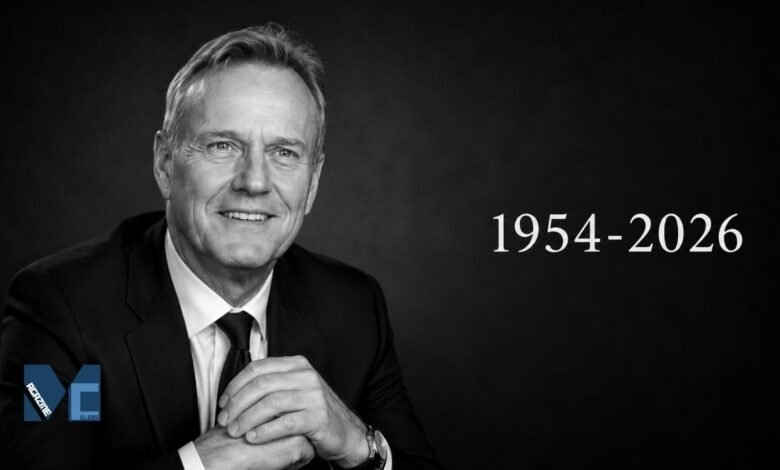
Anthony Stewart Head spent nearly fifty years giving audiences someone to trust. Whether he was wearing tweed and polishing spectacles in a California high school library, commanding a medieval court with barely contained fury, or glowering from the directors’ box of a fictional Premier League club, he brought to every role a particular quality that television writers prize above almost everything else: genuine authority worn lightly. He made it look natural. It wasn’t.
Head died on 5 June 2026, aged 72, from complications due to pneumonia, surrounded by family at his home. His daughters, actresses Emily and Daisy Head, confirmed the news in a statement that was measured and dignified — much like the man himself. “He loved his job very much, and he always considered himself incredibly lucky,” they said, “to have been able to work alongside such exceptionally talented people, in such wonderful productions, across a career that spanned several decades.” The words could have served as a capsule biography on their own.
To many British viewers of a certain age, Head was first encountered not on a stage or a screen but in a coffee commercial. The Nescafé Gold Blend advertisements of the 1980s — a slow-burn romance between two neighbours played out in episodic thirty-second instalments — turned him into what he later described as a household face. But that fame, pleasant as it was, never fully captured the range of a man trained in classical theatre, capable of singing, and as comfortable in a West End musical as in a network drama pilot shot in Los Angeles. He kept working for half a century. He kept being good at it.
Early Life & Biography
Anthony Stewart Head was born on 20 February 1954 in Camden Town, in the north of London. The family later moved to Hampton, near Richmond upon Thames, and it was there that he grew up — a southwest London suburb with good grammar schools, proximity to the river, and a certain quiet middle-class gentility that would, in time, inform at least one or two of his most famous screen characters.
Camden Town in the early 1950s was a working neighbourhood still finding its footing after the war, and the Head household was rather different from its surroundings. Both parents were involved in the arts. His father, Seafield Laurence Stewart Murray Head, born in 1919, was a documentary filmmaker and a co-founder of Verity Films. His mother was Helen Shingler, an actress who had appeared in British films during the 1940s and 1950s. The environment was not aggressively bohemian but it was, in every practical sense, creative. Books, films, and performance were simply part of the atmosphere.
Head attended Sunbury Grammar School, which gave him a solid academic foundation, before going on to train at the London Academy of Music and Dramatic Art — known universally as LAMDA. It was there that the technical work began in earnest: voice, movement, period style, the mechanics of projection and timing. He graduated into a theatre landscape that still valued those skills enormously.
Parents, Siblings & Family Background
The Head family’s creative lineage ran deeper than just Anthony’s immediate parents. His older brother, Murray Head, became a musician and actor of considerable reputation — originating the role of Judas on the concept album for Jesus Christ Superstar and later achieving international chart success in 1984 with “One Night in Bangkok,” drawn from the musical Chess. The two brothers would go on to appear in many of the same productions over the years, though reportedly never simultaneously — a coincidence of scheduling that became something of a family joke.
Their father Seafield died in March 2009. Their mother Helen Shingler, whose own film work had established her as a credible screen presence in post-war British cinema, was a formative figure in both sons’ artistic sensibilities. Anthony spoke warmly of his upbringing in various interviews, framing his entry into the profession less as an act of rebellion or ambition and more as the natural continuation of something the family simply did. Much like the way siblings who both build careers in entertainment often describe it — as inherited inclination rather than calculated choice.
Head is survived by his two daughters. Emily Head, born in 1988, is known to British audiences as Carli D’Amato in The Inbetweeners. Daisy Head, born in 1991, has established herself through roles in Shadow and Bone and Guilt. Both daughters followed their parents into acting, continuing a family tradition that now spans at least three generations.
Full Bio & Career Timeline
Head trained through the late 1970s and entered professional performance at a moment when British theatre — particularly the West End and the Royal National Theatre — was as competitive and rigorous as it has ever been. He was not an overnight success. He was something more durable: a technician who built credibility steadily, role by role, production by production.
Late 1970s
After graduating from LAMDA, Head lands his first significant break playing Jesus in a West End production of Godspell, establishing his musical theatre credentials early. He also appears as Joseph in Joseph and His Amazing Technicolor Dreamcoat at the Everyman Theatre and takes on the role of Dr. Frank N. Furter in a London stage production of The Rocky Horror Show.
1980
Head performs in a production of Shakespeare’s Julius Caesar at the Riverside Studios in London, playing Octavius and Artemidorus. The same year he meets Sarah Fisher, a theatre administrator at the National, while performing in Danton’s Death. They begin a relationship that will last over four decades.
Mid-1980s
Head begins appearing in the Nescafé Gold Blend television advertisements in the UK — a serial romantic narrative between neighbours that ran across multiple instalments over several years. The campaign makes him, as he later acknowledged, “a household face” across Britain. The equivalent US campaign, for Taster’s Choice, extends his commercial recognition to North American audiences.
Early–Mid 1990s
Head continues building a varied television CV in British productions, then begins pursuing opportunities in the United States. He appears in the Showtime film Royce (1994) and joins the cast of Fox’s science-fiction series VR.5 (1995), which is cancelled after one season. He also guest-stars in an episode of ABC’s NYPD Blue, establishing his presence with American network television.
1997–2003
Head is cast as Rupert Giles — librarian, Watcher, and moral compass — in Joss Whedon’s Buffy the Vampire Slayer on The WB. The show runs for seven seasons and becomes one of the defining cult television properties of its era. Head’s portrayal of the quietly formidable mentor earns him a Saturn Award nomination for Best Supporting Actor on Television in 2001. The role changes the trajectory of his career and introduces him to an international audience that would follow his work for decades.
2003–2006
Head returns to the UK and joins the recurring cast of BBC Three’s sketch comedy Little Britain, playing the Prime Minister. Simultaneously he maintains his theatre work and takes on the lead in BBC Radio 4’s acclaimed comedy series Cabin Pressure, voicing the character of Herc Shipwright — a role that cemented his reputation for intelligent comic timing and demonstrated that his distinctive baritone was as useful on radio as on television.
2008–2012
Head takes on the role of Uther Pendragon in the BBC fantasy series Merlin, playing the conflicted and often cold-hearted king of Camelot across four series. The show, aimed at a family audience, gives him a second major franchise role and introduces his work to a new generation of British viewers. He is also cast in the cult horror musical film Repo! The Genetic Opera (2008) alongside Paris Hilton and Sarah Brightman, as the morally complex Nathan Wallace — a performance that became something of a touchstone for fans of the genre.
2011
Head appears as Geoffrey Howe in The Iron Lady, the Oscar-winning biographical film starring Meryl Streep as Margaret Thatcher. The role is brief but precise — a good example of the kind of supporting work he performed throughout his career, where the quality of the characterisation exceeded what the screen time might suggest.
2020–2023
Head is cast as Rupert Mannion in the Apple TV+ comedy-drama Ted Lasso — the villainous former owner of AFC Richmond and embittered ex-husband of Rebecca Welton (Hannah Waddingham). The show becomes a global phenomenon, and Head’s performance as the slick, wounded antagonist earns renewed critical attention and introduces him to a fresh wave of international fans who had never encountered Rupert Giles.
💜 A Human Perspective
The final months of Anthony Head’s life carried a weight that is difficult to fully process. His partner of 37 years, Sarah Fisher — the woman he met backstage at the National Theatre in his late twenties and described simply as “my best friend as well as my partner” — died in December 2025, aged just 61, in what their daughters called an immensely shocking loss that came with very little warning. Anthony survived her by barely six months. He had spent the better part of four decades building a life with her at Tilley Farm, their animal sanctuary in Bath, and the loss of that grounding presence so close to his own end feels less like coincidence and more like something too private and too large for public commentary to properly reach. He was, by all accounts, a man who had found what he needed — and then lost it, just before the lights went out.
Relationships & Family Life
Anthony Head and Sarah Fisher’s relationship began around 1982, when he was performing at the National Theatre and she was working there as an administrator. He was 28. They never married — a detail occasionally noted by journalists, though neither of them seemed to consider it a gap in their arrangement. They had two daughters: Emily, born in 1988, and Daisy, born in 1991. Both became actresses.
The family settled in Bath, Somerset, where Sarah Fisher developed Tilley Farm into a registered animal sanctuary for horses, ponies and donkeys. She was a qualified animal behaviour counsellor who turned her passion into her life’s work. Head described their relationship with characteristic dry warmth. “There’s no secret to a long-lasting relationship,” he said in a 2010 interview with The Guardian, “although Sarah has said it’s that we spend an enormous amount of time apart.” He continued: “A sense of humour is of huge importance. It’s about tolerance and liking the person you’re with. I adore Sarah.”
Emily Head is best known to British audiences for playing Carli D’Amato in The Inbetweeners, the Channel 4 comedy. Daisy Head has built an international profile through her work in the Netflix fantasy series Shadow and Bone, among other projects. Both daughters followed their parents into performance — a third generation of a family whose relationship with the stage and screen goes back to the 1940s. The continuity is striking, and not accidental.
Sarah Fisher died in December 2025 at the age of 61. Anthony Head died the following June. Their daughters released both announcements publicly, in statements notable for their composure and their evident grief. The parallel nature of the two losses, separated by less than six months, was not lost on those who followed the family.
Public Image & Professional Reputation
Head occupied a particular space in British cultural life that is harder to define than it looks. He was not a matinée idol, not a household name in the tabloid sense, not a controversy generator. He was something rarer: a performer whose presence in a production was itself a kind of quality signal, a shorthand for the audience that whatever this was, it had been taken seriously.
His physical qualities helped. He was tall, with strong features and a naturally imposing posture. His voice — a deep, measured baritone — was used extensively in voiceover and radio work. But the qualities that made directors keep casting him were less photogenic: an ability to convey intelligence without condescension, authority without pomposity, and vulnerability without sentimentality. These are not common combinations.
Off screen, those who worked with him consistently described a professional who was well-prepared, generous to colleagues, and disinclined to drama of the off-set variety. He did not court controversy. He gave considered interviews. He spoke publicly about his belief in the spiritual and the unexplained — “I have a very open mind,” he told one interviewer, “I believe that there’s a spirit world. I believe that there’s a lot of stuff out there that we don’t know about” — but did so without grandstanding. He was, in the parlance of the industry, a safe pair of hands in the best possible sense: someone you could build a show around and trust to deliver.
His musical abilities — piano, guitar, a singing voice capable of genuine range — gave him a dimension that pure screen actors lack. He had played Jesus and Frank N. Furter and Dr. Nathan Wallace in musical productions. He had recorded original music. He appeared on stage in Chess and understood the discipline that musical theatre demands. This grounding in the rehearsal room and on the boards of a live stage gave him a technical confidence that translated well across media.
Financial Overview
Anthony Head was not a celebrity whose financial affairs attracted public scrutiny, and no verified figures relating to his earnings or personal wealth have been published by authoritative sources. Celebrity Net Worth, a US-based aggregator site, has estimated his net worth at approximately $3 million — a figure that has circulated widely since his death but which has not been confirmed by any primary source. The actual size of his estate has not been disclosed.
What can be said with reasonable confidence is that his income derived from several distinct streams: a long stage career with credits at major subsidised and commercial theatres; television work spanning British and American productions over nearly five decades; the Nescafé Gold Blend advertising campaign, which was among the most sustained and visible commercial partnerships in British advertising history; and a body of voice and radio work including BBC Radio 4’s Cabin Pressure and various audiobook narrations. His final major television role, in Ted Lasso on Apple TV+, came in the streaming era, where talent fees for established British actors with international recognition can be substantial — though no figures have been publicly confirmed.
📊 Estimated Career Income Sources (Approximate, Unverified)
Note: All income classifications above are indicative only. No verified financial data has been publicly disclosed. Figures from third-party sites have not been confirmed by the Head estate.
“Anthony Head’s career was a lesson in the long game — built not on celebrity, but on craft, credibility, and a refusal to coast. He found the best roles of his television life after the age of forty, and kept finding good ones until the very end.”
— AB Rehman, Celebrity Features Writer
Legacy & Final Years
In the years immediately preceding his death, Head had remained professionally active. His work in Ted Lasso — which concluded its third season in 2023 — had given him fresh visibility with global streaming audiences, and the show’s enormous success on Apple TV+ had renewed critical interest in the breadth of his career. He had also made appearances in Motherland, the BBC Two comedy, and continued to be associated with several projects across British television.
He lived in Bath, Somerset, at the farm that he and Sarah had built together into both a home and an animal sanctuary. The property, Tilley Farm, was closely associated with Sarah Fisher’s animal welfare work and became something of a defining domestic environment for the family — rural, purposeful, and some distance from the transactional world of the entertainment industry. After Sarah’s death in December 2025, he had barely six months before his own health gave way.
His daughters announced his death on 5 June 2026. The response from the entertainment industry was immediate and generous. Cast members from Buffy the Vampire Slayer, Merlin, Ted Lasso, and numerous other productions paid public tribute. The consensus was consistent: a consummate professional, a kind colleague, and a performer who made everyone around him better. These are not universal eulogies in an industry where such statements can feel formulaic. In this case, they were repeated too consistently, from too many independent sources, to be dismissed.
For British television specifically, the loss is significant. Head belonged to a generation of classically trained actors who could cross effortlessly between prestige drama, broad comedy, fantasy, and musical performance — and who did so without apparent effort, without visible strain, and without the kind of public persona that tends to get in the way of the work. His daughters, now both working actors in their own right, carry the tradition forward. His work on screen will, as they said, remain watchable for as long as the shows themselves survive.
✨ Anthony Head: Career Snapshot
Years Active
1977–2026
Screen Credits
98+ (IMDb)
Iconic TV Roles
Giles · Uther · Mannion
Training
LAMDA, London
❓ Frequently Asked Questions
How did Anthony Head die?
Anthony Head died on 5 June 2026, aged 72, from complications due to pneumonia. His daughters Emily and Daisy confirmed in a statement to the Press Association that he passed away peacefully at home, surrounded by his family.
What is Anthony Head best known for?
He is best known internationally for playing Rupert Giles, the librarian and Watcher, in Buffy the Vampire Slayer (1997–2003) on The WB. In the UK, he was also widely recognised for his role in the Nescafé Gold Blend advertising campaign in the 1980s, for playing Uther Pendragon in the BBC’s Merlin, and for Rupert Mannion in Ted Lasso (2020–2023).
Was Anthony Head related to Murray Head?
Yes. Murray Head is Anthony’s older brother. Murray originated the role of Judas on the Jesus Christ Superstar concept album and achieved chart success with “One Night in Bangkok” from the musical Chess. Both brothers had careers in entertainment, though they reportedly never appeared in the same production simultaneously.
Who are Anthony Head’s children?
Anthony Head had two daughters with his long-term partner Sarah Fisher: Emily Head (born 1988), known for The Inbetweeners, and Daisy Head (born 1991), known for Shadow and Bone and Guilt. Both are working actresses.
Where did Anthony Head train as an actor?
He attended Sunbury Grammar School before training at the London Academy of Music and Dramatic Art (LAMDA), one of the UK’s most respected drama conservatoires. He later built an extensive stage career that included productions at the Royal National Theatre.
Did Anthony Head’s daughters also act?
Yes. Both Emily and Daisy Head pursued acting careers. Emily appeared in The Inbetweeners and Waterloo Road, among other productions. Daisy has worked in both British and international television, with notable roles in Shadow and Bone and Guilt. They are the third generation of a performing family that includes their grandmother Helen Shingler and their uncle Murray Head.
Final Thoughts
There is a particular kind of career that gets undervalued while it is happening, and then properly assessed only in retrospect. Anthony Head’s fits that description. During the years when he was most visible — most present in living rooms and multiplexes and West End theatres — he was frequently described as a supporting actor, a character player, a reliable presence rather than a lead. This was accurate in a literal sense and misleading in every other way.
The roles that defined his public reputation — Giles, Uther, Mannion — were in each case the emotional and moral centres of their respective shows. The writers who created those characters needed someone who could carry thematic weight without announcing it, who could be simultaneously accessible and slightly out of reach, who made the audience feel safe while quietly unsettling them. Head did this across three different franchises, in three different decades, for three different generations of viewers.
That the last six months of his life were marked by the loss of the person closest to him gives the final chapter of his story an unavoidable pathos. It would be wrong to reduce a 72-year life to those six months. But it would also be dishonest to pretend they don’t matter. He was, by all available evidence, a man who had arranged his life around the things he loved — the work, the farm, the family, the woman he had known since his late twenties — and he lost the most important of those before he lost everything else.
His daughters said they would always consider it an honour to have witnessed the impact of his work. That is the right word. Not legend. Not giant. Impact. The quiet accumulation of performances that made audiences feel something, across five decades, in a career built on discipline and care. The obituaries will reach for bigger adjectives. The work itself does not need them.
Further reading on British entertainment figures and the families they leave behind: Coleen Rooney’s life story offers another portrait of a British public figure navigating the intersection of private family and public life. For those interested in how celebrity legacies pass between generations, the profiles of Lilly-Ella Gerrard and Lexie Gerrard — daughters of footballer Steven Gerrard — explore the same territory from a different angle.
📚 Sources & References
- IMDb – Anthony Head: Biography (Official Database)
- NBC News – Anthony Head, ‘Buffy the Vampire Slayer’ and ‘Ted Lasso’ actor, dies at 72 (June 5, 2026)
- Fox News – ‘Buffy the Vampire Slayer’ star Anthony Head dead at 72 from pneumonia (June 5, 2026)
- Hello Magazine – Anthony Head’s cause of death after he dies at 72
- Anthony Head Official Website – Biography
- Wikipedia – Anthony Head (cross-referenced with primary sources)
- TV Guide – Anthony Head: Biography & Credits
- Reality Tea – Anthony Head Dead at 72, cause of death (June 5, 2026)
About the Author
AB Rehman
Celebrity Features & Biography Writer
AB Rehman is a biography research and entertainment features writer contributing to MagazineCelebs.co.uk. His work focuses on the lives, legacies, and careers of public figures from British and international entertainment, drawing on verified public records, reputable publications, and official sources.
⚠️ Editorial Disclaimer
This article has been compiled using publicly available sources including official websites, reputable news publications, and verified databases. All factual claims have been cross-referenced where possible. Financial estimates attributed to third-party sources have not been independently verified and are presented with appropriate qualification. Where information could not be confirmed from a reliable primary source, this has been noted explicitly within the text. This article is intended for informational and editorial purposes only. MagazineCelebs.co.uk does not claim any affiliation with the subject or their estate.