
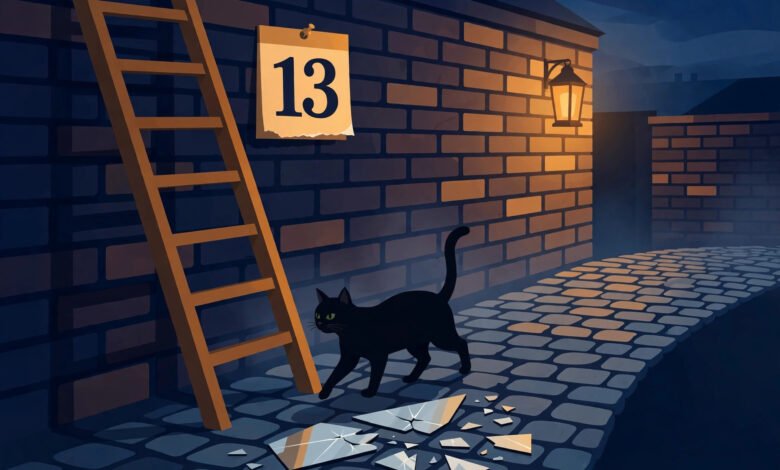
Friday the 13th November 2026: Why the Year’s Final Unlucky Date Has Everyone Talking


*Disclaimer: We may earn a commission if you make a purchase through our affiliate links, at no extra cost to you.
Friday the 13th lands on 13 November 2026, and it is the most searched-for phrase on Google in the United States today. It is the third Friday the 13th of 2026, after 13 February and 13 March, and it is the last one of the year. The date has fascinated and unsettled people for well over a century, even though researchers have found no clear evidence that it brings more bad luck than any other day.
The superstition is really two old fears joined together. Friday has carried a dark reputation in Christian tradition since the crucifixion, while the number 13 has been linked with misfortune since the Last Supper and an old Norse myth. The two did not join up as a single unlucky date until the 1800s, yet the idea is now so familiar that whole towns plan around it, airlines quietly skip row 13, and horror fans treat the day as a holiday of its own.
Friday the 13th November 2026 — Quick Reference Summary
| Detail | What we know |
|---|---|
| Date | Friday, 13 November 2026 |
| Position in 2026 | Third and final Friday the 13th of the year (after 13 February and 13 March) |
| Search interest | No. 1 trending search on Google in the United States on 13 November 2026 |
| Fear of the date | Paraskevidekatriaphobia, also called friggatriskaidekaphobia |
| Fear of the number 13 | Triskaidekaphobia |
| Earliest pairing | No record of Friday and 13 paired as unlucky before the 19th century |
| Famous film | Friday the 13th (1980), directed by Sean S. Cunningham |
| Franchise total | Twelve films, grossing over $468 million worldwide |
| Same pattern next due | The February–March–November trio last happened in 2015 and is not due again until 2037 |
Where the Fear of 13 Really Began
The unease around the number 13 is older than the date itself. In the story of the Last Supper, Jesus dined with his 12 disciples, making Judas Iscariot the thirteenth guest at the table, and Judas went on to betray him. Norse mythology tells a similar tale: at a dinner of 12 gods in Valhalla, the trickster Loki arrived uninvited as the thirteenth guest and arranged the death of the beloved god Balder.
Historians point out that neither story mentions a Friday. The number simply gathered a bad reputation of its own, helped by the contrast with 12, a number that appears in the months of the year, the signs of the zodiac and the apostles. Folklore historian Donald Dossey traces the unlucky reputation of 13 back to that Norse dinner, and the Old Farmer’s Almanac notes that the fear of Friday and the fear of 13 only combined into one superstition in the late 1800s.
Friday’s Own Dark Reputation
Friday has its own long history of suspicion. In Christian tradition the crucifixion took place on a Friday, and by the Middle Ages the day was widely seen as unlucky for starting journeys or new projects. In medieval Britain, Friday was traditionally execution day, which gave the weekday a grim association that lasted for centuries.
The name itself tells a gentler story. Friday comes from the Old English Frīġedæġ, or Frigg’s day, named for the Norse goddess Frigg, while the Romans called it dies Veneris, the day of Venus. Modern writers on the date’s history note that Friday was once a goddess’s day, and that its unlucky reputation arrived later, through religious tradition rather than through its name.
The Knights Templar and the 1307 Arrests
One of the most dramatic events tied to the date happened on Friday, 13 October 1307, when King Philip IV of France ordered the mass arrest of the Knights Templar. The wealthy military order was accused of blasphemy and other offences, and its leader, Jacques de Molay, was later burned at the stake in Paris.
The arrests were real, but historians are clear that the link between that day and the modern superstition is a much later story. No published work before the 19th century treats Friday the 13th as a date to fear, and the Templar connection was popularised long after the event itself. The date’s reputation owes far more to a 1907 novel, T. W. Lawson’s Friday, the Thirteenth, in which an unscrupulous broker uses the superstition to set off a Wall Street panic.
How the 1980 Film Turned a Date Into a Horror Brand
The superstition became a pop-culture fixture on 9 May 1980, when Sean S. Cunningham’s Friday the 13th opened in cinemas. Written by Victor Miller and released by Paramount Pictures, the low-budget slasher followed camp counsellors reopening Camp Crystal Lake, haunted by the drowning of a young boy named Jason Voorhees.
The film was made for roughly $550,000 and grossed nearly $60 million worldwide, launching a franchise of twelve films that have taken over $468 million at the box office. Jason Voorhees, the hockey-masked figure at the centre of the series, became one of horror’s most recognisable characters, even though the killer in the original film was his mother, Pamela Voorhees. The 2009 reboot, released on Friday, 13 February 2009, kept the series alive for a new generation, and a prequel series, Crystal Lake, is now in development.
The film’s shadow falls well beyond cinemas. Gothic styling has become a seasonal trend in its own right, and our look at Halloween jewellery trends shows how dark, dramatic looks now shape fashion well past October. The date itself has become a marketing moment too, with festivals and horror marathons timed to each occurrence.
What the Evidence Says About Bad Luck
For all the dread the date inspires, studies have consistently failed to find any increase in accidents, hospital admissions or disasters on Friday the 13th. Researchers who have examined insurance claims and hospital records report no clear pattern, and the fear itself has a clinical name: paraskevidekatriaphobia, from the Greek for Friday and thirteen.
That has not stopped the belief shaping real decisions. Buildings skip a thirteenth floor, airlines drop row 13 from seating plans, and some people still avoid travel or big decisions on the day. The superstition survives because it is a good story, passed down through folklore, novels and films, rather than because the calendar can be shown to be dangerous. This year’s final Friday the 13th is also a reminder of how rare the pattern is: 2026 is one of the few years with three of them, and the same February, March and November trio will not happen again until 2037.
FAQs: Friday the 13th November 2026
Why is Friday the 13th considered unlucky?
It combines two older superstitions: Friday’s association with the crucifixion and the number 13’s link to Judas as the thirteenth guest at the Last Supper and to Loki as the thirteenth guest in Norse myth. The two were first paired as one unlucky date in the 1800s.
How many Friday the 13ths are there in 2026?
Three: Friday, 13 February 2026, Friday, 13 March 2026, and Friday, 13 November 2026. The same trio last occurred in 2015 and will not happen again until 2037.
What is the fear of Friday the 13th called?
Paraskevidekatriaphobia, also known as friggatriskaidekaphobia. The fear of the number 13 alone is called triskaidekaphobia.
Did the Knights Templar arrests start the superstition?
No. The Templars were arrested on Friday, 13 October 1307, but historians say the link to the superstition is a much later invention. There is no record of Friday and 13 being paired as unlucky before the 19th century.
How many Friday the 13th films are there?
Twelve, from the 1980 original directed by Sean S. Cunningham to the 2009 reboot. Together they have grossed over $468 million worldwide, and the series also includes the Freddy vs. Jason crossover from 2003.
Is Friday the 13th actually more dangerous than other days?
Studies have found no consistent evidence of more accidents, hospital admissions or disasters on the date. The danger is a matter of folklore, not of measured risk.
Myth-busting: three claims about Friday the 13th that do not hold up
The superstition is ancient. It is not. The pairing of Friday and 13 as unlucky first appears in the 1800s, and its spread owes much to a 1907 novel and a 1980 horror film.
The Knights Templar started it. The 1307 arrests happened on a Friday the 13th, but the connection to the superstition was made centuries later. The event itself was about politics and debt, not about the calendar.
Jason Voorhees was the killer in the first film. He was not. The killer in the 1980 original was his mother, Pamela Voorhees. Jason became the series’ killer from the second film onwards.