
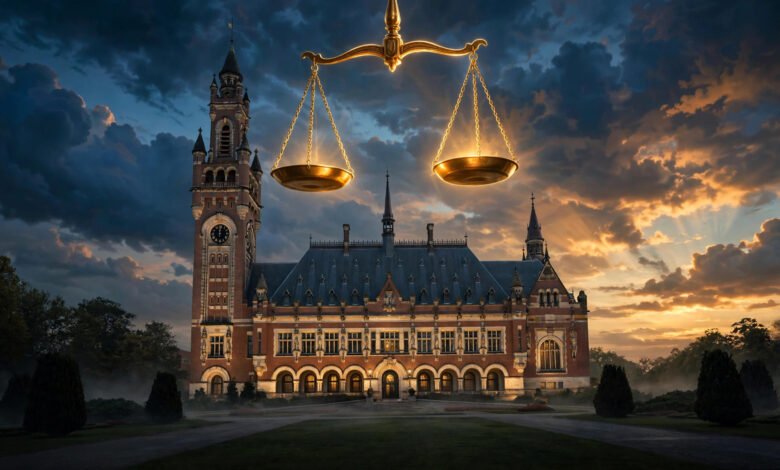

The International Court of Justice ruled on Thursday 19 November 2026 that Myanmar committed genocide against the Rohingya, in a landmark judgment delivered at the Peace Palace in The Hague. The court found by nine votes to six that Myanmar’s security forces acted with genocidal intent during the 2017 crackdown in northern Rakhine State.
It is the first time in the court’s 80-year history that a state has been found responsible for genocide. The ICJ Rohingya genocide ruling also ordered Myanmar to allow the safe and voluntary return of those who fled, and to provide reparations for its wrongful acts.
ICJ Rohingya Genocide Ruling — Quick Reference Summary
| Fact | Detail |
|---|---|
| Court | International Court of Justice (ICJ), The Hague |
| Date of judgment | Thursday 19 November 2026 |
| Decision | 9–6 that Myanmar committed genocide against the Rohingya in northern Rakhine State |
| Presiding judge | ICJ President Yuji Iwasawa |
| Case brought by | The Gambia, November 2019, under the 1948 Genocide Convention |
| Rohingya killed in 2017 | About 10,000, the court found |
| People who fled in 2017 | More than 730,000 to Bangladesh |
| Rohingya still displaced | More than 1.3 million, including 1.2 million in Cox’s Bazar camps (UN) |
| Orders | Safe and voluntary return, restitution of property, search for the disappeared, rehabilitation, protection from persecution |
| Appeal | None — ICJ judgments are final and binding |
What the World Court Decided in The Hague
ICJ President Yuji Iwasawa read the judgment over three hours in the court’s Great Hall of Justice. He said the court found that Myanmar’s security forces killed thousands of Rohingya civilians, committed widespread sexual violence, carried out extreme violence against children, and attacked fleeing Rohingya as they sought to escape to Bangladesh.
The judges concluded that the only reasonable inference from the evidence was that Myanmar’s forces intended to destroy a substantial part of the Rohingya minority. That finding of specific intent is the hardest part of any genocide case to prove, and the court had never before ruled that a state held it.
The 2017 Crackdown That Drove 730,000 People to Flee
The case turns on Myanmar’s military “clearance operations” in northern Rakhine State in 2017. More than 730,000 mainly Muslim Rohingya fled across the border into Bangladesh, joining a community that the United Nations says now numbers more than 1.3 million displaced people across South and Southeast Asia.
Rohingya refugees in the sprawling camps at Cox’s Bazar in Bangladesh watched the verdict live on a big screen. Many have waited almost a decade for any form of justice, and the judgment was the first time an international court had held a state responsible for genocide.
How The Gambia Brought Myanmar Before the Court
The Gambia, a predominantly Muslim West African nation, filed the case in November 2019. It accused Myanmar of breaching the 1948 Convention on the Prevention and Punishment of the Crime of Genocide, a treaty that allows any state party to bring a case against another it suspects of breaching it.
The Gambia asked the court to rule that Myanmar had breached the convention, order it to end illegal acts against the Rohingya, and ensure those responsible were punished. Eleven states later intervened in support of the case.
Myanmar argued that its 2017 campaign was a legitimate operation against insurgents, launched in response to attacks by fighters from the Arakan Rohingya Salvation Army (ARSA) on police posts. The court’s 15-judge panel rejected that defence.
Four Acts the Judges Said Proved Genocidal Intent
Al Jazeera’s correspondent in The Hague reported that the court established at least four genocidal acts. The first was the mass killing of civilians, with the court finding the estimate of about 10,000 Rohingya violently killed during the 2017 operations supported by the evidence.
The second was the forced displacement of hundreds of thousands of people. The third was serious bodily and mental harm inflicted on the group, including widespread sexual violence. The fourth was the prevention of births, with the court hearing that the Rohingya had long been treated as second-class citizens and forced to take part in a birth control programme.
The court also found that Myanmar should have known there was a risk of genocide when armed civilians took part in the military campaign. “Myanmar thus violated its obligation to prevent genocide,” the judgment said.
What the ICJ Rohingya Genocide Ruling Orders Myanmar to Do
Myanmar is now obliged to provide reparations and restitution as a result of its wrongful acts, Judge Iwasawa said. The court set out what appropriate restitution should include, starting with facilitating the safe and voluntary return of Rohingya refugees to their places of residence.
It also ordered the return or replacement of all collective property damaged in the campaign, and measures to facilitate the search for the disappeared and ensure proper burials. Myanmar must provide for the physical and psychological rehabilitation of those mentally injured, and ensure the population’s protection from persecution.
The court further called on Myanmar to provide assurances that it would not repeat such acts in the future. Human rights groups welcomed the ruling, with Amnesty International saying it hoped the judgment marked the beginning of a long overdue process of accountability in Myanmar.
Why the Ruling Still Faces an Enforcement Problem
ICJ judgments are final and legally binding, and cannot be appealed. But the court has no independent way to enforce its rulings beyond reporting non-compliance to the United Nations Security Council.
Myanmar’s military rulers have consistently denied that genocide was committed, and it remains to be seen whether they will comply with the orders. That gap between a binding judgment and real-world enforcement is now the central question, including whether the issue goes before the Security Council and whether sanctions or other remedies follow.
What the Verdict Means Beyond Myanmar
The decision is expected to reach far beyond Myanmar. It is only the fourth time since the Nazi Holocaust that an international court has ruled that the legal threshold to prove genocide has been met, and the first time the World Court itself has done so.
Lawyers are already watching what it means for South Africa’s 2023 case accusing Israel of genocide in Gaza, which is before the same court. Human Rights Watch called the ruling a critical milestone in the Rohingya’s long quest for justice, and long-awaited recognition of the suffering endured at the hands of Myanmar’s military.
Frequently Asked Questions
Did the ICJ rule that Myanmar committed genocide against the Rohingya?
Yes. On 19 November 2026 the International Court of Justice found by nine votes to six that Myanmar committed genocide against the Rohingya group in northern Rakhine State, in violation of its obligations under the 1948 Genocide Convention.
How many Rohingya were killed in 2017?
The court found that evidence supported the estimate of about 10,000 Rohingya violently killed during the 2017 military operations. More than 730,000 people fled to Bangladesh during the same crackdown.
Who brought the case against Myanmar?
The Gambia filed the case at the ICJ in November 2019, accusing Myanmar of breaching the Genocide Convention. Eleven states later intervened in the proceedings.
Can Myanmar appeal the ICJ ruling?
No. ICJ judgments are final and legally binding, with no right of appeal. However, the court has no independent enforcement mechanism, so compliance depends on political pressure, including through the UN Security Council.
What must Myanmar do now?
The court ordered Myanmar to facilitate the safe and voluntary return of Rohingya refugees, return or replace damaged collective property, help find the disappeared, provide physical and psychological rehabilitation, and protect the Rohingya from further persecution.