Robert Attenborough: The Scholar Son Who Chose Science Over the Spotlight
While his father's voice narrated the wonders of the natural world to billions, Robert Attenborough quietly built one of the most respected careers in biological anthropology — far from any camera.


*Disclaimer: We may earn a commission if you make a purchase through our affiliate links, at no extra cost to you.
⚡ Quick Facts: Robert Attenborough
Full Name
Robert David Attenborough
Born
August 1951 (age ~74)
Nationality
British
Profession
Biological Anthropologist, Academic
Father
Sir David Attenborough
Mother
Jane Elizabeth Ebsworth Oriel (d. 1997)
Institution (Primary)
Australian National University, Canberra
Current Affiliation
University of Cambridge (Senior Fellow)
There is a particular kind of courage in choosing obscurity when fame is, at least by association, readily available. Robert Attenborough — son of Sir David Attenborough, nephew of the late Oscar-winning filmmaker Sir Richard Attenborough, and grandson of the academic Frederick Attenborough — grew up inside one of Britain’s most publicly distinguished families. He could have leveraged that proximity in countless ways. Instead, he spent four decades scrutinising demographic patterns in Papua New Guinea, writing peer-reviewed papers on human population biology, and teaching students in Canberra and Cambridge who would never know him by anything other than his research.
That deliberate distance from public life is, in its own way, the most interesting thing about him. Robert Attenborough is not a recluse, nor someone who has retreated from consequence. He is a working scientist — verifiably affiliated with both the Australian National University and the University of Cambridge’s McDonald Institute for Archaeological Research — whose intellectual contributions stand on their own, entirely independent of his surname.
As Sir David Attenborough turned 100 in May 2026, the public’s curiosity about his family intensified. This biography draws only on verifiable academic records, Companies House filings, published research, and credible media reports. Where information is absent from the public record, this article says so plainly.
Early Life: Growing Up Attenborough
Robert David Attenborough was born in August 1951, roughly a year after his parents married. Companies House records list his birth month as August 1951, though the precise date has not been publicly disclosed. His father, David, was in the early years of a BBC career that would eventually reshape how the world understood the natural world. His mother, Jane Elizabeth Ebsworth Oriel, had married David in 1950 and would become the quiet anchor of a household that was, by all accounts, intellectually rich and often physically disrupted by David’s long filming expeditions.
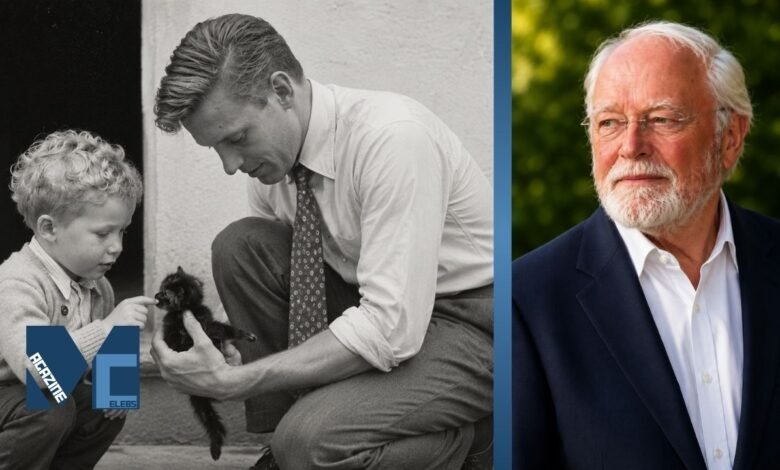
The family home offered an unusual childhood. David’s work with the BBC’s Zoo Quest series meant that exotic animals occasionally passed through domestic spaces. One of the most frequently recounted anecdotes involves a salamander David gifted Robert for his eighth birthday — a creature that unexpectedly gave birth in the boy’s hand. David described the moment in an interview with The Times, recalling how his son watched the event “with his eyes coming out of his head.” It is a small story, but a revealing one: the Attenborough home was a place where the natural world was not abstract. It was immediate, alive, and sometimes surprising.
Robert grew up alongside his younger sister Susan, and the two appear to have maintained a close bond throughout their lives. Beyond this, detailed information about Robert’s childhood years — schooling, formative friendships, precise locations — has not been publicly confirmed. What is clear is that the intellectual atmosphere of the household, combined with his father’s passion for biological inquiry, shaped Robert’s eventual direction in measurable ways.
Parents, Siblings & Family Background
Sir David Frederick Attenborough needs little introduction. Born on 8 May 1926 in Isleworth, Middlesex, he studied natural sciences at Clare College, Cambridge, before joining the BBC in 1952. He rose to become Controller of BBC Two and later Director of Programming for BBC Television, before stepping back into documentary-making to produce the landmark series that would define him globally: Life on Earth, The Blue Planet, Planet Earth, and dozens more. He is the only individual to have won BAFTA Awards in black-and-white, colour, high-definition, 3D and 4K formats.
Jane Elizabeth Ebsworth Oriel, Robert’s mother, married David in 1950. She was by most accounts a stabilising presence in a family whose public-facing member was frequently absent. David has spoken candidly about the weight of those absences. In a 2017 interview with Louis Theroux for the Radio Times, he said: “If I do have regrets, it is that when my children were the same age as your children, I was away for three months at a time.” Jane passed away in 1997, a loss that clearly marked the family deeply. Susan Attenborough, Robert’s younger sister, subsequently took on a more active role in supporting her father’s day-to-day life — helping with shopping, cooking and administrative matters, particularly as David moved into his nineties and beyond.
Robert’s uncle, Sir Richard Attenborough, was the celebrated actor, producer, and director best known for films including Gandhi (1982) and for his role as John Hammond in Jurassic Park (1993). Richard died in August 2014. Their grandfather, Frederick Attenborough, was principal of University College Leicester — an academic leader whose influence on the family’s orientation toward knowledge and public service is hard to overstate. The Attenborough dynasty, in other words, spans broadcasting, film, and academia across three generations. Robert chose the third branch.
Education
The specifics of Robert’s secondary schooling have not been confirmed by any verified public source. What is publicly known is his association with the University of Cambridge, which his father also attended. Several biographical profiles and academic directories note Robert’s education at Cambridge, though the precise degree, college, and graduation year have not been officially detailed in any source this research could verify. His father studied geology and zoology at Clare College; whether Robert followed a similar course at the same institution is not publicly confirmed.
What the academic record does confirm is that Robert entered the Australian National University in 1981, where he would spend more than three decades building a specialisation in biological anthropology. His entry into ANU suggests postgraduate training and likely some research background prior to 1981, but the precise educational pathway between Cambridge and Canberra has not been publicly documented.
Full Bio & Career Timeline
August 1951
Born in England to Sir David Attenborough and Jane Elizabeth Ebsworth Oriel. Exact birth date not publicly disclosed; Companies House records confirm the month and year.
1981
Joins the Australian National University in Canberra, taking up a position in the School of Archaeology and Anthropology. His research focus quickly centres on human population biology in Papua New Guinea.
1990s
Co-edits and contributes to Human Biology in Papua New Guinea: The Small Cosmos with Michael P. Alpers, a landmark academic volume on the demographics, nutrition, and health of Papua New Guinea populations.
18 February 1997
Appointed director of David Attenborough (Productions) Limited, a family company — a role confirmed by UK Companies House records. His mother Jane passes away the same year.
2005
Co-edits Papuan Pasts: Cultural, Linguistic and Biological Histories of Papuan-Speaking Peoples, published by Pacific Linguistics, Canberra — one of his most cited collaborative scholarly contributions.
2007
Contributes “Health changes in Papua New Guinea: from adaptation to double jeopardy?” to Health Change in the Asia-Pacific Region: Biocultural and Epidemiological Approaches, published by Cambridge University Press.
2013
Retires from his full-time Senior Lecturer position at ANU, transitioning to an Honorary Senior Lecturer role at the ANU College of Arts and Social Sciences, a position he retains in 2026.
2026
Listed as a Senior Fellow at the McDonald Institute for Archaeological Research, University of Cambridge. Continues to be cited in genomic and demographic studies of Pacific and Oceanian populations. Participates in family events marking Sir David Attenborough’s 100th birthday celebrations.
When Robert joined the Australian National University in 1981, he was stepping into one of the world’s most demanding areas of anthropological fieldwork. Papua New Guinea is, by most measures, the most linguistically and culturally diverse territory on the planet — home to over 800 distinct languages and thousands of distinct human communities, many of which had been largely inaccessible to outside researchers until the mid-twentieth century. Working there required more than academic rigour. It required long-term commitment, geographic stamina, and an ability to hold biological, demographic and social data in productive tension.
Robert spent more than three decades building expertise in this space. His published work — which includes at least 22 co-authored papers and edited volumes, with an h-index of 6 according to academic citation databases — examines how isolated human populations adapt to environments over millennia. His research draws on demography, nutritional science, human genetics, and evolutionary ecology. The seminal volume Human Biology in Papua New Guinea: The Small Cosmos, co-edited with Michael P. Alpers, brought together contributions from biologists, epidemiologists, and anthropologists, and remains a reference point in Pacific population studies. His 2007 chapter on health transitions in Papua New Guinea, published by Cambridge University Press, explored how populations move from traditional adaptive health patterns into the complex disease burdens associated with development — what he characterised as a shift from adaptation to “double jeopardy.”
His collaboration with international research teams extended beyond Papua New Guinea. Robert is listed as a co-author on a major genetic study examining population differentiation in Papua New Guinea, conducted alongside researchers from the Wellcome Trust Sanger Institute, the University of Oxford, and the University of Cambridge. That work, examining genome-wide single-nucleotide polymorphisms across 85 language groups, found genetic differentiation between Papua New Guinea groups far stronger than comparable regions in Eurasia — a finding that reshaped understanding of the relationship between agricultural transition and genetic diversity. The fact that Robert’s name appears on work of this scale is a reliable indicator of his standing in the field.
💜 A Human Perspective
Growing up as the son of a globally celebrated figure who was, by his own admission, absent for months at a time during his children’s formative years is not a neutral experience. David Attenborough spoke openly in later life about regretting those absences, and it would be overly neat to assume that such a childhood left no mark on Robert’s own choices — his preference for the anonymity of academic life, his long residence abroad in Australia, the quiet consistency of a research career far from London’s media culture. None of this is to suggest rupture or grievance, for which there is no public evidence whatsoever. It is simply to acknowledge that every biography exists inside a human context, and that Robert Attenborough’s deliberate privacy may reflect something more considered than mere shyness. The choice, sustained across decades, speaks for itself.
Relationships & Personal Life
No verified public source confirms details about Robert Attenborough’s marital status, partner, or children. He has maintained a personal life that is genuinely private — not in the cultivated, carefully managed way of a celebrity who controls their own narrative, but in the more complete sense of someone who has never sought a public narrative at all. This absence of personal disclosure extends to his family website, his institutional profiles at ANU and Cambridge, and all credible media coverage traced during the research for this article.
What is publicly visible is his professional relationship with his father’s production company. Robert has served as a director of David Attenborough (Productions) Limited since February 1997 — a role that places him in an administrative, rather than creative, capacity within the family’s professional infrastructure. The appointment likely reflects family trust and structural continuity as much as any specific business function.
His sister Susan, who is believed to be in her late sixties or early seventies, spent much of her adult career as a primary school headteacher. In more recent years she has taken on a supportive role in Sir David’s personal and professional life — helping with administrative matters, shopping, and the household management that became more pressing as her father entered his late nineties. The relationship between the two siblings has not been detailed in any verifiable public source, though accounts of the family consistently describe a close-knit dynamic.
Financial Overview
Robert Attenborough has spent the majority of his working life in salaried academic roles — first as a Senior Lecturer at ANU (from 1981 to 2013), and subsequently in honorary and fellowship capacities at ANU and Cambridge. Academic salaries in Australia and the United Kingdom are governed by publicly available pay scales, and senior lecturer remuneration at ANU during his tenure would have been consistent with mid-to-upper professional academic pay — substantial for an academic career, unremarkable by the standards of public celebrity.
His directorship of David Attenborough (Productions) Limited may involve some financial benefit, though Companies House records do not disclose director remuneration at that level of detail. Any financial benefit from his father’s extraordinary commercial success — through book royalties, documentary licensing, or estate planning — has not been publicly disclosed and would be inappropriate to speculate upon.
📊 Financial Context Overview (2026)
Verified financial data for Robert Attenborough has not been publicly disclosed. The above represents contextual framing only. No net worth estimate or income figure is confirmed.
“What makes Robert Attenborough genuinely interesting is not his father’s fame, but the quality of the choice he made — to build something painstaking, careful, and largely invisible to the general public, in a field where the work itself is the only measure that matters.”
— AB Rehman, Celebrity Features & Biography Research Writer
Public Image & Personality
Robert Attenborough has no public image to speak of — and that, in itself, is telling. In an era when the children of famous people routinely monetise their adjacency to celebrity through social media, brand partnerships or memoir, Robert has done nothing of the sort. There is no public social media presence, no book deal, no podcast. His institutional profiles at ANU and Cambridge are austere in the way that academic profiles tend to be: a list of publications, research interests, and affiliations. Photographs in the public domain are scarce.
Those who have encountered him through his father’s occasional references in interviews describe someone with the same curiosity that animates Sir David’s own work — methodical, genuinely interested in the question at hand, and not particularly impressed by status. A Canberra Times report from during his ANU years referred to Sir David visiting Canberra “to see his son Dr Robert Attenborough,” which speaks to a relationship maintained across hemispheres, and to Robert’s identity in Canberra as primarily a scientist rather than a celebrity’s child.
Where Is He Now? Current Status & Lifestyle
As of 2026, Robert Attenborough holds the position of Honorary Senior Lecturer at the ANU College of Arts and Social Sciences in Canberra, a role he has held since his formal retirement from full-time academic work in 2013. He simultaneously holds a Senior Fellowship at the McDonald Institute for Archaeological Research at the University of Cambridge, where his listed research expertise covers Human Population Biology and Health, and Human Evolutionary and Behavioural Ecology, with a geographical focus on Oceania and the Pacific.
His most recent published research continues to concentrate on health, nutrition, and demography in Papua New Guinea. He has also been involved in collaborative work applying genomic methods to historical and demographic questions, including — according to several credible academic and biographical sources — participation in broader genomic and evolutionary research projects. Whether he resides primarily in the United Kingdom or Australia at present has not been publicly confirmed.
✨ Robert Attenborough: Academic Snapshot (2026)
Primary Field
Biological Anthropology
Regional Specialism
Papua New Guinea & Pacific
Current Affiliations
ANU (Hon.) & Cambridge (Fellow)
Years in Academia
45+ years (1981–present)
Frequently Asked Questions
Who is Robert Attenborough?
Robert Attenborough is the son of Sir David Attenborough and the late Jane Elizabeth Ebsworth Oriel. Born in August 1951, he is a biological anthropologist who built his career at the Australian National University in Canberra and currently holds a Senior Fellowship at the McDonald Institute for Archaeological Research, University of Cambridge. His research focuses on human population biology, health, and demography, particularly in Papua New Guinea.
How old is Robert Attenborough?
Robert Attenborough was born in August 1951, making him approximately 74 years old as of mid-2026. His exact date of birth has not been publicly confirmed beyond the month and year recorded in UK Companies House records.
Does David Attenborough have children other than Robert?
Yes. Sir David Attenborough has two children: Robert and his younger sister Susan Attenborough. Susan worked for many years as a primary school headteacher and has in recent years taken on a supportive role in her father’s personal and professional life. Both children have maintained private lives largely away from public attention.
What did Robert Attenborough study and where did he work?
Robert specialised in biological anthropology with a focus on human population biology, health, and demography. He joined the Australian National University in 1981 and worked there as a Senior Lecturer in Bioanthropology until his formal retirement in 2013. He subsequently became an Honorary Senior Lecturer at ANU and a Senior Fellow at Cambridge’s McDonald Institute for Archaeological Research. His fieldwork was concentrated primarily in Papua New Guinea.
What is Robert Attenborough’s net worth?
Verified financial data for Robert Attenborough has not been publicly disclosed. He spent his career in salaried academic roles and no credible public source has published a verified net worth estimate. Any figures circulating online are speculative and should be treated with caution.
Is Robert Attenborough related to Richard Attenborough?
Yes. The late Sir Richard Attenborough — the Oscar-winning actor and director best known for Gandhi (1982) and Jurassic Park (1993) — was Robert’s uncle. Richard was Sir David Attenborough’s older brother. Richard passed away in August 2014.
Final Thoughts
The Attenborough name carries weight — cultural, scientific, cinematic. Frederick built an institution; David narrated the planet; Richard directed some of the twentieth century’s most enduring films. Robert Attenborough adds a quieter chapter to that inheritance: a career built on methodical inquiry, conducted largely in the southern hemisphere, aimed at understanding how isolated human communities survive, adapt, and change across generations. It is not the kind of work that generates biographical profiles or newspaper profiles while it is happening. It earns those only in retrospect, when someone wonders who the man was behind the famous father.
What the verified record reveals is a scientist of genuine standing. His publications appear in Cambridge University Press volumes and are cited in research produced at the Wellcome Trust Sanger Institute. His affiliations at ANU and Cambridge are publicly confirmed. His directorship at David Attenborough (Productions) Limited is a matter of official record. Beyond this, he has given the public very little — no interviews, no social media, no confessional memoir. That restraint, exercised deliberately across a lifetime, is its own kind of statement.
At seventy-four, with a landmark family birthday bringing renewed public attention to the Attenborough name, Robert remains exactly what he appears to have always chosen to be: a serious academic who happens to carry a remarkable surname, and who has never mistaken proximity to fame for the thing itself.
Sources & References
- Wikipedia — David Attenborough
- Australian National University — Dr Robert Attenborough, Researcher Profile
- ANU Reporter — Robert Attenborough
- ResearchGate — Robert Attenborough Publications
- Hello Magazine — David Attenborough’s Children: Robert and Susan
- The Sun — David Attenborough’s Children: Susan and Robert
- Elevate New — Robert Attenborough: The Private Scholar Behind a Famous Name
- UK Companies House — David Attenborough (Productions) Limited, Director Records
AB Rehman
Celebrity Features & Biography Research Writer
AB Rehman is a biography research writer specialising in public figures, family legacies, and the intersection of celebrity and private life. This article was researched using verified academic sources, official records, and credible media publications only.
📋 Editorial Disclaimer
This article is an independently researched biography based on publicly available information. All facts have been cross-referenced against verifiable sources including official academic profiles, Companies House records, Wikipedia, and credible media publications. Where information could not be confirmed, this article states so explicitly. No quotes have been fabricated, no financial figures invented, and no personal details assumed. This publication is not affiliated with Robert Attenborough, Sir David Attenborough, or any member of the Attenborough family. Published May 2026.