
A new account needs both a reason for someone to watch one post and a reason to recognize the next. Familiar video formats can provide a starting structure, while a recurring subject supplies the connection. Tools that help creators recreate viral videos with AI make it possible to explore that approach using their own images. Replacing a performer with a person, animated character, or animal can create a distinctive version when the new subject adds a clear twist.
Separate the Format from the Account Identity
The format might be a dance, reaction, entrance, or reveal. The account identity comes from the subject and situations you repeatedly choose.
For example, an original villain reacting dramatically to minor frustrations has a premise that can fit several formats. A collection of unrelated remakes has a weaker connection, even if each reference was popular elsewhere.
Write a sentence explaining what viewers can expect from the account. Use it to choose trends and decide which replacements belong. This makes account planning more focused without assuming any particular format guarantees growth.
A reference video or template provides the format; your replacement subject supplies the account’s recurring identity.
How to Plan a Focused Set of Adaptations
Step 1: Choose a Subject with Several Usable Situations
Pick a subject you can imagine reacting, celebrating, entering, and being surprised. A recurring person, an original cartoon figure, or an animal character can support different kinds of actions.
Prepare consistent reference images. Make sure the face, costume, markings, or other identifying details agree. This helps viewers recognize the subject and gives you stable criteria for reviewing each output.
Also define a personality. A subject who is cheerful, sleepy, overconfident, or easily startled gives you a more useful selection guide than appearance alone.
Step 2: Collect References by Their Main Event
Organize suitable references into categories such as reactions, celebrations, and entrances. Describe why each might work for your subject.
Look for clear visibility and a readable payoff. A scene that depends heavily on another person’s identity or an unexplained inside joke may be difficult to adapt meaningfully.
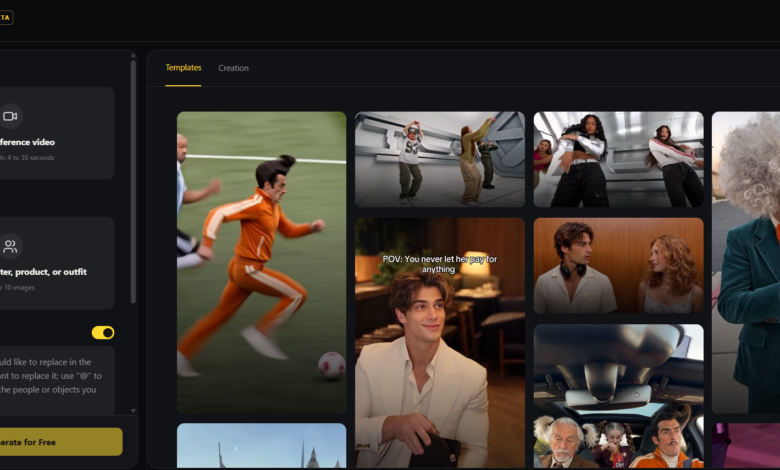
Use footage you have permission to adapt. Available templates can provide another starting point when their action already matches the intended situation.
Step 3: Generate a Version with a Specific Twist
For custom footage, upload the video and replacement images, then identify the performer to change. Describe the central movement and the recognizable features that matter.
For a template, select the format and upload your images. The built-in instructions let you proceed without composing a custom prompt.
Before generating, write the intended caption or setup. This checks whether the replacement has a clear role in the joke rather than leaving the scene’s meaning to be invented afterward.
Step 4: Review Comprehension and Visual Consistency
Watch at normal speed and ask whether someone unfamiliar with the project could explain the scene. Is the unusual casting visible? Does the reaction match the setup? Does the subject remain recognizable?
Inspect turns, fast gestures, and interactions separately. Animal and animated replacements may introduce visual challenges because their proportions differ from the reference performer.
Decide whether the next revision should change the source, images, prompt, or concept. Repeating the same attempt without identifying the problem does not make the process more focused.
Step 5: Publish for Discovery Without Losing the Premise
For TikTok and Instagram Reels, consider how a new viewer encounters the post without knowing the earlier clips. Use a short setup that explains the situation while keeping the central action visible.
Connect the caption, recurring subject, and profile description so they express the same idea. Review music and other added assets for the intended use. Where appropriate, make the creative AI adaptation clear rather than presenting it as footage of a real event.
Example Case: An Animated Villain Has Ordinary Problems
Imagine a fictional creator starting an account around an original villain whose daily life is disappointingly ordinary. This is a hypothetical account concept, not a reported growth case.
They choose a refusal format for a cancelled delivery, a celebration for finding a discount, and a dramatic entrance for arriving at the supermarket. Each adaptation gives an exaggerated character an everyday situation.
The creator reuses approved villain images and reviews the face, outfit, and main gesture in every output. Captions explain the specific problem without requiring viewers to remember previous posts.
If one adaptation is visually coherent but the joke needs a long explanation, the creator can revise the setup. If the joke is clear but the costume changes during movement, the visual inputs or reference may need attention. These are separate editorial decisions.
Let Responses Refine the Next Set
Build a simple idea queue organized around the recurring subject’s personality. For the villain account, categories might include small victories, embarrassing mistakes, and inconvenient surprises. Each category can connect to several suitable reference formats without changing what the account is about. This makes the next creative decision more concrete than asking which random trend to copy today.
Review the planned posts together before generating. If every setup communicates the same reaction, introduce a different situation or emotion. If the subjects and tones have no connection, return to the account premise and select the strongest thread.
Record which situations people understand and which kinds of follow-up ideas fit the account. Look for useful patterns across multiple posts rather than treating one result as proof of a formula.
To recreate viral videos with AI for a new account, combine a recognizable format with a consistent subject and a meaningful twist. That gives you an actionable way to develop posts while leaving audience growth as an outcome to observe, not a promise attached to the tool.