
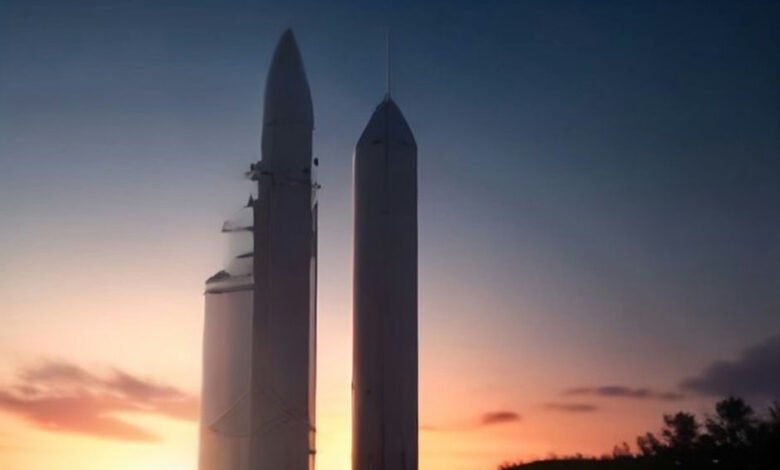
SpaceX Starship Flight 15: First-Ever Double Catch Attempt as World’s Biggest Rocket Launches Today


*Disclaimer: We may earn a commission if you make a purchase through our affiliate links, at no extra cost to you.
SpaceX is preparing to launch Starship on its 15th test flight on Friday, 13 November 2026, in the most ambitious mission the programme has attempted: catching both stages of the world’s biggest rocket back at the launch pad. The 407-foot (124-metre) vehicle is due to lift off from the company’s Starbase site in South Texas, with the launch window opening at 4:45 pm CT (2245 GMT) and running for 75 minutes.
The flight, known as Starship Flight 15, is the top trending search on Google in the United States today. It is the second Starship flight to carry a batch of operational Starlink satellites, and the first in which SpaceX will try to recover the upper-stage spacecraft on land rather than discarding it in the ocean.
| Flight | Starship Flight 15 (15th full-stack test flight since 2023) |
| Launch date | Friday, 13 November 2026 |
| Launch window | 4:45–6:00 pm CT (2245 GMT), 75 minutes |
| Launch site | Starbase, South Texas |
| Rocket height | 407 feet (124 metres) |
| Booster | Super Heavy Booster 22 |
| Spacecraft | Ship 42 |
| Payload | 26 Starlink V3 satellites |
| Main objective | First-ever catch of both rocket stages at the launch tower |
| Mission length | About 22.5 hours, 14 orbits |
| Ship catch attempt | Saturday, 14 November, around 2:45 pm CT |
| Launch licence | Not yet published by the FAA as of Friday morning |
| How to watch | Livestream on SpaceX’s website and X, from about 30 minutes before launch |
The Double Catch SpaceX Has Never Tried Before
SpaceX has caught the Super Heavy booster with the launch tower’s mechanical arms before, but it has never brought the Starship upper stage back to land. On Flight 15 it plans to do both. After liftoff, Booster 22 will return to Starbase about six and a half minutes later for a catch at Pad 2, while Ship 42 continues into orbit.
The second catch is the harder part. Ship 42 is expected to spend most of a day in space, completing about 14 orbits, before returning over land for its own catch attempt on Saturday afternoon. For that to happen, SpaceX must first move the booster off the launch pad to clear the way, because both stages are due to be caught at the same tower.
The attempt is a key test of Elon Musk’s plan to make Starship fully reusable. A rocket that can be caught, refuelled and flown again would cut the cost of each launch sharply and allow far more frequent flights. Musk has said he expects to reach a weekly launch cadence by the first half of 2027.
Flight 15 Timeline From Liftoff to Saturday’s Ship Catch
The launch window opens at 4:45 pm CT on Friday, with sunset at Starbase due around 5:42 pm CT, so a launch late in the window could produce a glowing plume effect in the evening sky. SpaceX’s livestream is due to begin about 30 minutes before liftoff and continue through the ship catch, with hours of live views from orbit in between.
The booster landing burn is expected at about six minutes and ten seconds into the flight, with the catch following roughly 25 seconds later. Ship 42 will then deploy its 26 Starlink V3 satellites and settle into orbit at an altitude of about 170 miles (275 kilometres). Its return is planned for around 2:45 pm CT on Saturday, about 22 and a half hours after launch.
Backup launch opportunities run from 14 to 20 November in the same time slot, if Friday’s attempt is delayed. Road closures around Starbase are in place for both Friday and Saturday.
26 Starlink Satellites and the Longest Starship Mission Yet
Flight 15 will be Starship’s longest mission to date if it goes to plan. The 26 next-generation Starlink V3 satellites are the second operational batch the rocket has carried, following Flight 14 on 28 September 2026, when Starship reached orbit for the first time.
The satellites sit closer to Earth than earlier Starlink craft and are designed to serve customers with faster connections. Their deployment is the commercial heart of the mission: Starlink is the revenue engine funding Starship’s development, and each flight that carries a full load of satellites moves the constellation closer to its planned size.
Ship 42 carries one lighter detail. The words “Don’t Panic” were spotted on the upper stage after it was moved to the launch pad on 12 November, a reference to The Hitchhiker’s Guide to the Galaxy that has become a running joke in SpaceX’s test programme.
The Licence Question Hanging Over the Launch
One uncertainty remains. As of Friday morning, SpaceX had not received a launch licence from the United States Federal Aviation Administration, according to Reuters, and the agency had not yet published an updated licence for the flight. SpaceX was still working towards a Friday launch, but the licence is a hard requirement: without it, the rocket cannot legally leave the pad.
The launch caps a week in which technology has dominated the news, from Microsoft’s global Outlook outage on Thursday to today’s rocket test. For SpaceX, the stakes are practical as well as symbolic. The company has said it could begin launching Starship from a new Florida launch pad by the end of 2026, and a successful double catch would strengthen the case for the higher flight rate that plan needs.
Why Full Reusability Matters for the Moon and Mars
Starship is being developed as a fully reusable transport system, and NASA plans to use a version of it as the lunar lander for its Artemis missions returning astronauts to the Moon. Musk’s longer-term ambition is crewed trips to Mars, which would be impossible at today’s launch costs without reusing both stages of every rocket.
SpaceX, which Musk founded in 2002, has built its reputation on landing and reusing Falcon 9 boosters. Starship is the same idea taken to its limit: a vehicle taller than the Statue of Liberty, with both stages recovered by giant mechanical arms known as chopsticks. Elon Musk’s mother Maye Musk has spoken about the drive behind her son’s companies, but the engineering case stands on its own: reuse is what turns a rocket from a single-use firework into an airline.
If Friday’s double catch works, Starship will have cleared its biggest remaining technical hurdle. If either stage is lost, the flight will still return data on the new V3 spacecraft and the Starlink deployment, and SpaceX’s record is to fly again quickly. Either way, the result will shape how fast the world’s biggest rocket moves from test flights to routine service.
Frequently Asked Questions About SpaceX Starship Flight 15
Q: When is SpaceX Starship Flight 15 launching?
A: The launch window opens at 4:45 pm CT (2245 GMT) on Friday, 13 November 2026, and runs for 75 minutes. The launch is from SpaceX’s Starbase site in South Texas.
Q: What is the double catch attempt?
A: SpaceX will try to catch both stages of Starship at the launch tower: the Super Heavy booster about six and a half minutes after liftoff, and the Ship 42 spacecraft after about 22.5 hours in orbit, on Saturday afternoon. Catching both stages has never been done before.
Q: How many satellites will Starship Flight 15 carry?
A: Ship 42 will deploy 26 Starlink V3 satellites into orbit. It is the second Starship flight to carry an operational batch of Starlink satellites, after Flight 14 in September 2026.
Q: Has SpaceX received a launch licence for Flight 15?
A: As of Friday morning, 13 November, the FAA had not yet published an updated launch licence for the flight, according to Reuters. SpaceX was still working towards a Friday launch, with backup dates from 14 to 20 November.
Q: How can I watch Starship Flight 15?
A: SpaceX will livestream the launch on its website and on X, starting about 30 minutes before liftoff, with coverage continuing through the ship catch.
Q: Why does the double catch matter?
A: Recovering both stages would prove Starship can be fully reused, cutting launch costs and enabling far more frequent flights. NASA plans to use Starship as the lunar lander for Artemis Moon missions, and Musk wants it for crewed Mars trips.