
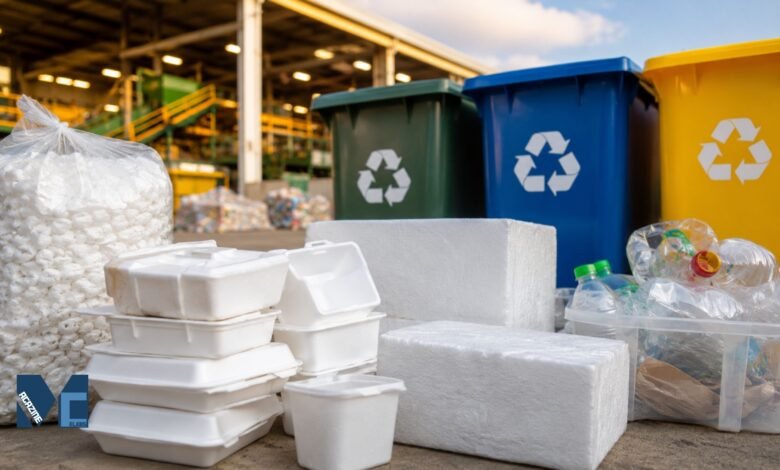
Is Styrofoam Recyclable? The Truth About Foam Recycling in the United States
Styrofoam is technically recyclable in some circumstances, but most curbside recycling programs in the United States do not accept it. Understanding the difference between recyclable and actually recycled is the key to disposing of foam responsibly.

*Disclaimer: We may earn a commission if you make a purchase through our affiliate links, at no extra cost to you.
📋 Quick Facts
Material Type
Expanded Polystyrene (EPS)
Technically Recyclable
Yes
Accepted Curbside
Usually No
Common Use
Packaging & Food Containers
Resin Code
#6 Plastic
Main Challenge
Low Density
EPA Position
Limited Recycling Access
Best Disposal Method
Specialized Foam Collection
Is Styrofoam recyclable? The short answer is yes—but only in a technical sense. Most Styrofoam products are made from expanded polystyrene (EPS), a plastic material that can be processed and turned into new products. The problem is that most municipal recycling programs across the United States do not accept Styrofoam in curbside bins because it is lightweight, bulky, expensive to transport, and easily contaminated by food residue.
For many Americans, this creates confusion. A material may be recyclable in theory yet still end up in a landfill because the local recycling infrastructure does not support it. Understanding that distinction helps consumers make better choices about packaging, takeout containers, shipping materials, and household waste.
The debate around foam packaging also reflects a broader conversation about sustainability. Similar questions arise when people investigate the environmental impact of products ranging from food items such as what is a truffle sourcing to workplace products discussed in guides like what is a riser desk. Consumers increasingly want to know not only what a product is made from, but what happens after they throw it away.
What Is Styrofoam and Why Is It So Common?
One of the biggest misconceptions surrounding Styrofoam is that people use the word to describe almost every type of white foam packaging. Technically, “Styrofoam” is a trademarked insulation product originally developed by Dow Chemical. Most disposable foam cups, food trays, coolers, and protective packaging are actually expanded polystyrene, commonly abbreviated as EPS.
EPS became popular because it is inexpensive, lightweight, moisture resistant, and highly effective at cushioning fragile items. Electronics manufacturers, furniture companies, food distributors, and shipping firms have relied on it for decades. Its low production cost helped it become one of the most recognizable packaging materials in the world.
Yet those same qualities create waste-management challenges. EPS contains a large volume of air—often more than 90 percent of its structure. This means recycling trucks can fill quickly while collecting relatively little material by weight. Transportation and processing costs frequently exceed the value of the recovered plastic.
The Origins of Foam Recycling Programs
Modern foam recycling efforts emerged as municipalities and environmental organizations recognized the growing volume of plastic waste entering landfills. Industry groups such as the Foodservice Packaging Institute and various regional recycling coalitions began promoting collection programs capable of densifying EPS before transport.
The process generally involves compacting foam into dense blocks, dramatically reducing its volume. Those blocks can then be shipped economically to manufacturers that convert the material into picture frames, molding products, insulation components, and other plastic goods.
Although these programs have expanded in some states, availability remains uneven. Residents often need to search for dedicated drop-off centers rather than relying on standard household recycling collection.
What Is Styrofoam? (Quick Answer)
Styrofoam and expanded polystyrene foam are lightweight plastic materials made primarily from petroleum-based polystyrene. While the material can be recycled through specialized facilities, most curbside recycling programs in the United States do not accept it due to transportation costs, contamination issues, and limited processing infrastructure.
Timeline: Key Milestones
1941
Polystyrene foam technologies begin expanding into commercial applications.
1950s
Foam packaging gains popularity across consumer and industrial markets.
1980s
Communities begin examining recycling options for expanded polystyrene.
2000s
Dedicated densification and foam recovery programs expand in several U.S. states.
2020s
Growing public focus on packaging waste increases interest in foam alternatives and recycling access.
💜 Why This Matters
A foam coffee cup used for ten minutes can remain in the environment for decades if it is not properly managed. For consumers, the issue is not simply recycling; it is understanding how everyday purchasing decisions shape waste streams. When people discover that something marked as recyclable is rarely recycled in practice, it highlights the gap between environmental intention and real-world infrastructure. That gap affects communities, local governments, businesses, and ultimately the landscapes where waste ends up.
Why Most Recycling Programs Reject Styrofoam
Many people assume that if a product is made of plastic, it belongs in a recycling bin. Expanded polystyrene challenges that assumption. Recycling facilities, known as Material Recovery Facilities (MRFs), are designed to process large volumes of commonly accepted materials such as cardboard, aluminum cans, steel containers, and certain plastic bottles. Foam packaging behaves differently inside these systems.
Because EPS is extremely light, sorting equipment can struggle to separate it efficiently. Pieces may break apart during processing, contaminate other recyclable materials, or become difficult to transport economically. Recycling operators often report that a truckload of loose foam contains surprisingly little usable plastic by weight.
Contamination is another major obstacle. Food containers stained with grease, sauces, or beverages can reduce recycling quality. Once contaminated, many foam products become unsuitable for cost-effective recycling. This is one reason why clean packaging foam from electronics shipments is more likely to be accepted than used takeout containers.
The challenge is similar to waste-management issues discussed in consumer-focused articles such as how to check transmission fluid, where proper disposal matters as much as product use. Materials require specific handling procedures, and convenience often determines whether those procedures are followed.
How Styrofoam Recycling Actually Works
When a recycling program does accept foam, the material generally undergoes a multi-stage process designed to reduce volume and recover usable plastic resin.
The first stage involves collection and inspection. Foam must usually be clean, dry, and free from labels, tape, food residue, or mixed materials. Collection centers may reject contaminated loads because cleaning costs can outweigh recycling value.
After inspection, the foam is fed into densification equipment. Densifiers compress large volumes of EPS into compact blocks. This step dramatically lowers transportation costs because thousands of pounds of loose foam can be condensed into manageable units.
The resulting plastic material can then be sold to manufacturers. Recycled polystyrene may be transformed into picture frames, molding products, architectural trim, insulation materials, office supplies, and certain packaging components. In some cases, the recovered resin re-enters manufacturing supply chains rather than becoming consumer-facing products.
Advances in processing technology continue to improve recovery efficiency, though access remains inconsistent across the United States. Some states support broader collection networks while others offer few options beyond landfill disposal.
Environmental Impact of Foam Packaging
Environmental concerns surrounding expanded polystyrene extend beyond recycling rates. Because foam products are lightweight, they can easily become litter when not properly contained. Wind can carry fragments into waterways, parks, and coastal environments where cleanup becomes difficult.
Unlike organic materials, polystyrene does not biodegrade in a conventional sense. Instead, it gradually breaks into smaller fragments over time. Environmental researchers often focus on how plastic fragmentation contributes to broader concerns surrounding microplastic pollution.
The U.S. Environmental Protection Agency has repeatedly emphasized waste reduction and responsible materials management as priorities. While recycling remains important, the EPA’s waste-management hierarchy places source reduction and reuse ahead of recycling whenever possible.
That approach encourages consumers to consider alternatives such as reusable containers, refillable products, or packaging systems designed to generate less waste from the start.
Public awareness of product life cycles has expanded significantly during the last decade. Readers interested in broader educational explainers often explore guides such as what is colegia and what is TTRS, reflecting a wider interest in understanding how systems work behind the scenes. Recycling infrastructure is another example of a system that many people use without fully seeing its complexity.
What Should Consumers Do Instead?
For most households, the best strategy starts with checking local recycling guidelines. Municipal programs vary significantly. A foam container accepted in one county may be rejected just a few miles away.
If local recycling is unavailable, consumers can search for specialized drop-off locations. Several communities partner with private recyclers that accept clean packaging foam, protective shipping materials, and certain foam coolers.
Reducing foam use where practical can also have a measurable impact. Many retailers now offer paper-based protective packaging, molded fiber inserts, reusable shipping containers, and recyclable cardboard alternatives. Businesses have increasingly adopted these materials in response to consumer demand and regulatory changes.
Another practical step involves reusing foam packaging before disposal. Packing materials from electronics shipments can often be saved for future moves, storage projects, or shipping needs. Extending a product’s useful life helps reduce waste even when recycling options are limited.
Bans, Regulations, and Industry Responses
Several cities and states have implemented restrictions on specific foam products, particularly single-use food-service containers. Policymakers often argue that low recycling rates and litter concerns justify limiting their use in restaurants, events, and retail environments.
Industry groups have responded by supporting expanded collection infrastructure, investing in densification technology, and promoting recycling partnerships. Manufacturers frequently point out that expanded polystyrene requires relatively little raw material compared with heavier packaging alternatives, creating a complex environmental debate rather than a simple yes-or-no question.
The future of foam packaging will likely depend on a combination of improved recycling systems, alternative materials, regulatory changes, and consumer behavior. No single solution has emerged as universally accepted across all markets.
Current discussions resemble broader sustainability conversations occurring across industries—from consumer goods and transportation to workplace products such as those discussed in riser desk guides. The common challenge is balancing convenience, affordability, performance, and environmental responsibility.
📊 Key Recycling Factors
Note: These indicators are editorial interpretations based on public recycling guidance, EPA materials-management resources, and industry recycling practices. Actual recycling access varies by municipality.
“The most environmentally responsible item is often the one that never becomes waste in the first place. Recycling matters, but reducing unnecessary packaging can matter even more.”
— AB Rehman, Senior Features & Research Writer
Where Things Stand Now
As of 2026, Styrofoam recycling remains a patchwork system across the United States. While some cities and counties provide access to dedicated collection programs, most households still cannot place expanded polystyrene foam into standard curbside recycling bins. The situation has improved compared with previous decades, but access remains uneven.
Technology continues to evolve. More recycling operators are investing in densifiers capable of compressing foam into dense blocks suitable for transportation and resale. Industry organizations have also expanded educational campaigns to help consumers understand the difference between recyclable materials and materials that are actually accepted by local programs.
Meanwhile, many businesses are experimenting with alternative packaging materials. Corrugated cardboard, molded pulp, paper-based inserts, and reusable shipping systems have gained popularity in sectors ranging from e-commerce to food delivery. These changes are driven by a combination of environmental concerns, corporate sustainability goals, and consumer expectations.
For consumers, the most important takeaway remains practical rather than political: check local recycling rules before placing foam into a recycling bin. Wish-cycling—placing questionable items into recycling containers in the hope they can be processed—can create contamination problems that affect entire recycling streams.
✨ Styrofoam Recycling — At a Glance
Material
Expanded Polystyrene
Plastic Code
#6
Typical Collection
Drop-Off Programs
Consumer Verdict
Check Local Rules First
❓ Frequently Asked Questions
Can Styrofoam go in the recycling bin?
Usually not. Most curbside recycling programs in the United States do not accept expanded polystyrene foam. Consumers should check local recycling guidelines because acceptance varies by municipality and recycling facility.
Why is Styrofoam difficult to recycle?
Styrofoam is lightweight, bulky, and often contaminated by food or labels. These factors make transportation and processing expensive compared with many other recyclable materials.
Is Styrofoam biodegradable?
No. Expanded polystyrene does not biodegrade in the same way organic materials do. Instead, it gradually breaks into smaller plastic fragments over long periods.
Where can I recycle Styrofoam near me?
The best option is to contact your local waste-management department or search for EPS recycling drop-off centers. Some packaging retailers, transfer stations, and specialized recycling companies accept clean foam materials.
Can Styrofoam be reused?
Yes. Packaging inserts, shipping blocks, coolers, and protective foam can often be reused for storage, moving, shipping, and household projects. Reuse extends the material’s useful life before disposal becomes necessary.
What is the best alternative to Styrofoam?
The answer depends on the application. Paper-based packaging, molded fiber products, reusable containers, recyclable cardboard, and compostable food-service materials are among the most common alternatives currently available.
Final Thoughts
The question “is Styrofoam recyclable” sounds simple, yet the real answer depends on infrastructure rather than chemistry. Expanded polystyrene can be recycled, but the majority of American households still lack convenient access to programs capable of processing it. That distinction explains why so many consumers feel confused when they discover that a technically recyclable material often ends up outside traditional recycling systems.
The most responsible approach is practical rather than ideological. Before throwing foam into a recycling bin, verify local acceptance rules. If a dedicated foam recycling program exists in your area, take advantage of it. If not, consider reusing packaging materials whenever possible and choosing products that use less problematic packaging.
As recycling technology improves and public awareness grows, opportunities for foam recovery may continue expanding. Until then, informed disposal decisions remain one of the simplest ways consumers can reduce waste and support more effective resource management.
📚 Sources & References
-
U.S. Environmental Protection Agency — How Do I Recycle Common Recyclables?
-
U.S. EPA — Facts and Figures About Materials, Waste and Recycling
-
City of Kirkland — Styrofoam Recycling Information
-
Earth911 Recycling Directory
-
Foodservice Packaging Institute Resources
All sources verified at time of publication. Links subject to change.
AB Rehman
Senior Features & Research Writer
AB Rehman is a features and research writer covering consumer education, sustainability, environmental topics, and practical explainers. His work focuses on separating verified fact from common misconceptions, using primary sources, government publications, and reputable institutional research to create accurate and accessible long-form content.
⚠️ Editorial Disclaimer
This article is intended for informational purposes only. Recycling regulations, municipal collection programs, and waste-management policies vary by location and may change over time. Readers should consult local authorities or waste-management providers for the most current guidance. Information has been compiled from publicly available sources believed to be reliable at the time of publication.