
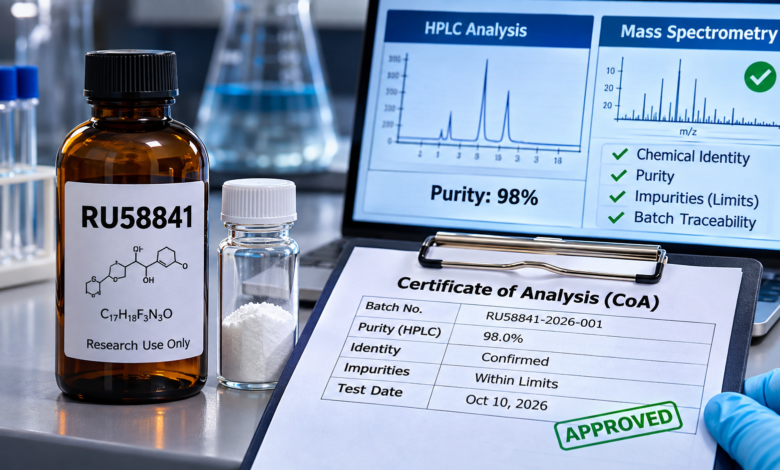
Evaluate RU58841 Product Specifications Through Batch Records And Analytical Testing


*Disclaimer: We may earn a commission if you make a purchase through our affiliate links, at no extra cost to you.
A product specification has value only when evidence supports each claim. For anyone researching buy ru58841 uk, batch traceability and laboratory documentation provide important information about chemical identity, reported purity, and manufacturing consistency. However, analytical quality does not establish medical safety. RU58841 remains an unapproved compound, and its long term effects in humans remain uncertain.
Batch Records Establish Product Traceability
Batch records connect a material to its production history. These documents identify the batch number, recorded processing steps, and quality checks. A matching identifier links laboratory findings to a specific lot. Without that connection, even a credible report may not describe the material being examined.
Useful records should identify the manufacturer and testing date. Missing signatures, unexplained amendments, or inconsistent identifiers weaken confidence. Traceability matters because results from one batch cannot automatically validate another.
Chemical Identity Requires Analytical Evidence
A label alone cannot establish chemical identity. Laboratory methods provide evidence about a sample’s composition. High performance liquid chromatography (HPLC) separates components, helping analysts assess purity and detect certain impurities. Mass spectrometry can provide additional evidence about molecular identity.
However, no single result answers every quality question. A reported purity percentage does not establish the absence of every contaminant. Method suitability, reference standards, and complete reporting also affect interpretation.
What Should A Certificate Include?
A certificate of analysis (CoA) summarizes testing for an identified batch. Its value depends on clear specifications, actual results, and identifiable methods. When reviewing documents associated with buy ru58841 uk, the distinction between reported findings and independently verified results is essential.
A credible report should provide:
- A traceable batch identification number.
- Chemical identity and applicable acceptance criteria.
- Measured purity with the testing method.
- Impurity results and relevant detection limits.
- Laboratory identification and report dates.
A certificate remains evidence, not a safety guarantee.
Do Testing Methods Reveal Every Impurity?
Different analytical methods answer different questions. HPLC can reveal separated components, while mass spectrometry supports structural identification. Gas chromatography can assess suitable volatile compounds, including certain residual solvents. Elemental analysis can investigate specified metals.
No method detects every possible contaminant. Therefore, a report must identify its analytical scope. An untested substance cannot be declared absent merely because other measurements passed.
Finished Formulations Need Separate Verification
Raw material results cannot establish the quality of a finished solution. Solvents, excipients, concentration, and processing introduce additional variables. A powder report does not verify the final formulation’s composition, stability, or microbiological quality.
Relevant checks depend on the product’s intended research application. Documentation should distinguish source material testing from finished product testing. This separation prevents unsupported claims about concentration or consistency.
Storage Records Preserve Analytical Meaning
Chemical measurements describe a sample at a particular time. Storage conditions can affect stability, especially when light, moisture, or temperature exposure matters. Reviewers should examine packaging details, storage instructions, and available stability evidence.
A useful documentation checklist includes:
- Recorded storage conditions match stated requirements.
- Packaging protects against relevant environmental exposure.
- Retest dates have a documented basis.
- Stability findings identify tested conditions and timepoints.
A retest date alone does not prove stability. Supporting data must justify conclusions about material quality over time.
Batch Evidence Cannot Establish Clinical Safety
RU58841 has not been established as safe or effective for human treatment. Available clinical safety information remains limited, and long term effects are uncertain. Potential concerns include skin irritation and systemic exposure.
Consequently, laboratory purity cannot establish a safe human dose or demonstrate effectiveness against hair loss. Regulatory review considers evidence beyond chemical analysis, including safety and efficacy. These distinctions matter when interpreting supplier documentation or research claims.
A precise distinction separates chemical evidence from medical assurance. For example, an HPLC purity result of 98% describes a specific analytical finding, not a validated treatment. That difference becomes critical when laboratory documents influence decisions involving human health.
FAQs
What is a batch record?
A batch record documents a material’s production history, identifiers, processing steps, and quality checks. It supports traceability and accountability.
What does HPLC purity indicate?
HPLC estimates the proportion of measured components under specified conditions. Results depend on method suitability and do not prove complete contaminant absence.
Does a certificate guarantee product safety?
No. A certificate reports selected analytical findings. It cannot establish clinical safety, effectiveness, or suitability for human use.
Why does batch identification matter?
A batch number connects laboratory results to a particular lot. Without a reliable match, reported findings may not represent the material supplied.
For more latest stories and updates, visit VA Magazine.