
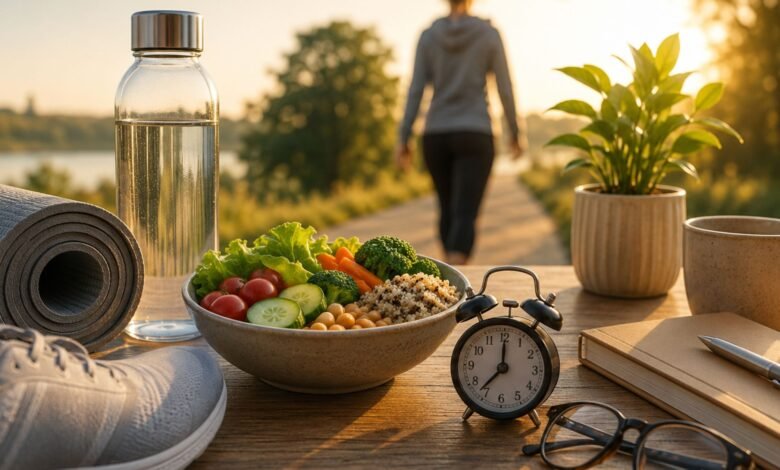
How Small Daily Habits Are Shaping Healthier, Happier Lives in Your 40s and Beyond


*Disclaimer: We may earn a commission if you make a purchase through our affiliate links, at no extra cost to you.
Turning 40 often brings a quiet shift in how people think about their bodies and their time. The big dramatic health overhauls that worked in your twenties, like crash diets or all-or-nothing gym routines, tend to lose their appeal. What replaces them is something steadier: small, repeatable habits that fit into ordinary days without asking for too much. Research on ageing well keeps pointing to the same idea. It is not one big change that keeps people healthy and content in midlife, but a collection of small choices made consistently over time.
Why Small Habits Work Better Than Big Overhauls
Most people who try to transform their health overnight burn out within weeks. The habit sticks when it is small enough to survive a busy week, a bad mood, or a late night. A ten-minute walk after dinner is easier to keep up than an hour at the gym you dread. Drinking a glass of water before your morning coffee is easier to remember than a strict eight-glasses-a-day rule. These tiny actions matter because they compound. A habit repeated daily for a year adds up to real change, even when each individual instance feels too small to count.
This is especially true in your 40s and beyond, when the body starts giving different feedback than it did before. Recovery after exercise takes longer. Sleep quality can shift. Eyesight, joints, and energy levels all begin to ask for a bit more attention. The people who feel best in this decade are usually not the ones doing the most, but the ones doing a little, regularly, without skipping too many days.
Movement That Fits Real Life
Exercise advice aimed at younger adults often assumes free time that many people in their 40s simply do not have between work, family, and everything else. The habits that actually last tend to be woven into the day rather than bolted onto it. Taking the stairs instead of the lift, parking further from the entrance, stretching while the kettle boils. None of these look impressive, but done daily they protect mobility and strength for years.
Strength training deserves a specific mention here, since muscle mass naturally declines with age if it is not actively maintained. Two short sessions a week, even with light weights or resistance bands at home, can slow this decline noticeably. The goal is not to look different in the mirror. It is to still be able to carry the shopping, get up off the floor easily, and move through daily life without strain a decade from now.
Sleep and Stress: The Habits Nobody Talks About Enough
Sleep hygiene rarely gets the same attention as diet and exercise, yet it affects nearly everything else. A consistent bedtime, less screen time in the hour before sleep, and a cooler, darker room all make a measurable difference to sleep quality in midlife. Poor sleep in your 40s does not just make you tired. It affects mood, memory, appetite, and how well your body handles stress the next day.
Stress management habits matter just as much. This does not have to mean meditation retreats or expensive therapy, although both can help. Sometimes it is as simple as five minutes of quiet before checking your phone in the morning, or a short walk outside during a hard day at work. The people who handle midlife stress well are usually not avoiding stress altogether. They have built small recovery habits into their routine so stress does not accumulate unchecked.
Everyday Health Checks People Tend to Skip
Alongside the bigger habits, this decade is also when small maintenance checks start paying off. Dental checkups, blood pressure monitoring, and eye tests all become more important as the body changes with age. Vision in particular shifts for many people in their 40s, often through presbyopia, which makes it harder to focus on close-up tasks like reading or phone screens.
This is where a practical daily habit can make a real difference to comfort and confidence. Many people in this age group start needing correction for both distance and close-up vision at the same time, and switching between two pairs of glasses throughout the day gets old fast. For anyone who prefers not to wear glasses at all, varifocal contact lenses offer a way to handle both distance and near vision with a single lens, which fits neatly into a routine built around convenience rather than constant adjustment. Multifocal lenses work by correcting for several focal points at once, so reading a menu and then looking across the room does not require swapping eyewear or squinting to adjust.
For those exploring multifocal contact lenses UK opticians recommend, it is worth having an eye test to confirm the right prescription and lens type, since needs vary depending on the exact stage of presbyopia. Contacts for multifocal correction have improved significantly in comfort and clarity over recent years, making them a realistic daily habit rather than an occasional workaround. Anyone weighing up a varifocal contact lens against separate reading and distance glasses might find that the simplicity of one lens type suits a busier lifestyle better.
Building Habits That Actually Last
The common thread across movement, sleep, stress, and vision care is consistency over intensity. None of these habits require dramatic effort. What they require is repetition, and repetition is only possible when the habit is small enough to survive a difficult day. Stacking a new habit onto an existing one, like stretching while the coffee brews or reviewing the day’s priorities during the commute, makes it far more likely to stick.
By the time small habits like these have been repeated for a year, they rarely feel like effort anymore. They become part of how the day naturally unfolds. That is really the point of building healthy habits in your 40s and beyond. It is not about becoming a different person overnight. It is about making the version of daily life you already have a little easier, a little more comfortable, and a little more sustainable for the years ahead.