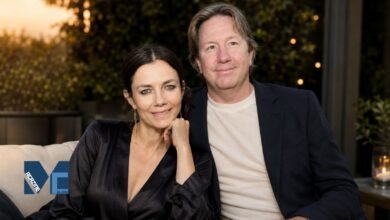
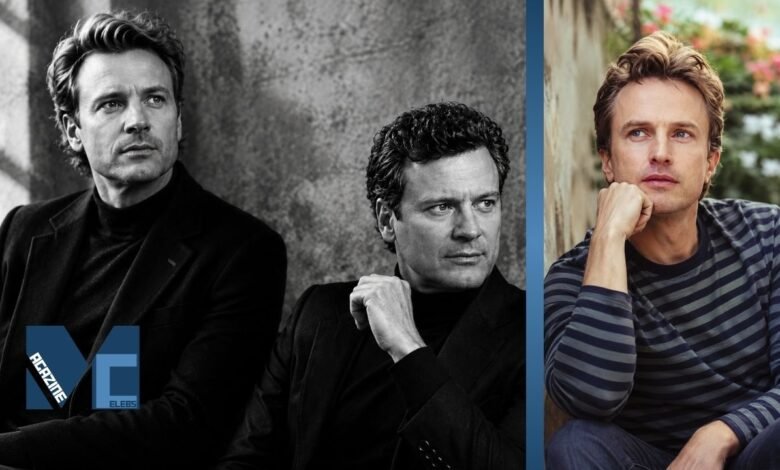
Jonathan Firth: The Complete Biography of Colin Firth’s Talented Younger Brother
From Shakespeare stages to BBC period dramas, Jonathan Firth has built a distinguished acting career entirely on his own terms — stepping well beyond his famous surname.


*Disclaimer: We may earn a commission if you make a purchase through our affiliate links, at no extra cost to you.
⚡ Quick Facts: Jonathan Firth
Full Name
Jonathan Stephen Firth
Date of Birth
6 April 1967
Age (2026)
59 Years Old
Birthplace
Brentwood, Essex, England
Profession
Actor, Audiobook Narrator
Education
Central School of Speech & Drama
Famous Sibling
Colin Firth (Actor)
Current Residence
Islington, North London
Jonathan Stephen Firth, born on 6 April 1967 in Brentwood, Essex, is an English actor best known for his prominent roles in British period television dramas including Middlemarch (1994), Far from the Madding Crowd (1998), and Victoria & Albert (2001). The younger brother of Academy Award-winning actor Colin Firth, Jonathan has built a prolific and respected career in British theatre, television, and film that spans over three decades — entirely on his own considerable merit.
Trained at the prestigious Central School of Speech and Drama in London, Jonathan graduated in 1989 and quickly established himself as one of the more nuanced character actors working in British period drama. His career ranges from Shakespeare on stage with the Royal Shakespeare Company to audiobook narrations for the BBC, demonstrating a versatility that few actors in his generation can match.
While the Firth surname inevitably draws comparisons, those who have followed Jonathan’s work closely know he is no understudy. His performances are marked by emotional intelligence, careful physicality, and an instinct for complex, morally layered characters — qualities that have kept him steadily employed across multiple decades in a notoriously competitive industry.
Early Life & Biography
Jonathan Firth was born on 6 April 1967 in Brentwood, Essex, England — a market town in the county of Essex, roughly 25 miles east of central London. He was the third and youngest child of David Norman Lewis Firth and Shirley Jean (née Rolles) Firth, both of whom were academics with deep roots in religious education and international missionary work.
His early childhood was anything but stationary. The family had previously lived in Billericay before settling in Brentwood, and when Jonathan was approximately five years old, the entire family relocated to St. Louis, Missouri in the United States for a year, owing to his parents’ academic and professional commitments. That early exposure to life outside England — however brief — likely contributed to the worldly quality that would later distinguish his performances.
Upon returning to England, the Firths settled in Winchester, Hampshire, a cathedral city in southern England with a rich historical identity. Winchester would become the formative backdrop of Jonathan’s adolescence. He attended Peter Symonds College in Winchester for his sixth-form education before going on to pursue formal actor training in London.
Winchester’s cultural environment — its historic architecture, proximity to the arts, and the academic atmosphere cultivated by both his parents — appears to have planted the seeds of Jonathan’s artistic temperament early. It is also worth noting that his older brother Colin was already developing his own theatrical ambitions during the same period, meaning that acting was not a foreign concept in the Firth household; it was, in many ways, the family language.
Parents, Siblings & Family Background
The Firth family background is one of the more fascinating in contemporary British acting, rooted in faith, academia, and cross-cultural experience. Jonathan’s father, David Norman Lewis Firth, was a history lecturer at King Alfred’s College in Winchester (now the University of Winchester). He also served as an education officer for the Nigerian Government, reflecting a career that blended academic rigour with international public service.
His mother, Shirley Jean Firth (née Rolles), was a comparative religion lecturer at the same institution — a subject that sits at the crossroads of philosophy, history, and culture. Both of Jonathan’s parents were children of Methodist missionaries who had worked in India, meaning the family had a generational connection to religious service and global mobility that was genuinely unusual for a mid-twentieth century English household.
This heritage is significant context. Growing up in a home shaped by academic inquiry, religious pluralism, and international experience would naturally foster a certain intellectual openness — precisely the quality that allows an actor to inhabit characters from distant eras and vastly different worldviews with credibility.
Jonathan is the younger brother of Colin Andrew Firth, born 10 September 1960, who would go on to win the Academy Award for Best Actor for his portrayal of King George VI in The King’s Speech (2010). The seven-year age gap between them meant their careers developed along parallel but independent tracks. He also has a sister, Kate Firth, who works as a voice coach — meaning all three Firth siblings pursued professions centred on performance, voice, and expression, a remarkable coincidence that points unmistakably toward the household they grew up in.
One notable trivia detail that perfectly illustrates the family’s theatrical symmetry: both Jonathan and Colin have each played a Prince Albert of the British Royal Family on screen. Jonathan portrayed Prince Albert, the Prince Consort to Queen Victoria in the BBC’s Victoria & Albert (2001), while Colin later played Prince Albert who became King George VI in The King’s Speech (2010) — the former being the great-grandfather and namesake of the latter.
Full Bio & Career Timeline
1967
Born on 6 April in Brentwood, Essex, England, the youngest child of academic parents David and Shirley Firth. Grows up in Winchester, Hampshire, following the family’s return from a year in St. Louis, Missouri.
1989
Graduates from the Central School of Speech and Drama in London — one of the UK’s most prestigious conservatoires — and begins building his professional acting career. His flatmate during this period was fellow actor Rufus Sewell.
1992
Receives his first major television role as Linton Heathcliff in the ITV adaptation of Emily Brontë’s Wuthering Heights, introducing him to a wider British audience and establishing his aptitude for classic literary adaptations.
1994
Delivers a breakthrough performance as Fred Vincy in the acclaimed BBC mini-series Middlemarch, adapted from George Eliot’s novel. That same year, tours with the Royal Shakespeare Company and makes his RSC debut as Henry VI, aged twenty-seven.
1998
Earns a BAFTA nomination for Best Actor for his complex portrayal of Sergeant Troy in the television remake of Thomas Hardy’s Far from the Madding Crowd, marking a high point in his critical recognition.
2001
Takes on the iconic role of Prince Albert, the Prince Consort to Queen Victoria, in the sweeping BBC mini-series Victoria & Albert, one of the most high-profile productions of his career.
2003
Appears in the BBC dramatised documentary Pompeii: The Last Day and portrays Cardinal Aleander in the film Luther, for which he receives the CFT Excellence Award for Best Actor in a Motion Picture.
2006–2010
Creates the recurring role of Søren in the romantic fantasy franchise The Prince and Me, bringing an international dimension to his career and reaching a younger global audience.
2013–Present
Continues a steady stream of guest appearances in beloved British series including Father Brown (2013) and expands his audiobook narration work through BBC Audiobooks and Audible, cementing a respected legacy in long-form storytelling.
💜 A Human Perspective
Building a career in acting is difficult for anyone; building one in the shadow of a globally famous sibling requires an additional layer of self-assurance. Jonathan Firth has navigated that particular challenge with quiet dignity, allowing his body of work to speak for itself without either trading on the family name or distancing from it. Over more than three decades, he has accumulated a portfolio that most character actors would consider a full and rewarding career — from Shakespeare at the RSC to narrating Proust for the BBC. The industry’s consistent re-casting of him in period dramas and literary adaptations speaks not to nepotism, but to a reputation built one careful, committed performance at a time.
Education & Training
Before his professional career began, Jonathan followed his sixth-form studies at Peter Symonds College in Winchester — a well-regarded further education college in Hampshire — with formal actor training at the Central School of Speech and Drama in London, from which he graduated in 1989. The Central School, located in Swiss Cottage, North London, is one of the UK’s most prestigious drama conservatoires and has produced generations of distinguished British stage and screen talent.
His time at drama school evidently laid the technical and intellectual groundwork for what would become a career defined by classical discipline. The school’s rigorous training in voice, movement, and text analysis translates visibly into the quality of precision Jonathan has brought to period roles requiring authentic period speech and physical restraint.
During his time as a student, Jonathan reportedly shared a flat with actor Rufus Sewell — himself a highly regarded performer who would go on to appear in productions including Dark City, The Man in the High Castle, and The Diplomat. The pairing of two future leading actors as flatmates is a detail that speaks to the calibre of talent passing through British drama training in the late 1980s.
Television Career & Notable Roles
Jonathan Firth’s television work reads like a greatest hits of British period drama. His early career was defined by prestige BBC and ITV productions, and his facility with classical material — whether Brontë, Hardy, Eliot, or Tolstoy — made him a natural fit for the kind of literary adaptations that dominated British screens through the 1990s and 2000s.
His role as Linton Heathcliff in Wuthering Heights (1992) announced his arrival on British television. Two years later, his portrayal of the charming but flawed Fred Vincy in the landmark BBC adaptation of George Eliot’s Middlemarch (1994) brought him to the attention of critics and casting directors across the industry. Middlemarch was a critically celebrated production that attracted enormous audiences and remains one of the finest adaptations of Victorian fiction ever produced for British television.
The role that perhaps best showcases the full range of Jonathan’s talent is Sergeant Troy in the 1998 television film adaptation of Thomas Hardy’s Far from the Madding Crowd. Troy is a morally ambiguous, dangerously charming soldier whose appeal and recklessness drive the narrative — a role requiring both physical magnetism and psychological depth. His performance earned him a nomination for best actor, marking the critical peak of his television career in that era.
His portrayal of Prince Albert in the BBC’s Victoria & Albert (2001) was another milestone: a high-budget, emotionally demanding role opposite Victoria Hamilton that required him to carry the emotional weight of a royal love story across multiple episodes. Also notable are his appearances as Lord Byron in Highlander: The Series (1997), as Lord Arthur Goring in An Ideal Husband (2000), and as Joshua in the biblical drama In the Beginning (2000).
Beyond the period drama canon, Jonathan demonstrated range through guest appearances in enduring British procedural series including Agatha Christie’s Poirot, Inspector Morse, Midsomer Murders, Holby City, and Father Brown. He also appeared in the American series Ghost Whisperer (2006) and, more recently, in the Netflix miniseries Anatomy of a Scandal (2022), in which he played Richard — demonstrating continued relevance in contemporary productions.
📺 Career Output & Media Profile Overview
Stage Work & the Royal Shakespeare Company
Jonathan’s theatrical roots run deep. After graduating from drama school, he pursued stage work with the commitment of an actor who genuinely loves the craft rather than merely using theatre as a stepping stone. His tour with the Royal Shakespeare Company saw him debut in the title role of Henry VI (1994) at the age of twenty-seven — a substantial and demanding role in one of Shakespeare’s most politically complex history plays.
The RSC is not an institution that casts on the basis of celebrity connections; it demands technical mastery, vocal discipline, and stamina. Jonathan’s inclusion in that company places him in a lineage of serious British stage actors whose craft was forged in classical repertory rather than soap opera or reality television.
His stage career, while less publicly documented than his television work, forms the invisible backbone of his performance quality. The control, the stillness, the ability to carry weight without visible effort — these are all qualities instilled by serious stage training and repertory experience, and they are precisely what makes his screen performances so compelling in period material.
Audiobook Narration Career
One of the lesser-discussed but genuinely impressive dimensions of Jonathan Firth’s career is his body of work as an audiobook narrator. His voice — trained at one of England’s foremost drama schools and refined through decades of stage and screen work — is exceptionally well-suited to the long-form demands of literary narration.
His narration credits include a remarkable range of canonical titles. For BBC Audiobooks, he narrated Leo Tolstoy’s War and Peace (1997), William Shakespeare’s Julius Caesar (1999), Shakespeare’s Twelfth Night (2005), and Marcel Proust’s In Search of Lost Time (2009) — the latter an especially formidable undertaking given the novel’s extraordinary length and stylistic complexity.
He also narrated James Herbert’s Nobody True (2007) and Sepulchre (2008), bringing the same dramatic precision to genre fiction as he had to the literary classics. More recently, his involvement in the Audible Original production of The Waringham Chronicles, Volume 1: The Runaway (2019–2020), alongside actors including Miriam Margolyes and Philip Franks, was praised by listeners for his ability to sustain emotional engagement across an eleven-hour ensemble narration.
This dimension of his career is a natural extension of his theatrical discipline. Narrating audiobooks — particularly of the literary classics — requires exactly the kind of technical vocal control, interpretive intelligence, and long-form endurance that separates a trained classical actor from a television personality.
Jonathan Firth’s career is a masterclass in sustained professional credibility. In an industry that frequently rewards spectacle and personal brand over craft, his three-decade run of quality character work across theatre, television, film, and audio narration stands as a quiet but powerful argument for what serious training and genuine commitment to the work can achieve.
— AB Rehman, Editorial Analysis
Where Is Jonathan Firth Now? Current Life & Status
As of 2026, Jonathan Firth is publicly known to reside in Islington, North London — a neighbourhood long associated with writers, artists, and theatre practitioners, and well-positioned for easy access to the cultural institutions of central London. He has served as a director in the freehold company for his building since 2020, a detail that suggests a settled, community-oriented domestic life.
Jonathan has consistently maintained a low public profile with respect to his personal relationships and private life. His marital status and family details have not been publicly disclosed, and he appears to prefer keeping that dimension of his life entirely separate from his professional identity. This is a deliberate choice that commands respect in an era when celebrity culture demands transparency as a condition of public relevance.
Professionally, he remains active. His recent involvement in the Netflix miniseries Anatomy of a Scandal (2022) demonstrated continued engagement with contemporary productions, while his audiobook work through Audible keeps him creatively occupied in a medium that suits his particular gifts. He continues to appear in popular British television series, maintaining the professional consistency that has defined his career from its earliest stages.
His net worth has not been publicly disclosed, and no credible verified figure exists in the public domain. As an actor working primarily in British television and theatre — sectors not known for generating the headline-level earnings of Hollywood productions — it would be inaccurate and irresponsible to speculate. His financial details remain private.
✨ Jonathan Firth Career Snapshot
Career Span
1989 – Present (35+ Years)
Primary Genre
British Period Drama
Theatre Background
Royal Shakespeare Company
Award Recognition
CFT Best Actor (2003); BAFTA Nom.
❓ Frequently Asked Questions
Who is Jonathan Firth?
Jonathan Stephen Firth (born 6 April 1967) is an English actor and audiobook narrator, best known for his roles in Middlemarch (1994), Far from the Madding Crowd (1998), and Victoria & Albert (2001). He is the younger brother of Academy Award-winning actor Colin Firth and has built a distinguished career in British period drama, theatre, and literary narration spanning over three decades.
How old is Jonathan Firth?
Jonathan Firth was born on 6 April 1967, making him 59 years old as of 2026. He is seven years younger than his brother Colin Firth, who was born on 10 September 1960.
What is Jonathan Firth’s relationship to Colin Firth?
Jonathan Firth is the younger brother of Colin Firth. Both are English actors who trained at prominent London drama schools and have built careers in British film and television. They also share a remarkable coincidence: both have played a Prince Albert of the British Royal Family on screen — Jonathan as Queen Victoria’s Prince Consort in Victoria & Albert (2001), and Colin as Prince Albert who became King George VI in The King’s Speech (2010).
Where did Jonathan Firth go to drama school?
Jonathan Firth trained at the Central School of Speech and Drama in London, graduating in 1989. He also attended Peter Symonds College in Winchester for his sixth-form education prior to drama school.
What are Jonathan Firth’s most famous roles?
His most celebrated roles include Fred Vincy in Middlemarch (1994), Sergeant Troy in Far from the Madding Crowd (1998), Prince Albert in Victoria & Albert (2001), Cardinal Aleander in Luther (2003), and Søren in The Prince and Me franchise (2006–2010). He has also appeared in Wuthering Heights, Poirot, Father Brown, and Anatomy of a Scandal.
What is Jonathan Firth’s net worth?
Jonathan Firth’s net worth has not been publicly disclosed. No credible or verified figure exists in the public domain, and any specific estimates circulating online should be treated with scepticism. As a working actor in British television and theatre, his financial details remain a private matter.
Where does Jonathan Firth live?
Jonathan Firth is publicly known to reside in Islington, North London. He has served as a director in the freehold company for his building since 2020. Further details about his private residence have not been publicly disclosed.
Final Thoughts
Jonathan Firth is the kind of actor the British film and television industry genuinely depends upon but rarely places centre stage. His career represents something increasingly rare: a working actor of serious classical training, sustained professional commitment, and genuine versatility, who has quietly accumulated a body of work that would be the envy of many more publicised names.
Born into an intellectually rich household, shaped by a childhood that moved between England and America, trained at one of Britain’s finest drama schools, and forged further through Royal Shakespeare Company stage work — Jonathan entered the industry equipped with rare tools. He deployed them across adaptations of Hardy, Eliot, Tolstoy, Brontë, and Shakespeare, in productions that remain benchmarks of quality British period television.
The Colin Firth comparison will likely never fully disappear — the family name carries too much cultural weight for that. But for anyone who has watched Jonathan as the tortured Fred Vincy navigating Middlemarch’s social labyrinth, or as the dangerously charming Sergeant Troy in the fog of Dorset, the performance stands entirely independent of any sibling fame. That independence is the measure of a genuine actor.
As he enters his late fifties with an active career and continued presence in British screen culture, Jonathan Firth’s story is one of intelligent, principled professional longevity — a career sustained not by celebrity gossip or reality television cameos, but by consistent, committed craft over more than three decades.
AB Rehman
Business & Celebrity Finance Analyst
AB Rehman is a specialist in celebrity biography, career analysis, and public finance research. His work focuses on verified, fact-checked profiles of entertainment industry figures drawn from authoritative public sources including IMDb, BBC archives, and reputable newspaper databases.
📋 Editorial Disclaimer
This article is based on publicly available, verified information sourced from authoritative references including Wikipedia, IMDb, BBC archives, and encyclopaedia entries. All facts are presented in good faith to the best of the author’s knowledge at the time of publication. Private details that are not publicly confirmed — including net worth, marital status, and personal relationships — have been deliberately omitted in accordance with a strict zero-fabrication editorial policy. This article does not represent any official statement from Jonathan Firth or his representatives.