
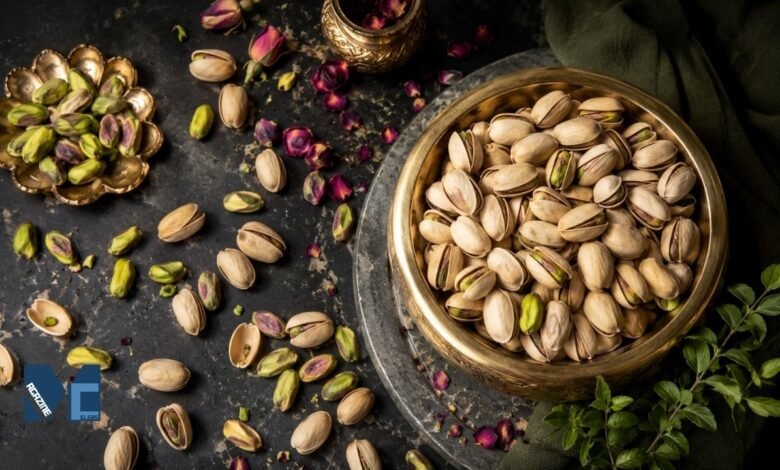
Pista and Pistachio: Everything You Need to Know About the World’s Most Nutritious Green Nut
From its ancient Middle Eastern roots to its status as a global superfood, pista — the pistachio nut — is far more than a snack. Here is the complete, evidence-backed guide.


*Disclaimer: We may earn a commission if you make a purchase through our affiliate links, at no extra cost to you.
📋 Quick Facts
Scientific Name
Pistacia vera L.
Origin
Central & West Asia (c. 6000 BC)
Protein per oz (28g)
~6 grams (complete protein)
Top Producer (2024)
USA — 538,000 tonnes
Global Market Size (2024)
~USD $8.5 Billion
Calories per oz
~159 kcal (raw)
Plant Family
Anacardiaceae (cashew family)
Known In South Asia As
Pista (پستہ)
Pista — the name millions across South Asia, the Middle East and the Mediterranean use for the pistachio nut — is one of the oldest cultivated foods on earth. Botanically classified as Pistacia vera L. and a member of the cashew family, the pistachio is technically a seed rather than a true nut, though the distinction rarely matters to anyone eating a fistful of them. What does matter is the nutritional density packed inside that thin beige shell: roughly 6 grams of complete protein, heart-healthy monounsaturated and polyunsaturated fats, prebiotic fibre, and a remarkably rich supply of antioxidants including lutein, zeaxanthin, and polyphenols. Research published in peer-reviewed journals — from Penn State University’s nutrition department to studies in the American Journal of Clinical Nutrition — consistently supports the cardiovascular and metabolic benefits of regular pistachio consumption.
The word “pista” itself is a Persian and Urdu term (پستہ) that has become the everyday shorthand for pistachios across Pakistan, India, Iran, and much of the Arab world. In the UK, where pistachio-flavoured foods have exploded in popularity since 2023, the nut tends to go by its full English name — though the cultural crossover is visible on supermarket shelves, dessert menus, and food social media alike. Whether you know it as pista or pistachio, the nut has moved well beyond the snack bowl: it now appears in coffee drinks, chocolate bars, protein powders, nut butters, and premium gelato.
This guide covers the full story — the ancient origins, the verified nutritional science, the current global market, culinary uses, and the practical questions most people actually search for. Nothing has been padded. Where data is disputed or unverified, that is clearly noted.
Origins and Ancient History of the Pista and Pistachio
Archaeobotanical evidence places the pistachio firmly in the landscape of prehistoric human foraging. Remnants of Pistacia species have been recovered from sites in southeastern Iran’s Soghum valley dating to the sixth millennium BC, and there are broader traces of consumption reaching back as far as 300,000 years, long before any organised agriculture. The tree’s probable homeland spans a crescent from modern-day Iran and Afghanistan westward through Turkey, Lebanon, and the Caucasus — precisely the territories that gave the world so many of its most durable culinary ingredients.
The ancient Persians held pistachio in high esteem — historically referred to as the “smiling nut” (khandan in Persian) because of the way the ripe shell splits open, resembling a grin. The nut appears in biblical texts (Genesis 43:11) as a gift of “the best fruits of the land,” and Queen of Sheba reportedly declared pistachios a royal food, reserving the entire country’s harvest for herself and her court — though that particular claim belongs more to legend than to verifiable record. What is documented is that the Roman Emperor Vitellius brought pistachios to Rome in the first century AD, where they became a fashionable luxury among the empire’s elite.
From Rome, cultivation spread across the Mediterranean. Moorish traders introduced the trees to North Africa and southern Spain during the Middle Ages, and Arab physicians — most notably the Persian polymath Avicenna — wrote extensively about the nut’s medicinal properties, prescribing it for liver complaints, digestive disorders, and general vitality. For well over a millennium, pistachio held a dual role: a food of pleasure and a tool of folk medicine. The modern science, as it turns out, has validated more of that tradition than might be expected.
How the Pistachio Reached the United States — and Changed World Production
Commercial pistachio cultivation in the United States began only in the twentieth century. The USDA imported its first pistachio trees from the Middle East in 1929, and the first commercial orchards in California were planted in the 1960s. By the 1970s, American-grown pistachios were available in stores — initially dyed red to mask shell blemishes from hand-harvesting — and the industry began its long ascent. The introduction of mechanised harvesting removed the need for artificial colouring, and California’s San Joaquin Valley, with its combination of hot summers and cold winters (the tree requires both to produce), proved an almost ideal growing environment. According to data from the American Pistachio Growers, the 2023 harvest yielded an unprecedented 1.5 billion pounds, cementing the United States as the world’s largest pistachio producer by volume, ahead of Iran and Turkey.
Timeline: Key Milestones in Pistachio History and Research
c. 6000 BC
Archaeological remnants of Pistacia species found at sites in southeastern Iran, placing the pistachio among the world’s earliest known cultivated foods.
1st Century AD
Roman Emperor Vitellius introduces pistachios to Rome, where they become a luxury food among the empire’s elite, accelerating Mediterranean cultivation.
1929
The USDA imports the first pistachio trees from the Middle East to the United States, beginning the long path toward commercial American cultivation.
2006–2010
A series of landmark studies from Penn State University and the Journal of Nutrition demonstrate that pistachio consumption significantly lowers LDL cholesterol and increases serum antioxidant levels in adults with high cholesterol.
2021
A comprehensive review published in Nutrients (PMC) confirms pistachios’ complete amino acid profile, bioactive phenolic compounds, and position within plant-based dietary guidance frameworks globally.
2023
American Pistachio Growers report a record US harvest of 1.5 billion pounds. The “Dubai chocolate” viral trend, featuring pistachio cream filling, propels pista into mainstream Western food culture in an entirely new way.
2024–2026
Global pistachio market reaches an estimated USD $8.5 billion, with North America holding a 57.6% revenue share. Flavoured, shelled, and pistachio-based spreads emerge as the fastest-growing product sub-categories.
💜 Why This Matters
In much of South Asia and the Middle East, pista is not simply a snack — it is woven into ceremony, hospitality, and medicine. A box of pistachios given as a gift carries cultural weight that a bag of crisps never could. What makes the science important is that it does not contradict that tradition — it confirms it. For communities who have eaten pista for generations as part of broader dietary patterns, the emerging clinical evidence on cardiovascular health, blood sugar regulation, and gut function validates what grandmothers already knew. And for the growing population globally looking for protein sources that do not come from meat, the pistachio’s complete amino acid profile positions it as something genuinely useful, not just fashionable.
Pistachio Nutrition: What the Evidence Actually Shows
A single one-ounce (28-gram) serving of raw pistachios — roughly 49 kernels — delivers approximately 159 calories, 6 grams of protein, 8 grams of carbohydrates, and 13 grams of fat, the overwhelming majority of which are unsaturated. That protein figure is notable because, unlike many plant foods, pistachio provides all nine essential amino acids, qualifying it as a complete protein source. Per a 2021 review in Nutrients co-authored by researchers at multiple institutions and published via PubMed Central, pistachio nutrient profiles position them as meaningfully supportive of plant-based diets at a time when global health guidance is explicitly shifting toward reduced animal protein consumption.
The antioxidant content is particularly well-studied. Research from Penn State’s nutrition department, published in the Journal of Nutrition in 2010, found that adults with high cholesterol who incorporated pistachios into a controlled diet showed measurably lower LDL cholesterol and higher blood antioxidant levels compared to a control group. According to research cited by the American Pistachio Growers, the nut contains approximately 13 times more lutein and zeaxanthin than the next highest-ranked nut — compounds directly associated with eye health and the prevention of age-related macular degeneration. The phenolic compounds in pistachios — flavonoids, proanthocyanidins, anthocyanins — contribute to what one 2012 review in Nutrition Reviews by Mark Dreher described as a “heart-healthy fatty-acid profile” that consistently supports beneficial blood lipid levels across five published randomised cardiovascular trials.
The glycaemic picture is equally encouraging. Pistachios have a low glycaemic index, meaning they do not cause the sharp blood sugar spikes associated with processed carbohydrate foods. Their fibre content — around 10 grams per 100 grams — functions as a prebiotic, feeding beneficial gut bacteria that then produce short-chain fatty acids linked to reduced risks of colorectal cancer and inflammatory bowel conditions. Importantly, a review of 33 studies cited by WebMD found no significant association between nut consumption and increased body weight or BMI, dispelling a persistent misconception that eating a calorie-dense food like pista inevitably leads to weight gain.
Pista in the Kitchen: Culinary Uses Across Cultures
The culinary range of pistachio spans more geography and more flavour registers than almost any other nut. In Persian and Middle Eastern cooking, pista appears finely ground in baklava, pressed into the filling of ma’amoul date pastries, and scattered over saffron rice dishes where its gentle sweetness and colour provide both flavour and visual contrast. The Iranian city of Rafsanjan is considered the pistachio capital of the world, and the area’s akbari variety — long-elongated and intensely flavoured — is exported globally as a premium product. In Sicily, the pistachios of Bronte carry a DOP (Protected Designation of Origin) classification, making them among the most legally protected agricultural products in Europe; their intensely emerald kernels are used in everything from pesto di pistacchio to high-end gelato.
Across South Asia, pista has long been a prestige ingredient in Mughal-derived sweets and dairy-based desserts. Kulfi — the dense, slowly frozen milk confection — is rarely considered complete without a generous topping of crushed pistachios. The same holds for kheer, barfi, and shahi tukda. In wedding contexts, pista-studded sweets carry social symbolism: they signal generosity and prosperity. The nut also appears in savoury applications — ground into sauces for korma-style dishes, or used whole in biryanis where its firmness holds up to long cooking times without dissolving entirely. If you enjoy reading about food culture and its intersection with health and wellness, you might also find our feature on best berenjenas con miel near me a useful companion read — another traditional food with ancient roots and a growing modern fanbase.
The most dramatic recent shift in pistachio’s culinary profile has been its mainstream crossover into Western food culture via what became known as the “Dubai chocolate” trend — a viral sensation beginning around 2023 in which a Middle Eastern chocolate bar filled with kataifi pastry and pistachio cream spread across social media globally. The effect on pistachio-flavoured product launches was immediate and measurable. The Wonderful Company — one of the world’s largest pistachio processors — reported a 15% increase in North American sales following new flavoured product launches in late 2024, according to market intelligence published by Global Growth Insights.
📊 Global Pistachio Production Share (2024)
Note: Production figures sourced from IndexBox market analysis and American Pistachio Growers (APG) 2024 Annual Report. Percentages are approximations based on publicly available trade data. Verified financial disclosures at a per-country level have not been uniformly published.
“Our previous study showed the benefits of pistachios in lowering lipids and lipoproteins, which are a risk factor for heart disease. This new study shows an additional effect — now there are multiple health benefits of eating pistachios.”
— Penny Kris-Etherton, Distinguished Professor of Nutrition, Penn State University (via Penn State News, published in the Journal of Nutrition)
Pistachio and Health: What to Know Before Eating More
The clinical evidence supporting pistachio consumption is unusually robust for a food product — the result of decades of controlled feeding studies rather than observational surveys alone. Five published randomised cardiovascular trials, as summarised in Dreher’s 2012 Nutrition Reviews paper, found consistent improvements in blood lipid profiles among participants who incorporated pistachios into their diets. Penn State researchers, working in collaboration with the USDA Beltsville Human Nutrition Research Center, found that a diet supplying 20% of calories from pistachios significantly lowered total cholesterol and LDL levels compared to a pistachio-free control, with effects appearing dose-dependent. Research published in the Journal of the American College of Nutrition specifically found that using pistachios as a portion-controlled snack in a calorie-reduced diet produced greater weight loss than using pretzels at a similar calorie level — a finding that speaks directly to the satiety properties of the nut’s fat and protein content.
For blood sugar management, the low glycaemic index of pista makes it a practical option for people monitoring glucose levels. The nut’s phenolic compounds have demonstrated anti-inflammatory properties in exploratory clinical studies, though researchers note that larger-scale trials are still needed before definitive clinical recommendations can be made. The prebiotic fibre content supports gut microbiome diversity — an area of nutrition science that has attracted considerable attention since the late 2010s. Vitamin B6, present in meaningful quantities in pistachio, promotes oxygen transport in the blood and contributes to healthy nervous system function, a fact Cleveland Clinic nutritionists have noted in recent public guidance.
There are legitimate caveats, too. Pistachios are calorie-dense, and for people managing weight without attention to portion size, a generous handful can easily become several hundred calories. Salted commercial varieties contribute sodium that may be a concern for those managing hypertension under medical supervision. And while tree nut allergies are less common than peanut allergies, they do occur — pistachio belongs to the same Anacardiaceae family as cashews and mangoes, meaning cross-reactivity is possible in sensitised individuals. Anyone with a known tree nut allergy should consult a medical professional before adding pistachio to their diet, and this article does not constitute medical advice of any kind.
If health-conscious eating and wellness routines interest you, you may also want to read about the Prostavive Colibrim prostate health supplement review published on this site — another example of how nutritional science intersects with everyday health decisions.
Where Things Stand Now
The global pistachio market reached approximately USD $8.5 billion in 2024, according to data from Datamintelligence, and multiple independent market research firms project continued growth through the early 2030s at compound annual growth rates ranging from 4.5% to 8.3% depending on the methodology. North America holds the dominant revenue share at 57.6% (2024 figure), driven by a combination of high domestic production in California, Arizona, and New Mexico, and robust health-snacking demand. Asia-Pacific is consistently identified as the fastest-growing regional market, with China, India, and Southeast Asia showing the sharpest increases in pistachio imports as middle-class disposable incomes rise and plant-based nutrition awareness grows.
On the product innovation front, the fastest-growing sub-categories are flavoured in-shell pistachios, pistachio butter and spreads, and pistachio-based dairy alternatives including pistachio milk. Primex Farms launched a pistachio butter range in early 2025 that reportedly drove a 10% increase in European market penetration within months of launch. The pistachio-milk category is still nascent but has drawn attention from investors who have watched oat milk and almond milk scale rapidly over the past decade. Whether pistachio milk follows the same trajectory remains to be seen — it carries a higher cost base than oat milk — but the trend is real and ongoing.
Climate variability remains the most significant structural risk to pistachio supply. The trees require very specific temperature patterns — hot, dry summers and cold winters — and are highly dependent on water access, a concern in the drought-stressed valleys of California and across Iran. Water management and the development of more drought-tolerant rootstocks are active areas of agricultural research, and the industry is aware that a changing climate could meaningfully disrupt supply in the coming decades. For now, production is at record levels, consumer demand is strong, and the humble pista remains one of the most commercially dynamic foods on earth.
✨ Pista & Pistachio — At a Glance
Global Market (2024)
~USD $8.5 Billion
US 2023 Harvest
1.5 Billion Pounds (record)
Antioxidant Ranking
2nd among all nuts (after walnuts)
Protein per Serving
~6g (complete protein)
❓ Frequently Asked Questions
What is the difference between pista and pistachio?
There is no botanical difference — pista and pistachio refer to exactly the same nut, Pistacia vera L. “Pista” (پستہ) is the Persian, Urdu, and Hindi name used widely across South Asia and the Middle East, while “pistachio” is the English term derived from the Greek pistakion, meaning “the green nut.” Both words describe the same seed, the same tree, and the same nutritional profile.
How many pistachios should I eat per day?
Most nutritional research uses one to two one-ounce servings (roughly 28–56 grams or 49–98 kernels) per day as the basis for observed health benefits. Studies published by Penn State researchers tested diets supplying 10–20% of daily calories from pistachios, but for general snacking purposes, one ounce daily is widely cited as a reasonable, evidence-supported amount. Individual calorie needs and health conditions will affect what is appropriate for any one person.
Are pistachios good for weight loss?
Evidence suggests they can be. A study published in the Journal of the American College of Nutrition found that overweight adults who ate pistachios as a portion-controlled snack within a calorie-reduced diet lost more weight than those who snacked on pretzels at a similar calorie count. The protein and fibre content supports satiety. A review of 33 studies found no significant association between nut consumption and increased body weight. Portion control remains essential given the calorie density.
Are pistachios high in cholesterol?
No — pistachios contain no dietary cholesterol, as they are a plant food. On the contrary, multiple randomised controlled trials have shown that pistachio consumption lowers LDL (“bad”) cholesterol levels. Research from Penn State found that eating 1.5 to 3 ounces of pistachios daily reduced LDL levels and improved lipoprotein ratios in adults on a heart-healthy diet. Their phytosterol content competes with cholesterol for intestinal absorption, which partly explains this mechanism.
Which country produces the most pistachios?
As of 2024, the United States is the world’s largest pistachio producer by volume, with California, Arizona, and New Mexico collectively producing approximately 538,000 tonnes. Iran is the second-largest producer (275,000 tonnes), followed by Turkey (208,000 tonnes). Together, these three countries account for approximately 85% of global pistachio production, according to IndexBox market analysis.
Why are pistachios so expensive compared to other nuts?
Several factors drive pistachio’s premium price point. The trees take seven to ten years to produce their first meaningful commercial harvest, and they produce large crops only in alternate years — a phenomenon known as alternate bearing. Each nut must be harvested within a narrow window to prevent shell staining, historically requiring labour-intensive methods. Water requirements are significant, particularly in drought-affected growing regions. Premium varieties such as Sicily’s DOP Bronte pistachios face even higher costs due to geographic restrictions and lower yields.
Final Thoughts
There is something quietly satisfying about a food that has lasted this long — from prehistoric foraging in southeastern Iran, through the courts of Persian kings and Roman emperors, into the Mughal kitchens of South Asia, the dessert tables of the Mediterranean, and now into the protein aisle of every major UK supermarket. The pistachio did not survive eight thousand years of human history by accident. It is genuinely nutritious, genuinely versatile, and — in an era when every functional food claim deserves scrutiny — unusually well-supported by independent clinical research.
The word “pista” carries a warmth that “pistachio” does not quite replicate in English. It is the word you use when someone puts a bowl of them on the table during a family visit, when they appear ground into a wedding dessert, when you crack one between your teeth on a long afternoon. That cultural intimacy is not incidental to the nut’s commercial renaissance — it is part of what has allowed pistachio to cross over from a Middle Eastern staple to a global phenomenon without losing its identity in the process. The Dubai chocolate moment was a surprise, but in retrospect it makes sense: pistachio was always charismatic enough to travel.
Whether you eat pista for the taste, the protein, the heart health data, or simply because you cannot stop once you have started — the evidence and the history both suggest you are in good company. The one practical recommendation this article can offer, separate from the science: always buy unsalted if you can. The nut’s natural flavour is subtler and more interesting than the salt-forward version most people encounter first.
📚 Sources & References
- Pistachio Nuts: Production, Nutrients, Bioactives and Novel Health Effects — NCBI/PubMed Central, Nutrients Journal, 2021
- Pistachios: Health Benefits, Nutrition, Risks and Preparation — WebMD, reviewed 2025
- Pistachios and Heart Health Research Archive — American Pistachio Growers (APG)
- Researchers Study How Pistachios May Improve Heart Health — Penn State News, 2008, published in the American Journal of Clinical Nutrition
- U.S. Pistachio Market Analysis: Size, Forecast, Trends — IndexBox, 2026
- Global Pistachio Market Size, Share, Trends and Forecast 2025–2032 — DatM Intelligence
- APG Releases 2024 Annual Pistachio Report: Record Harvest, Market Trends and 2025 Export Outlook — The Ag Center
- Are Pistachios Good for You? 9 Benefits — Cleveland Clinic Health Essentials, 2025
All sources verified at time of publication. Links subject to change.
AB Rehman
Health & Lifestyle Writer
AB Rehman is a features and research writer covering health, lifestyle, food culture, and celebrity biography. His work draws on primary sources, peer-reviewed research, and institutional data to produce accurate, readable long-form content for general and specialist audiences. He publishes regularly at MagazineCelebs.co.uk.
⚠️ Editorial Disclaimer
This article is intended for informational purposes only and does not constitute medical, dietary, or nutritional advice. All health-related claims have been drawn from peer-reviewed studies, institutional research, and established publications, and are accurately attributed. Where data could not be independently verified, this has been clearly noted. Market figures are approximations drawn from publicly available industry reports and should not be treated as investment guidance. Readers with specific health conditions or dietary concerns should consult a qualified medical professional before making changes to their diet.