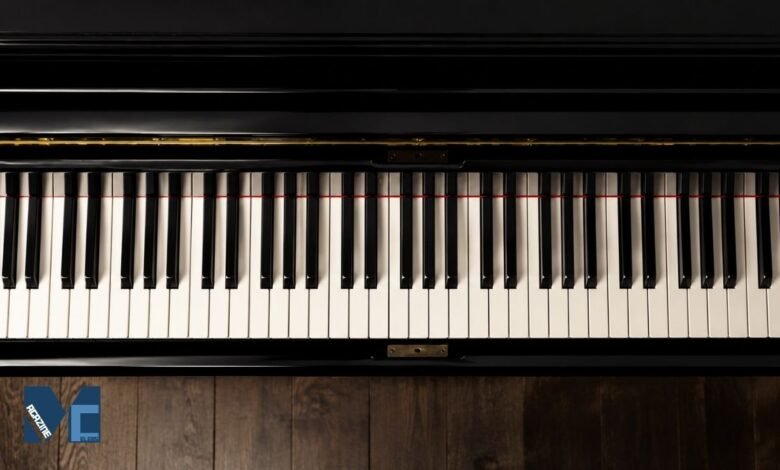
How Many Keys on a Piano? The Full Breakdown Behind the 88-Key Standard
A standard piano has 88 keys — 52 white and 36 black — but the history behind that number, and why some instruments diverge from it, is more interesting than the figure itself.


*Disclaimer: We may earn a commission if you make a purchase through our affiliate links, at no extra cost to you.
📋 Quick Facts
Total Keys (Standard)
88 Keys
White Keys
52
Black Keys
36
Octaves Covered
7 Full + 3 Extra Keys
Standard Established By
Steinway & Sons, ~1880s
Lowest Note
A0 (27.5 Hz)
Highest Note
C8 (4,186 Hz)
Keys Per Octave
12 (7 White + 5 Black)
A standard piano has 88 keys — 52 white and 36 black, spanning just over seven octaves from A0 at the bass end to C8 at the top. That number is so firmly embedded in the instrument’s identity that most people accept it without question, the way you might accept that a week has seven days. But 88 is not a law of physics. It emerged from a process of musical demand, mechanical possibility, and manufacturer influence that played out over roughly two centuries. Understanding it means understanding something fundamental about how the piano became the instrument it is today.
The number also varies more than most players realise. Digital pianos routinely come with 61 or 76 keys. Student keyboards start at 25 or 49. Bösendorfer makes a concert grand with 97 keys, extending the bass range by nine additional notes. These differences are not arbitrary — each configuration reflects a specific philosophy about who plays the instrument, what repertoire they need, and how much space or money they have. Knowing the logic behind each option helps buyers make better decisions and gives players a clearer sense of where the instrument’s boundaries actually lie.
This guide covers the full picture: why 88 became the norm, how the piano keyboard evolved from the earliest harpsichords to the modern concert grand, what the notes at either extreme actually sound like and when they get used, and which key configurations make sense for different kinds of players. The answer to “how many keys on a piano” turns out to be both simpler and more layered than the question implies.
Read About Guitar Strings
How the Piano Keyboard Came to Have 88 Keys
The piano’s ancestors — the harpsichord and clavichord — typically had four or four-and-a-half octaves by the mid-seventeenth century. When Bartolomeo Cristofori invented the fortepiano around 1700, his earliest surviving instruments (including the 1720 specimen at the Metropolitan Museum of Art in New York) had 54 keys covering four and a half octaves. That was sufficient for the Baroque repertoire of the era, which rarely ventured into extreme registers.
Composers drove the expansion. As the Classical period gave way to the Romantic, composers like Beethoven, Chopin, Liszt, and Brahms began pushing at the keyboard’s edges. Beethoven’s late sonatas, particularly the Hammerklavier (Op. 106), written in 1818, were already straining instruments of the time. Publishers sometimes had to transpose passages because the pianos available to buyers did not reach far enough in either direction. Manufacturers responded by adding keys — first to five octaves, then five and a half, then six. By the mid-nineteenth century, six and a half octaves (78 keys) was common on quality instruments. By the 1870s and 1880s, Steinway & Sons had pushed their concert grands to 88, and the repertoire that major composers were producing for Steinway instruments — particularly the works commissioned or associated with Anton Rubinstein and later Sergei Rachmaninoff — cemented the expectation that a serious concert piano would have the full range.
The 88-key standard was never formally mandated by a governing body. It emerged from market consensus: Steinway established the benchmark, other premium manufacturers followed, and because professional pianists trained on 88-key instruments, concert halls and conservatories standardised around the same layout. Today the teaching of musical skills at a young age almost invariably begins on full-size or near-full-size keyboards precisely because the standard repertoire assumes 88 keys.
The Anatomy of the 88 Keys: White, Black, and the Logic of the Layout
Of the 88 keys, 52 are white and correspond to the natural notes of the musical alphabet: A, B, C, D, E, F, G — repeating across seven full octaves plus a partial eighth. The 36 black keys are the sharps and flats, grouped in alternating clusters of two and three. Each complete octave contains 12 keys: seven white and five black. The pattern repeats identically across the keyboard, which is why a pianist who learns one octave can immediately orient themselves anywhere on the instrument.
The lowest note, A0, vibrates at 27.5 Hz — deep enough that many listeners feel it as much as hear it. The highest, C8, rings at approximately 4,186 Hz, a pitch so bright and percussive that it blends almost imperceptibly into string resonance on most acoustic instruments. Both extremes feature in the concert repertoire, though sparingly. Liszt used the bass end to devastating effect in his transcriptions; Ravel’s Gaspard de la Nuit reaches into the upper registers for its glass-like harmonic shimmer. Most music, however, sits comfortably in the middle four octaves — which is why smaller keyboards can serve many players adequately.
Timeline: Key Milestones in Piano Keyboard History
c. 1700
Bartolomeo Cristofori builds the earliest known fortepiano in Florence, Italy, with approximately 54 keys spanning four and a half octaves.
1818
Beethoven composes the Hammerklavier Sonata (Op. 106), exploiting the full six-octave range of contemporary Viennese instruments and pushing manufacturers to expand keyboard capacity.
1853
Steinway & Sons is founded in New York by Heinrich Engelhard Steinweg (later Steinway). The company’s innovations — including the cross-strung frame and cast iron plate — allow for greater string tension and a broader tonal range.
c. 1880s
Steinway concert grands reach 88 keys, establishing the standard that all major competitors — Bechstein, Blüthner, Yamaha (founded 1887) — would eventually adopt. The 88-key range becomes the professional benchmark.
1909
Bösendorfer introduces the Imperial Concert Grand with 97 keys, adding nine extra bass notes below the standard A0. The additional strings also act as sympathetic resonators, enriching the instrument’s tonal depth.
1970s–80s
Electronic keyboards and digital pianos proliferate, introducing 61-key and 76-key configurations designed for portability and affordability. The Roland, Korg, and Yamaha digital lines establish smaller formats that remain standard in home and stage use today.
2000s–Present
Stuart & Sons, an Australian piano maker, introduces instruments with 102 keys (nine octaves), extending both the treble and bass ranges beyond any previous piano. These remain bespoke rarities, made to commission for specialist players.
💜 Why This Matters
For a beginner choosing their first instrument, the difference between 61 keys and 88 is not merely about range — it shapes what music you can learn, how your technique develops, and whether the instrument grows with you. Millions of people buy compact keyboards assuming they can upgrade later, only to find that pieces they love require keys their instrument simply doesn’t have. Understanding the logic of key counts before you buy means you’re less likely to outgrow your piano before you’ve had a chance to love it.
Different Piano Types and Their Key Counts
Not every piano has 88 keys, and the variation is both deliberate and meaningful. Grand pianos — from baby grands at roughly 4.5 feet to concert grands at nine feet — all use the 88-key layout. The size differences relate to string length and sustain, not keyboard range. Upright pianos (also called vertical pianos) similarly come with 88 keys as the standard. These are the instruments you find in homes, school music rooms, and rehearsal studios; the upright format simply uses vertical string orientation to save floor space.
Digital and electronic instruments fragment the range more dramatically. A 61-key digital piano covers five octaves and handles most beginner and intermediate repertoire adequately, but it misses the bottom two and top one and a bit octaves compared to an acoustic standard instrument. 76-key models close most of that gap and are popular among gigging musicians who need portability without sacrificing too much range. 88-key digital pianos replicate the full acoustic layout and are the recommended choice for anyone serious about classical training or who wants to transition between digital and acoustic without adjustment. For context, pieces like Chopin’s Ballade No. 1 in G minor and Liszt’s Hungarian Rhapsody No. 2 both require notes outside the 61-key range — the bass notes that give those pieces their particular gravity simply aren’t available on a compact keyboard.
Synthesisers and MIDI controllers occupy a different space entirely. A 25-key controller is designed for studio producers who need to input notes and chords but rely on software instruments to generate sound — physical key count matters far less there. The 49-key format suits melodic leads and basic chord work. These are production tools rather than pianos in the traditional sense, though the boundary between a digital piano and a keyboard synthesiser has blurred considerably over the past two decades, particularly in the work of musicians like Thomas Bangalter, who has spoken publicly about the relationship between electronic and classical keyboard traditions.
Beyond 88: Extended Keyboards and Why They Exist
The Bösendorfer Imperial, with its 97 keys, is the most famous departure from the 88-key standard. The nine extra notes — painted black to distinguish them from the standard range — extend the bass down to C0, a note so low it is at the very threshold of human pitch perception. In performance, Bösendorfer’s rationale is partly acoustic: those additional bass strings vibrate sympathetically even when not directly struck, adding overtones and a richness of resonance that affects the entire instrument’s character. Certain compositions — notably Busoni’s piano transcriptions and some of Scriabin’s late works — can benefit from this extended range, though most concert pianists perform the standard repertoire on the instrument and simply leave the extra keys unused.
Stuart & Sons of Newcastle, Australia, has pushed even further. Their instruments with 102 keys (nine full octaves from C0 to C9) were developed in collaboration with composers writing specifically for the extended range. According to the company’s published documentation, the treble extension provides harmonics that interact with the mid-range strings in ways an 88-key piano cannot replicate. These instruments remain extremely rare — bespoke commissions at significant cost — and represent an experimental edge of piano design rather than a practical alternative for most players. For the overwhelming majority of classical, jazz, and contemporary music, the 88-key standard remains not merely sufficient but genuinely comprehensive.
📊 Piano Key Configurations at a Glance
Note: Percentages represent approximate proportion of the 88-key range covered by each configuration. Extended instruments (97 and 102 keys) are not included as they represent specialist bespoke production.
“The piano is the most important of all instruments invented. On it every nuance of harmony and melody can be expressed and it offers the widest technical possibilities for the interpreter.”
— Ferruccio Busoni, pianist and composer, from his essay on piano transcription, c. 1910
How Many Keys Do You Actually Need?
The honest answer depends on what you want to play. Classical repertoire from the Baroque era through the early Classical period — Bach, Handel, Haydn, early Mozart — sits comfortably within a five-octave range and can be practised without issue on a 61-key instrument. As you move into the late Classical and Romantic periods, the demands expand. Beethoven’s mature works, Schubert’s sonatas, and virtually everything by Chopin, Schumann, Brahms, or Liszt will eventually require the full 88-key range. Structured music education programmes typically recommend a minimum of 76 keys for students who expect to continue beyond the beginner stage, with 88 being the professional standard.
Jazz players occupy a different position. Much jazz piano technique lives in the middle register, and a competent jazz pianist can work effectively on 73 or 76 keys. The extended bass range that classical music exploits is less critical in jazz, where the left hand tends to comp chords rather than sustain bass pedal points. That said, any player who wants flexibility — to move between genres, to cover classical transcriptions, or to accompany other instruments without limitation — will find 88 keys the only configuration that never becomes a constraint.
For producers and home studio musicians, the calculus shifts again. If your piano sound comes from software — a virtual instrument plugin in a DAW — then your 49-key MIDI controller can technically play anything, because the software generates notes your physical keys only trigger. The limitation is in playability and feel: complex two-handed passages become harder on a narrow keyboard, and the muscle memory you build on a short layout can interfere with technique if you ever move to an acoustic instrument. Music therapy applications, such as those referenced in educational contexts like structured reading and learning support tools, often use shortened keyboard formats specifically because the reduced visual field makes the instrument less intimidating for non-specialist learners.
✨ The Piano Keyboard — At a Glance
Standard Key Count
88 Keys
Frequency Range
27.5 Hz – 4,186 Hz
Maximum (Bespoke)
102 Keys (Stuart & Sons)
Standard Established
c. 1880s by Steinway
❓ Frequently Asked Questions
How many keys does a standard piano have?
A standard piano has 88 keys — 52 white keys and 36 black keys. This layout spans just over seven octaves, from A0 (the lowest note, at 27.5 Hz) to C8 (the highest, at approximately 4,186 Hz). The 88-key configuration has been the professional standard since the late nineteenth century, established primarily through the influence of Steinway & Sons.
Why does a piano have 88 keys and not more or fewer?
The 88-key number was not set by formal decree — it emerged from the demands of Romantic-era composers pushing at the instrument’s limits, and from Steinway’s decision in the 1880s to build concert grands to that specification. Because major composers wrote for Steinway instruments, and because professional pianists trained on them, the entire concert ecosystem standardised around 88. The number represents a practical ceiling: notes beyond it are too high to be musically useful in conventional harmony and too low to be clearly pitched.
How many white keys and black keys are on a piano?
A full 88-key piano has 52 white keys and 36 black keys. The white keys correspond to the natural notes (A through G, repeating), and the black keys are the sharps and flats. Within each octave, there are 7 white keys and 5 black keys, giving 12 notes per octave — the basis of the Western chromatic scale.
Do I need 88 keys to learn piano?
For complete beginners learning simple melodies and introductory pieces, 61 keys will cover most early-stage repertoire. However, for anyone pursuing classical training seriously, 88 keys is strongly recommended, as most intermediate and advanced repertoire requires the full range. A 76-key instrument is a reasonable compromise for players who want portability without sacrificing too much range. Professional pianists and those training for exams should use a full 88-key instrument.
Are there pianos with more than 88 keys?
Yes. The Bösendorfer Imperial has 97 keys, adding nine extra bass notes below A0, down to C0. Stuart & Sons of Australia has produced instruments with 102 keys (a full nine octaves). These are rare, expensive, bespoke instruments designed for specific compositional purposes. The extra keys on the Bösendorfer also function as sympathetic resonators, enriching the instrument’s overall tone even when unplayed.
How many keys does a beginner keyboard have?
Entry-level beginner keyboards typically have 61 keys (five octaves), which is sufficient for most beginner and early intermediate pieces. Some budget models start at 49 keys (four octaves), which is adequate for very basic melody practice but limiting for any serious repertoire. For children’s first instruments, 61 keys is generally considered the practical minimum that allows for meaningful musical progress without immediately outgrowing the instrument.
Final Thoughts
The 88-key piano is one of those rare design outcomes where a practical consensus produced something close to optimal — not because the number is mathematically perfect, but because it reflects a genuine balance between musical ambition and acoustic reality. Notes below A0 blur into indistinguishable rumble; notes above C8 lose their identity as distinct pitches. The centuries of composition that sit between those two points represent arguably the richest body of keyboard literature ever produced, and a well-made 88-key instrument can access all of it.
What the history of the keyboard also reveals is that the piano’s range has always been driven by composers, not manufacturers. Every time the instrument’s boundaries expanded — from Cristofori’s four-and-a-half octaves through to the Romantic-era push for 88 — it was because composers were writing music that required more. The keyboard didn’t grow arbitrarily; it grew because pianists demanded it, and because the music itself made the case. Bösendorfer’s extra nine keys exist because specific composers found uses for them. Stuart & Sons’ 102-key instruments exist because living composers commissioned them. The 88-key standard endures because the existing repertoire doesn’t need more — at least not in any consensus sense.
For anyone buying their first instrument, the practical takeaway is straightforward: if you’re serious about learning, 88 keys is the only configuration that will never hold you back. Everything below that is a compromise made for cost, portability, or simplicity — all legitimate reasons — but a compromise nonetheless. The piano is an instrument that rewards patience and investment. Starting on the full keyboard means you’re already playing the same instrument that Chopin wrote for, that Ravel wrote for, that Keith Jarrett and Maria João Pires and every other major pianist of the past 150 years has used. That continuity is worth something.
📚 Sources & References
- The Metropolitan Museum of Art — Cristofori Piano, 1720 (Collection Record)
- Steinway & Sons — Concert Grand Piano Specifications (Official Site)
- Bösendorfer — Imperial 97-Key Concert Grand (Official Product Page)
- Stuart & Sons Pianos — 102-Key Instrument Documentation (Official Site)
- Yamaha Musical Instrument Guide — Piano Keyboard Mechanism and History
All sources verified at time of publication. Links subject to change.
AB Rehman
Senior Features & Research Writer
AB Rehman is a features and research writer covering music education, instrument history, and consumer guidance in the performing arts. His work focuses on separating verified fact from speculation, drawing on primary sources to produce accurate, readable long-form content for general and specialist audiences.
⚠️ Editorial Disclaimer
This article is intended for informational purposes only. All facts have been sourced from publicly available information at the time of publication. Historical details regarding piano development are based on widely documented musicological sources; where precise dates are debated among historians, this has been noted. Manufacturer specifications referenced are subject to change — readers should consult official brand websites for current product details. The views expressed reflect editorial analysis, not personal legal, medical, or financial guidance.