


*Disclaimer: We may earn a commission if you make a purchase through our affiliate links, at no extra cost to you.
Choosing an electric mountain bike can feel overwhelming once you start comparing specifications. Motor power and battery capacity tend to grab most of the attention, yet the components that actually determine how a bike handles on the trail are the suspension, the tyres and the gearing. Understanding how these three systems work together can make the difference between a bike that feels sluggish and unpredictable and one that inspires genuine confidence on rough terrain.
Suspension: Hardtail Versus Full-Suspension
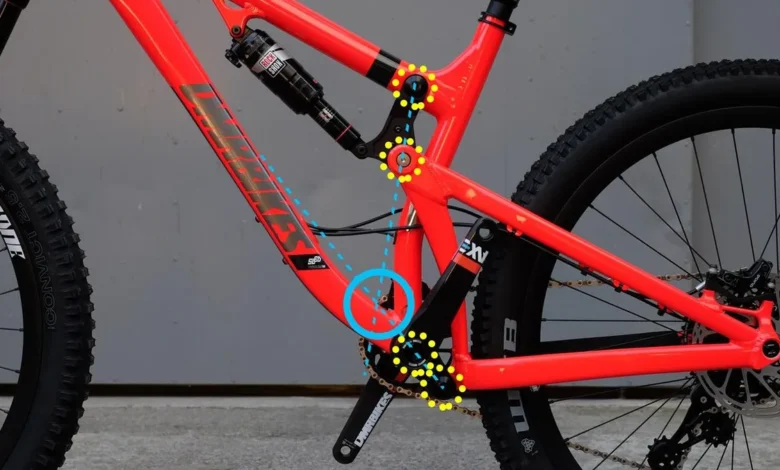
The first major decision riders face is whether to opt for a hardtail, which has suspension only at the front, or a full-suspension model with both front and rear travel. Hardtails tend to be lighter and more efficient when climbing, since there’s no rear shock absorbing pedalling energy. They’re also simpler to maintain, with fewer pivots and bearings to service over time. Full-suspension bikes, on the other hand, offer considerably more control and comfort on technical descents, as the rear shock helps keep the rear wheel tracking the ground even over roots, rocks and drops.
For an electric mountain bike specifically, the added weight of the motor and battery changes this equation somewhat. The extra mass sits lower in the frame, which can actually improve stability, but it also means the suspension has more weight to manage during compressions and rebounds. Many riders find that a well-tuned full-suspension setup suits e-MTBs particularly well, since the motor’s assistance offsets the slight efficiency loss on climbs that a rear shock introduces.
Suspension Travel and Where It Matters
Travel, measured in millimetres, refers to how far the suspension can compress before reaching its limit. Cross-country focused e-MTBs typically offer between 100 and 120mm of travel, prioritising efficiency and quick handling over rough-terrain capability. Trail bikes usually sit in the 130 to 150mm range, striking a balance that suits most UK riders tackling varied bridleways and moderate technical sections. Enduro and downhill-oriented models push beyond 150mm, designed for riders who prioritise descending performance above all else. Choosing travel that matches your typical riding rather than your aspirational riding will usually result in a more enjoyable and controllable bike.
Tyres: Width, Tread and Compound
Tyres are arguably the most underrated component when it comes to how a mountain bike actually performs, yet they’re often the last thing riders think about. Width affects both grip and rolling resistance; wider tyres, generally between 2.4 and 2.6 inches, provide more contact area and better traction at lower pressures, which is particularly useful on the loose or muddy conditions common across much of the UK. Narrower tyres roll faster but sacrifice some grip, making them better suited to hardpacked trails or riders who prioritise efficiency.
Tread pattern matters just as much as width. Widely spaced, aggressive knobs shed mud effectively and dig into soft ground, making them well suited to wetter conditions. Tighter, more closely packed tread patterns roll faster and perform better on drier, harder-packed surfaces but can clog quickly in mud. Rubber compound also plays a role: softer compounds grip better but wear faster, while harder compounds last longer but offer less traction, particularly on wet roots and rock.
Because electric mountain bikes carry additional weight from the motor and battery, tyre pressure and puncture resistance become even more important. Running pressures too low increases the risk of pinch flats under the extra load, while running them too high sacrifices grip. Many riders opt for reinforced or dual-ply tyre casings on e-MTBs specifically to cope with the added stress placed on the tyre during hard cornering and braking.
Gearing: Cadence, Range and the Role of the Motor
Gearing on an electric mountain bike works somewhat differently to a traditional bike, since the motor provides assistance that reduces how much the gearing needs to compensate for steep climbs. That said, a well-chosen gear range still matters enormously, particularly once the motor’s assistance cuts out at higher speeds or when the battery runs low.
Most e-MTBs use a single chainring paired with a wide-range cassette, often spanning something like 10 to 51 teeth. This wide range allows for spinning up steep climbs at a comfortable cadence while still providing enough top-end gearing for faster sections. Because the motor delivers torque directly, some riders find they can run slightly higher gearing than they would on an unassisted bike, since the motor compensates for the reduced mechanical advantage on climbs.
Chain and drivetrain wear tends to occur faster on e-MTBs than on traditional mountain bikes, largely due to the additional torque being transmitted through the system. Regular cleaning and lubrication, along with periodic checks of chain stretch, help prevent premature wear and maintain smooth, reliable shifting over time.
Bringing It All Together
None of these components work in isolation. A capable suspension system won’t perform to its full potential if paired with underinflated or worn tyres, and even the best tyres can’t compensate for gearing that doesn’t suit the terrain you actually ride. When evaluating a bike, it’s worth thinking about how these three systems complement your typical riding conditions rather than focusing solely on motor power or battery range, which tend to dominate marketing but only tell part of the story.
For riders looking to explore models that balance these components effectively, it’s worth researching a well-specified electric mountain bike to better understand how suspension, tyres and gearing come together across different builds before making a decision.